Begin with one simple idea: hide, find, understand
The biggest risk with this topic is turning the page into a row of insect portraits. Instead, build the whole poster around three steps: insects hide inside the scene, readers try to spot them, and a few short columns explain the science. A title like “Who is hiding in the grass?” pulls readers in far better than a plain heading.
Divide the paper before drawing: more than half goes to the scene with grass, fallen leaves and tree bark, then one interactive answer area and one explanation area.
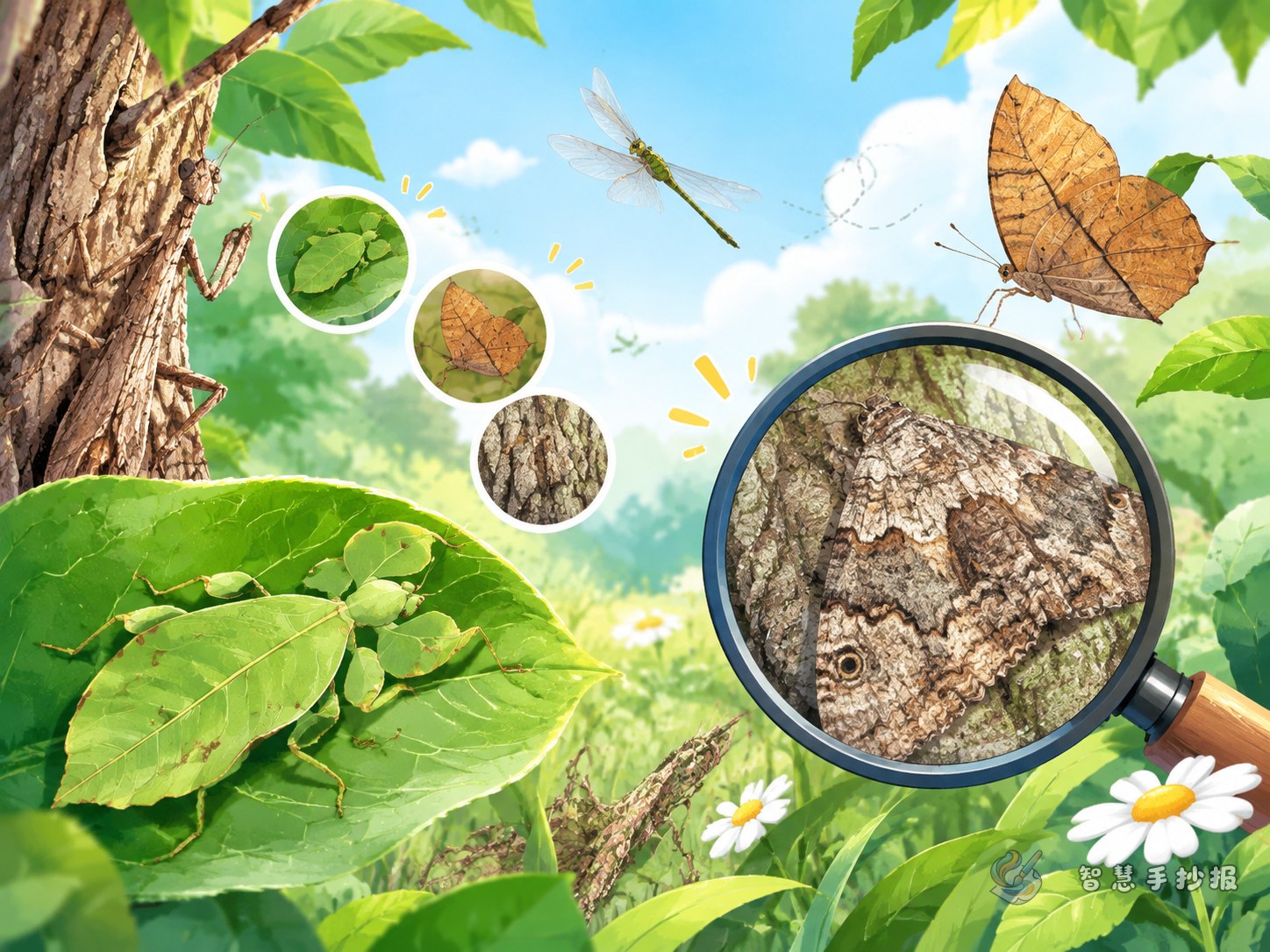
Camouflage examples that are easy to draw
These insects have simple outlines and hide convincingly on paper:
- Stick insect: a few thin segments along a twig, with only a hint of legs showing.
- Dead-leaf butterfly: wings shaped like a dry leaf with veins, tucked into leaf litter.
- Inchworm: a small arch that looks like a snapped twig.
- Green grasshopper: resting against the side of a blade of grass.
- Bark-colored beetle: a rounded back pressed against tree bark.
Keep one rule in mind: dense background, few insects. Three to five hidden insects is plenty; too many and readers give up.
Three small columns carry all the words
Column one: the answer key
Draw a small box in a corner with a line like “How many did you find?” and match numbers to hiding places. Short notes such as “1 on the trunk, 2 in the leaves” are enough.
Column two: why does it look like that?
Use three mini squares to separate the ideas: camouflage means the color blends with the surroundings, mimicry means the shape copies something else, and warning colors are bright markings that say “stay away.” One sentence and one tiny drawing for each.
Column three: my own sighting
Save a small space for a real observation from a flower bed, school lawn or park tree. Two or three sentences about where it was, what it looked like and what it was doing feel genuine and are easy to write.
Color and layout: dense grass, careful white space
Choose a pale green or soft yellow base, then layer two shades of green for the grass so the scene has depth. Browns and earth tones work well for bark and leaf litter, helping hidden insects blend in. Place text boxes on light backgrounds and outline them in deep green or brown to hold the eye.
A common mistake is drawing every insect in an empty area, which defeats the whole idea. Fill the scene first, tuck the insects into dense patches, and write the text last.
A quick build order
- Sketch the proportions of the three areas on scrap paper.
- Draw the grass, leaf litter and trunk as densely as you can.
- Hide three to five insects and note where each one is.
- Write the three columns in fairly large handwriting.
- Add the title, borders and small decorative details.
If you want a head start on the layout, the Smart Handwritten Newspaper WeChat mini program offers insect-themed page frames that you can fill with your own observations, then copy by hand or print. When it is finished, ask a classmate to find every hidden insect; if they can spot them all, the poster has done its job.