
Two cold-morning surprises on the same leaf
When children make a weather poster, they often write about rain, snow, thunder, and wind, but forget the small things they can see on a cold morning: droplets on grass and a thin white layer of frost. Both appear after a cool night, and both tell a quiet story about water vapor meeting a cold surface.
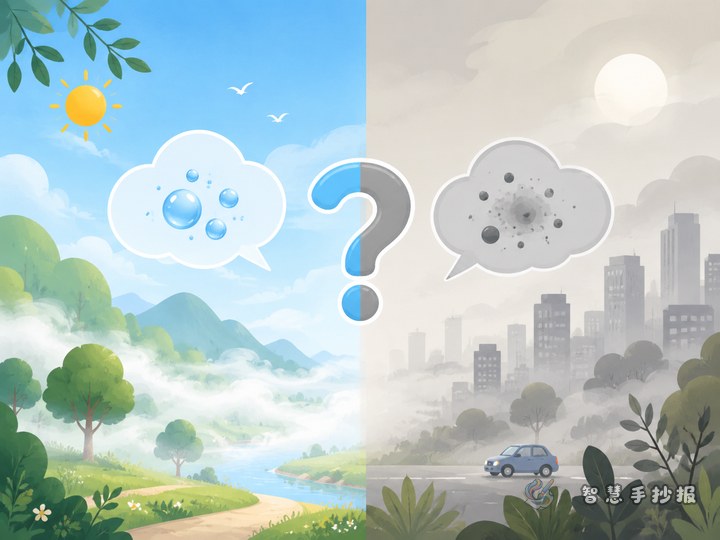
Putting dew and frost on one poster keeps the topic focused. One side can show round droplets, the other can show fine ice crystals, and the comparison makes the science easy to draw and easy to explain.
Why dew becomes droplets and frost becomes ice crystals
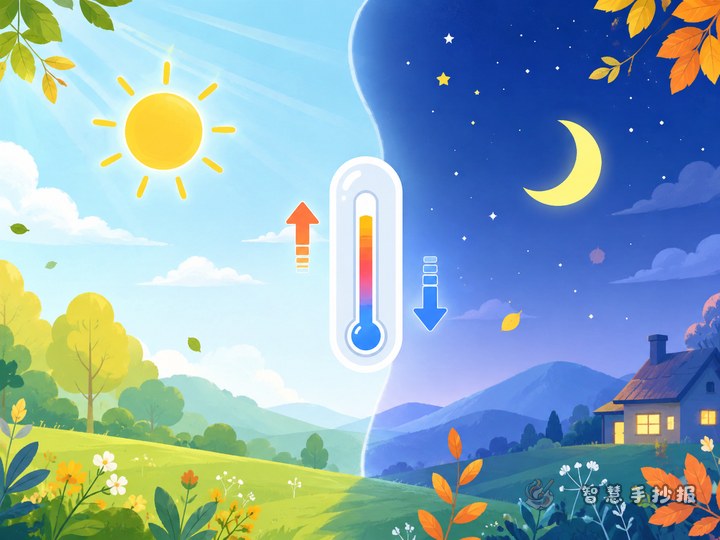
Air always contains some water vapor. At night, the ground gives off heat, and the air close to the ground becomes cooler. When grass, petals, or stones become cold enough, the vapor nearby settles on them.
- Dew: the temperature is still above 0°C, so vapor condenses into tiny droplets that cling to leaves and petals.
- Frost: the temperature drops below 0°C, so vapor changes directly into small ice crystals on the ground and leaves.
- Shared conditions: enough water vapor, clear cooling at night, and light wind help dew or frost stay on surfaces.
Children can be reminded that frost is not white powder falling from the sky. It grows on cold surfaces near the ground.
Sections that make the topic easy to read
- Spotting the signs: draw a leaf with droplets on one side and frost on the other, plus a short headline.
- How it forms: list key words such as water vapor, cooling, clear night, and light wind.
- Side-by-side comparison: use two columns for dew and frost, noting temperature, shape, and where they appear.
- Observation note: leave a small box for what the child saw one morning and how it felt.
- Safety reminder: frosty mornings can make paths slippery, so walk carefully.
Lay out the page along a temperature line
Draw a horizontal or vertical line across the page and mark 0°C on it. Put dew on one side and frost on the other, then connect both to the same cause: water vapor meeting a cold surface. Readers will quickly see that the key difference is temperature, not the source of the vapor.
For the title area, short phrases such as “Two Kinds of Morning Cold” or “Two Ways Water Vapor Changes” work well. Use light blue, pale gray, and white as the main colors, add green leaves for the dew section, and keep the frost section airy with thin lines for ice crystals.
Short lines and observation notes to copy
- “Dew is a small droplet on a leaf. Frost is a tiny ice crystal on a leaf.”
- “When water vapor meets something cold, warmer conditions make dew and colder conditions make frost.”
- “Mornings with dew or frost often follow a clear night.”
- Observation note example: This morning I saw droplets on the leaves by the flower bed. They slowly disappeared after the sun came up.
If you want to change the number of sections or shorten the text for a younger grade, you can continue in the 智慧手抄报 WeChat mini program and place your observation notes and drawings into a ready-made weather layout.