Turn the topic into a discovery journey
This kind of handwritten newspaper works best when it explains how an artifact is found, not when it simply lists many objects. A strong main title could be “How Historical Artifacts Are Discovered,” with a subtitle such as “From the Ground to the Museum.” That makes the whole page feel like a small story of exploration.
A clear order helps a lot: first the clue, then the excavation, next the cleaning and restoration, and finally the museum display and personal reflection. This makes the page easy for children to understand and easy for teachers to read.
Section ideas students can use right away
Section 1: Small clues lead to big discoveries
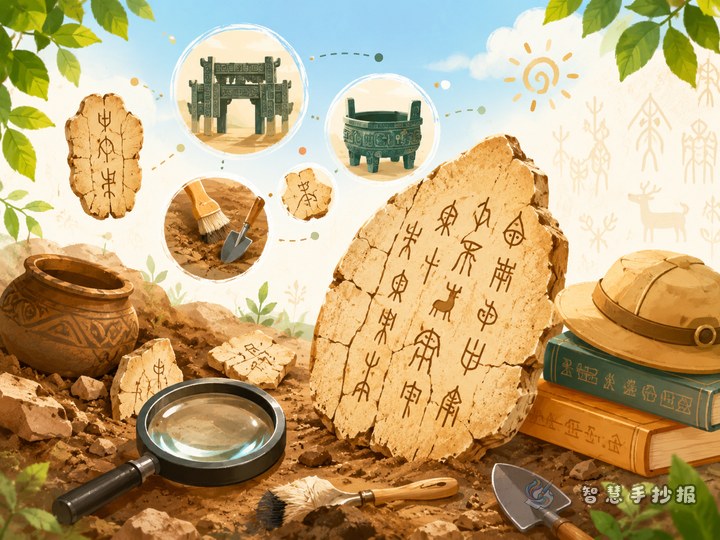
Students can write that some artifacts are found during road work, farming, field surveys, or after noticing pieces on the ground. This section can explain that discovery is not random treasure hunting but careful observation and research.
Section 2: What happens during excavation
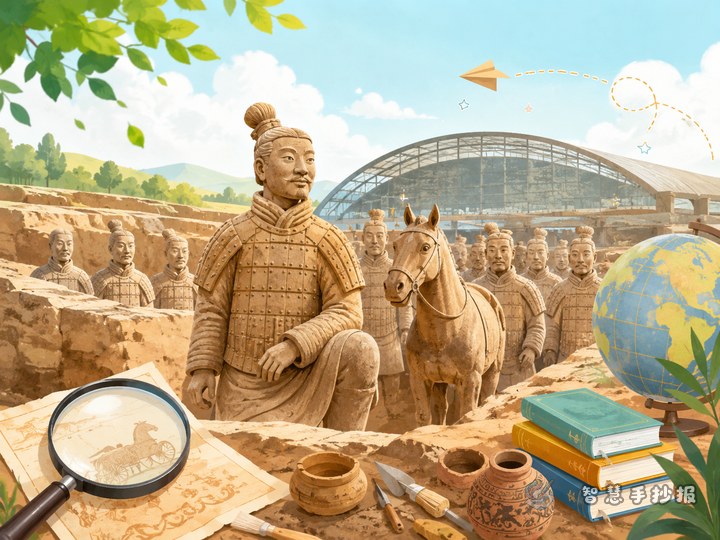
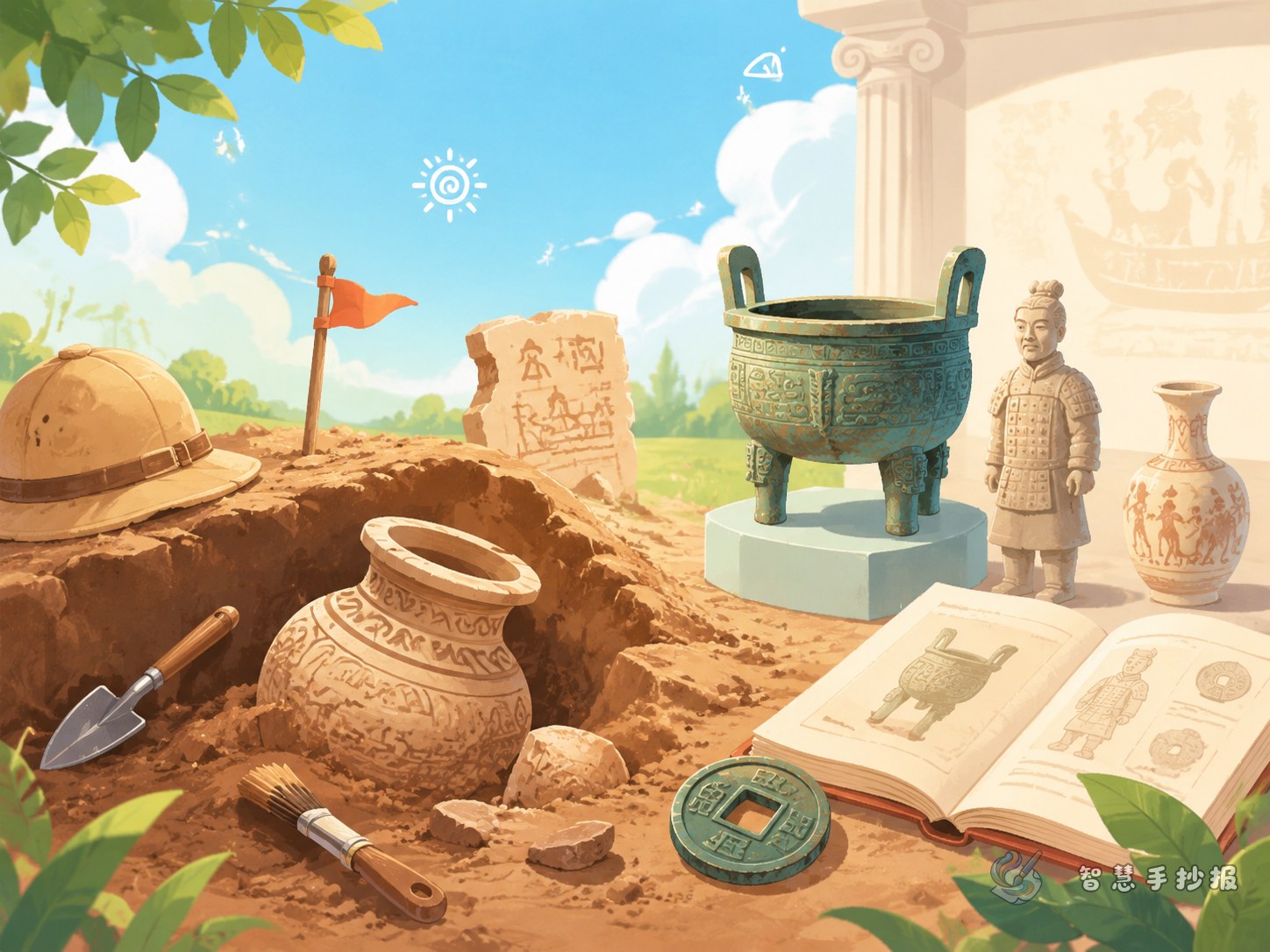
Write that archaeologists record the place, remove soil carefully, collect objects in order, and label everything. This gives the handwritten newspaper a scientific and structured feeling.
Section 3: Why restoration matters
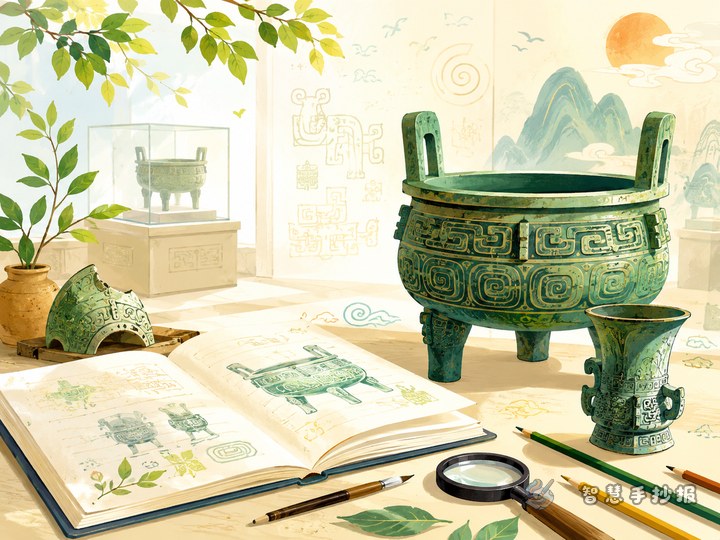
Many artifacts cannot be displayed immediately because they may be dirty, broken, or fragile. Restoration helps protect them and makes their historical value clearer.
Section 4: Entering the museum
After restoration, artifacts may be classified, studied, and displayed in museums. This section can show that museums protect memory, not just objects.
Section 5: What I learned from this discovery
This is a good place for personal thoughts such as “Artifacts are precious,” “Protecting relics means protecting history,” or “Each artifact is a message from the past.”
Short text materials for the poster
- Great discoveries often begin with tiny clues.
- Archaeology is careful scientific work, not casual digging.
- Artifacts need cleaning, restoration, and protection after excavation.
- Museums help history speak to people today.
- Learning about relics helps us understand the past.
- Protecting cultural relics means saving history for the future.
If there is still space on the page, students can add a small “Questions I Want to Ask” box, such as “How do experts know an artifact’s age?” or “Why were these objects made?” This adds curiosity to the design.
Choose a simple but effective layout
A timeline layout is perfect for this topic. Students can draw arrows from “clue” to “excavation,” then “restoration,” and finally “museum display.” Another good option is a large center title with section boxes placed around it.
- Main colors: earthy yellow, brown, dark green
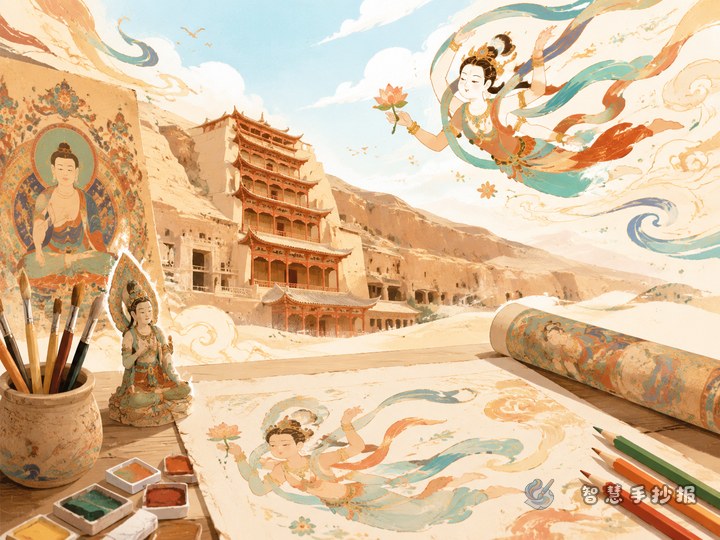
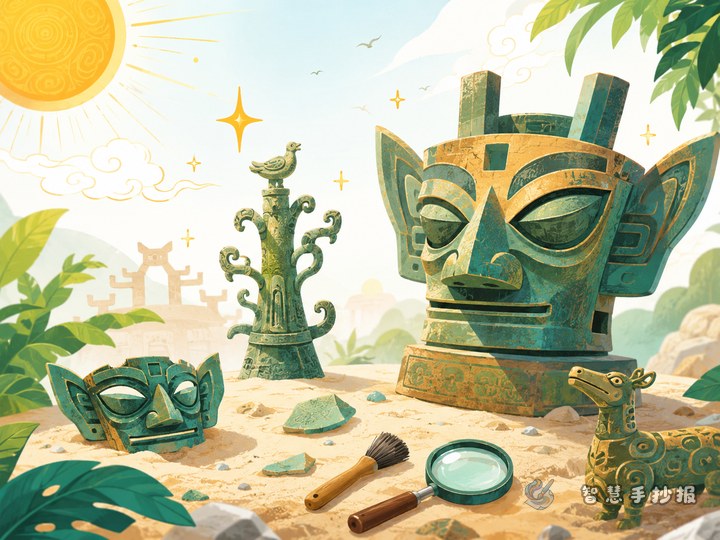
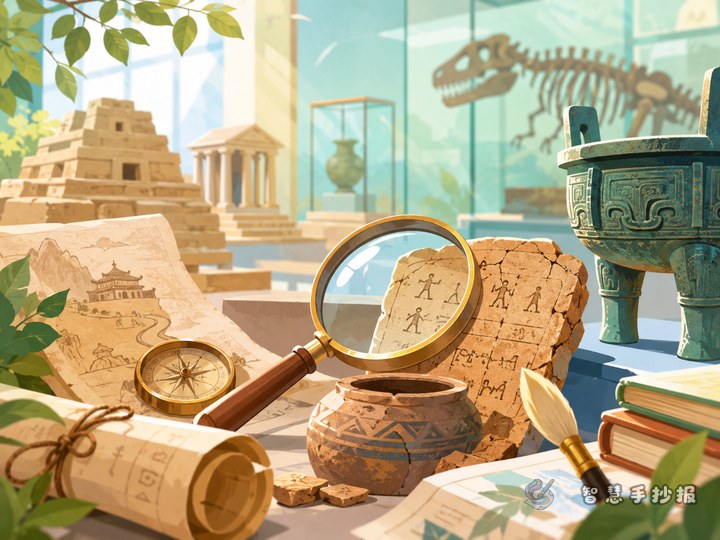
- Decorations: scrolls, pottery patterns, magnifying glasses, soft brush shapes
- Mini drawings: display cases, digging tools, broken pieces being matched, museum outlines
- Text tip: make the title bigger and keep body text short
Do not fill every corner with words. A little blank space will make the page look cleaner and more balanced.
Make it feel like a real handwritten newspaper
A good handwritten newspaper is more than copied facts. Students can add a box called “If I Were a Young Archaeologist” and write how they would protect relics. They can also create a simple artifact discovery flow chart with arrows and keywords. That makes the work informative and creative at the same time.
Before finishing, check three things: Is the title clear? Are the sections easy to see? Are the sentences short? After drafting the content, students can continue arranging the page in Zhihui Shouchaobao on WeChat for a cleaner and more polished result.