Choose a smaller angle to make the page stronger
Instead of covering all traditional Chinese buildings at once, focus on why the Forbidden City represents the beauty of traditional Chinese architecture. This makes the handout easier to organize and more visually connected. The Forbidden City is familiar to many students and offers clear points to write about, such as roof design, symmetry, colors, and cultural meaning.
A title like “Why Is the Forbidden City So Beautiful?” or “Traditional Architecture in the Forbidden City” feels natural and search-friendly while still fitting a school handout.
Four main kinds of content to include
1. Exterior features
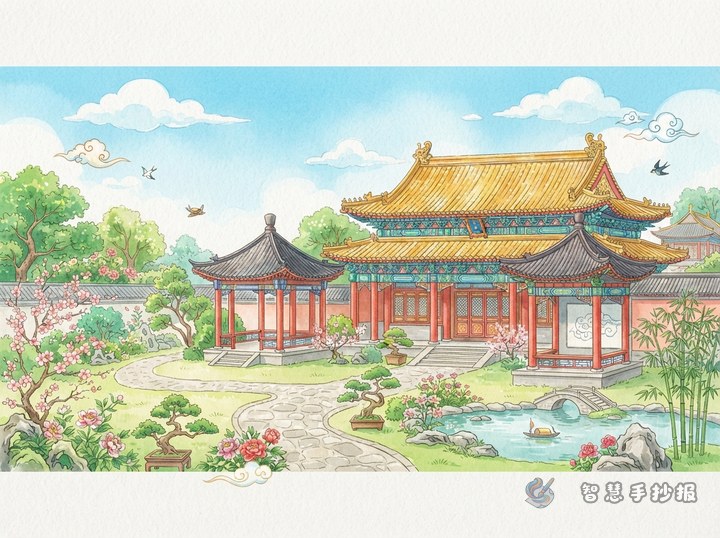
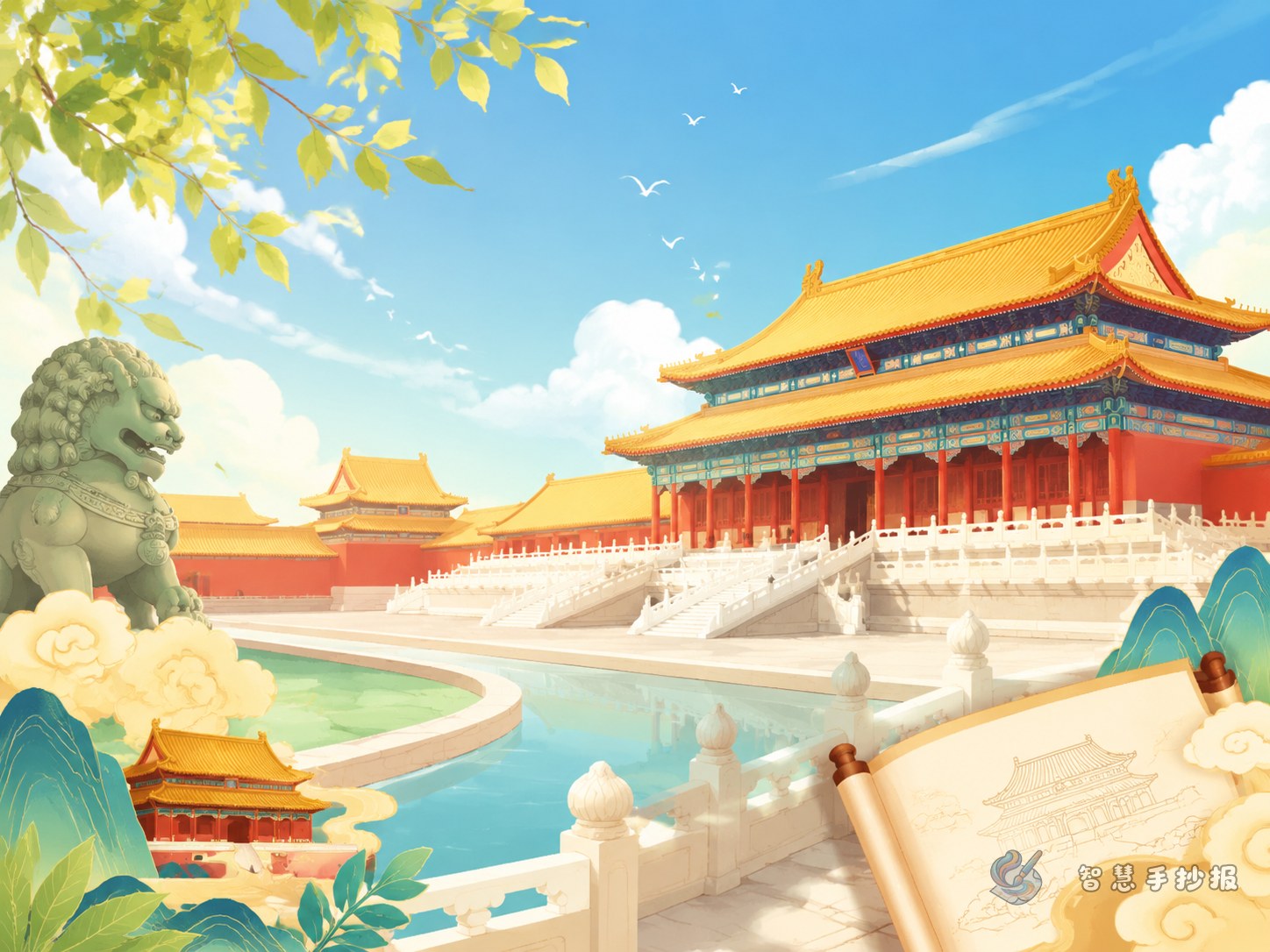
Students can describe the red walls, yellow glazed tiles, upturned eaves, tall platforms, large gates, and spacious courtyards. Short and simple lines work best, such as: The roofs rise upward at the corners, making the buildings look grand and elegant.
2. The beauty of layout
The Forbidden City follows a central axis and symmetrical design. This reflects order, balance, and ceremony in traditional Chinese architecture. A handout can explain that the most important halls are arranged in a clear north-south line.
3. Decorative details
Roof ornaments, bronze door studs, carved railings, and patterned window frames are all useful details. These small features show the skill of ancient builders and the refined style of the time.
4. Cultural meaning behind the buildings
The Forbidden City is more than a group of buildings. It reflects history, ritual, status, and traditional ideas of harmony and dignity. This helps students connect architecture with culture.
Short lines students can copy
- The Forbidden City is a classic example of traditional Chinese palace architecture.
- Its red walls and yellow roof tiles create a grand and formal style.
- Upturned eaves give the buildings movement and elegance.
- Symmetrical planning shows the beauty of order in Chinese architecture.
- Doors, windows, roofs, and stone railings all carry cultural meaning.
- Traditional buildings record history as well as artistic taste.
If the page is small, choose three or four lines. If the page is larger, add one or two extra sentences to explain each point.
Create a palace feeling through layout
This topic works best with a neat and balanced page design. Put the main title at the top and shape it like a plaque or palace gate. Then divide the page into three or four sections, almost like courtyards in a palace complex.
- Top area: main title with clouds or roofline decorations.
- Center area: a short paragraph about the beauty of the Forbidden City.
- Side sections: layout, color meaning, and decorative details.
- Bottom area: a closing sentence about traditional culture.
Red, yellow, brown, and a little black outlining can help the page look more traditional and eye-catching.
Easy decorations that match the theme
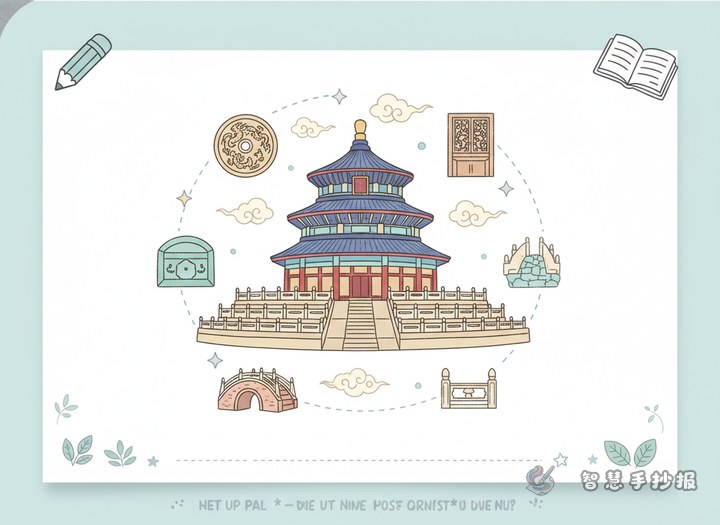
You do not need complex drawings. Simple lanterns, clouds, palace doors, window lattice patterns, roof corners, and floral borders are enough to give the handout a traditional look. Thick title lettering can also make the design feel more like an old plaque.
If time is limited, repeat easy patterns such as tile borders or symmetrical cloud shapes. Repetition saves time and keeps the whole page consistent.
A simple ending that sounds complete
The ending can be short but meaningful. For example: The Forbidden City is beautiful not only because of its appearance, but also because of the history and culture it carries. Learning about traditional architecture helps us better understand Chinese civilization.
After finishing the text, families and teachers can also continue refining the layout, colors, and title style in the Zhihui Shouchaobao WeChat mini program.