Start with a clearer angle: recognize characters through opera masks
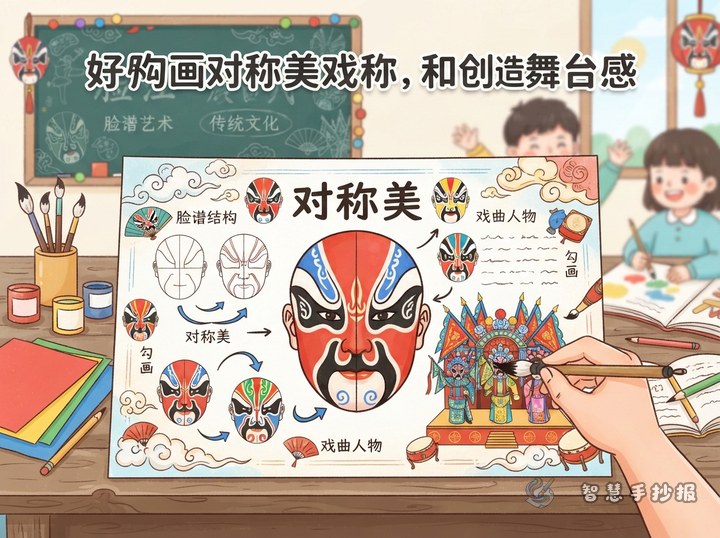
If you want a hand-copied poster that feels cultural and easy to organize, a smart angle is “Recognizing characters through opera masks”. Instead of only talking about colors, this topic explains how masks help the audience understand a role’s identity, personality, and dramatic presence at a glance.
You can place the main title at the top with a short introduction, then divide the body into sections such as “What masks do,” “How to read the patterns,” “Character types in opera,” and “My favorite mask.” This makes the page clear and visually balanced.
Useful content blocks you can directly include
Section 1: What is the purpose of an opera mask?
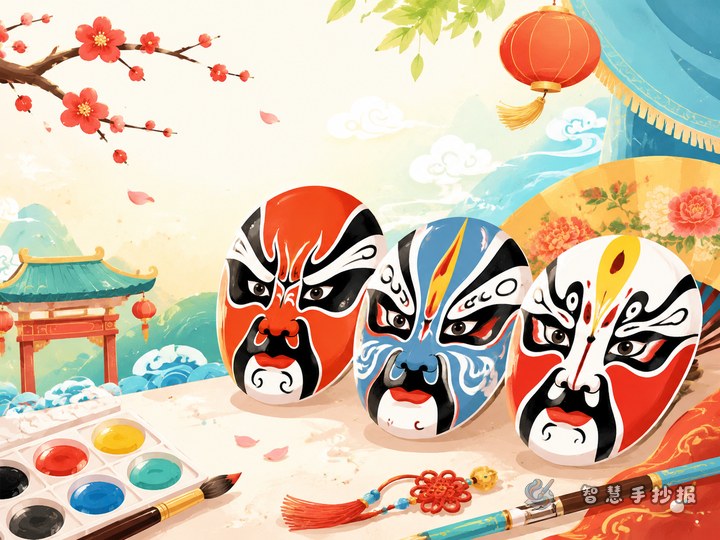
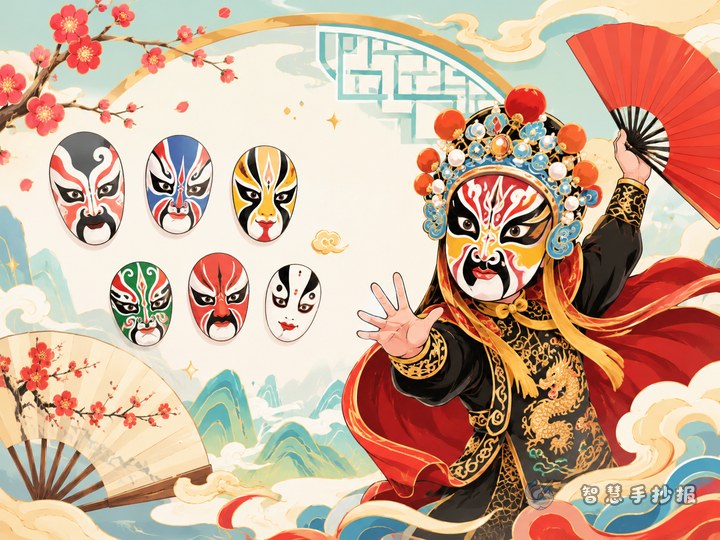
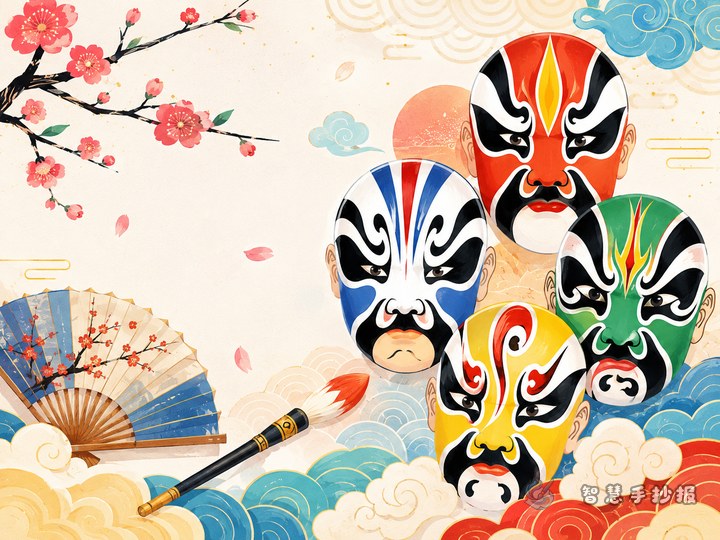
Opera masks are an important part of traditional Chinese stage art. The painted face is not only decorative. It helps highlight a character’s personality, identity, emotional tone, and dramatic role. When the audience sees the mask, they can often understand the character more quickly.
Section 2: How do we look at mask patterns?
Common design changes appear on the forehead, eyebrows, eyes, nose bridge, cheeks, and around the mouth. Different lines create different feelings: thick lines suggest strength, curved lines feel lively, symmetry feels solemn, and exaggerated patterns make a role more memorable.
Section 3: Masks and opera characters
Not every opera role wears a highly detailed painted face. Usually, the more vivid and dramatic characters use stronger mask designs. A good sentence for a poster is: opera masks are part of the stage language, helping a character speak through appearance before speaking through words.
Simple writing ideas for elementary students
- One definition: An opera mask is a traditional stage face-painting art used to express character traits.
- One feature: It combines color, lines, and patterns to make a character image more vivid.
- One personal thought: I think opera masks are like pictures that can speak because they show personality so clearly.
- One cultural meaning: Learning about opera masks helps us understand the charm of traditional Chinese culture.
If space is limited, do not write too much. Two to four sentences in each section are enough. Add small headings and borders to keep the page neat.
A layout idea that looks striking and organized
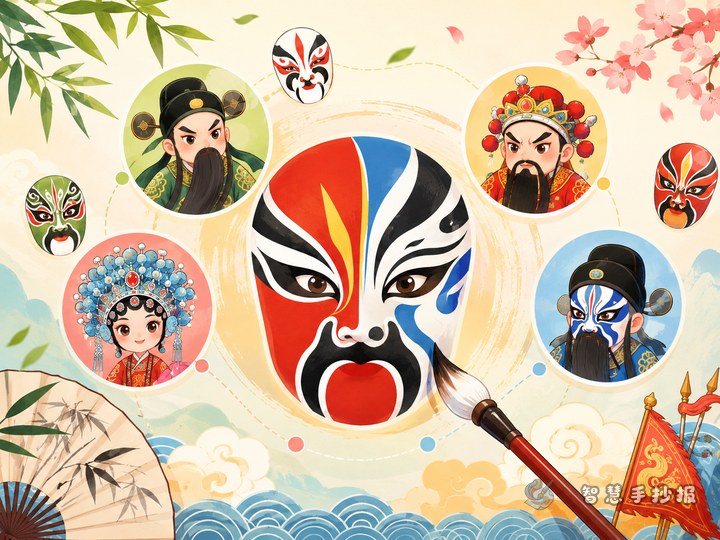
This topic works very well with a strong visual center. Draw a large opera mask in the middle, then place short text sections around it. This creates a “center image plus four knowledge corners” layout, which is easy for students to make and easy for readers to follow.
- Write the main title across the top.
- Draw a large mask outline in the center and keep it mostly symmetrical.
- Use the upper corners for short knowledge sections.
- Use the lower corners for reflections, fun facts, or a mini creative design idea.
For colors, red, black, gold, and blue work well, but do not fill the whole page with color. White space helps the key content stand out. After drafting your page, you can also explore more layout inspiration in the Zhihui Shouchaobao WeChat mini program.
How to finish the poster neatly
Your ending does not need to be long. A short conclusion is enough: traditional opera masks combine painting, design, and performance, making them a unique part of Chinese culture. By creating this poster, we can appreciate both the beauty of opera and the depth of traditional heritage.
If you want to add one more personal touch, include a small box titled “The mask I want to design” or “The opera character I want to learn about.” That will make the work feel more original and lively.