Start with a clear angle: make the mask meaningful
If you are preparing a poster about Peking opera masks, a practical theme is what mask colors tell us about a character. This gives your page a clear focus and makes it easier to combine drawings with short text. A title such as “What Do Peking Opera Mask Colors Mean?” feels natural and search-friendly.
Do not stop at saying the masks look beautiful. Explain that opera masks help the audience quickly understand a role’s personality, identity, and dramatic style on stage. That makes the poster informative as well as decorative.
Easy facts students can write on the poster
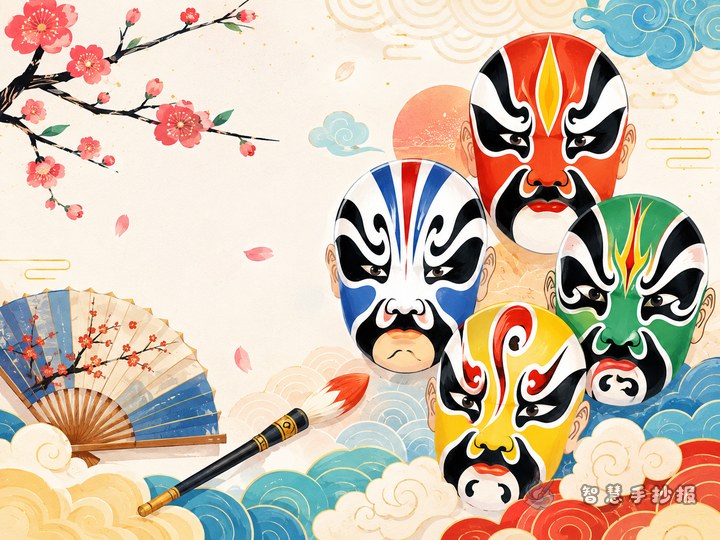
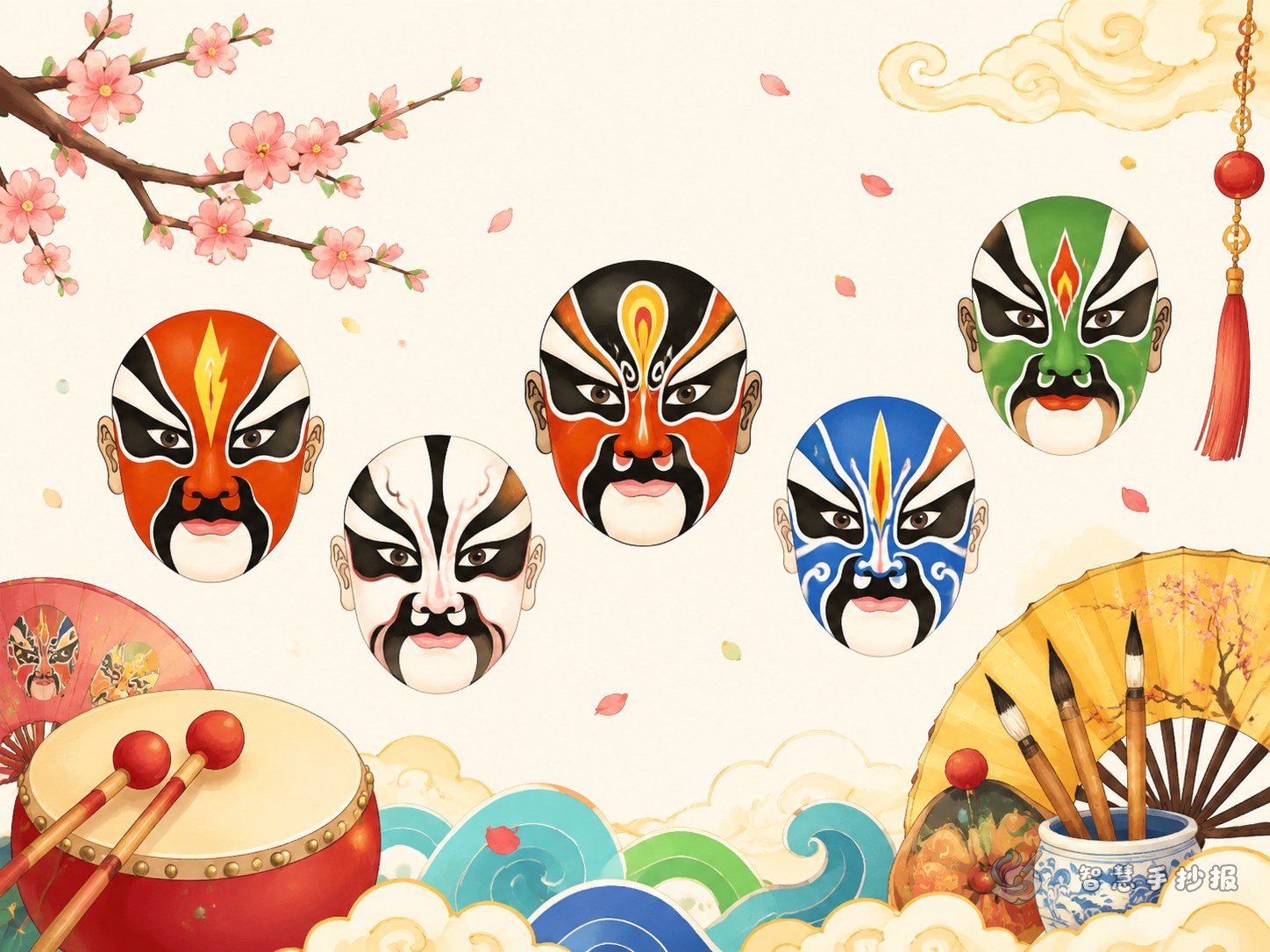
- Red masks: often suggest loyalty, courage, and upright character.
- Black masks: often represent fairness, firmness, and honesty.
- White masks: are commonly linked with suspicion, cunning, or complicated roles.
- Blue or green masks: may show boldness, strength, and a strong personality.
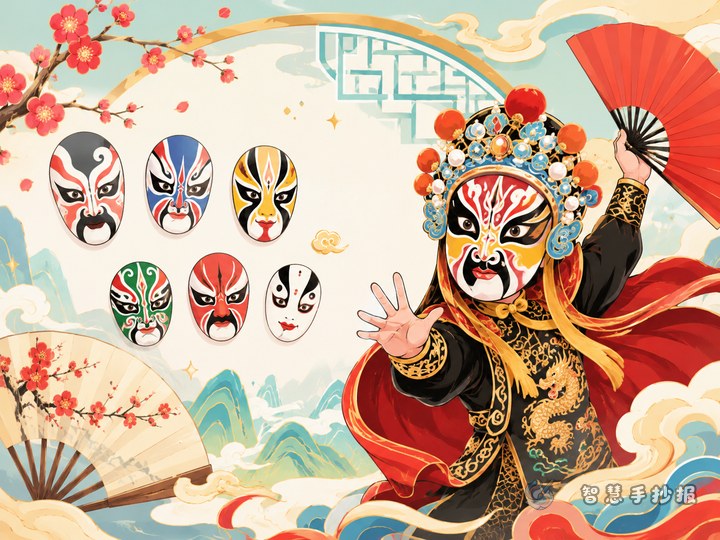
- Gold and silver masks: are often used for gods, spirits, or legendary characters.
Keep each explanation short so it is easy for children to copy by hand. A small mask drawing beside each color note will make the layout lively and clear.
Sections you can place directly on the page
Section 1: Color meanings of opera masks
Divide the page into small boxes and write one color, its meaning, and a few key words such as “red: loyal and brave” or “black: upright and strong.” This is the most useful core section.
Section 2: My favorite opera mask
Choose one simple mask design and introduce its colors, balanced patterns, and overall feeling. Three to five sentences are enough and leave room for decoration.
Section 3: A quick note on traditional opera
You can add short facts such as “masks are not painted randomly” or “costumes, singing, movement, and masks work together to shape a role.” This makes the poster more complete.
How to arrange the page for a strong visual effect
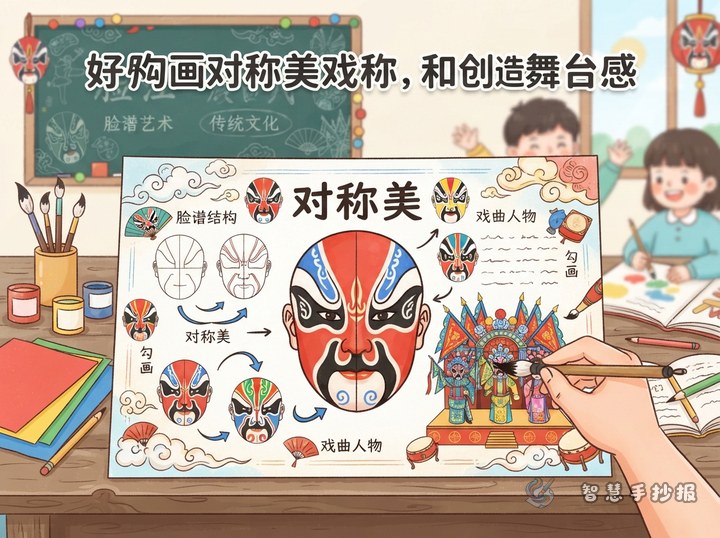
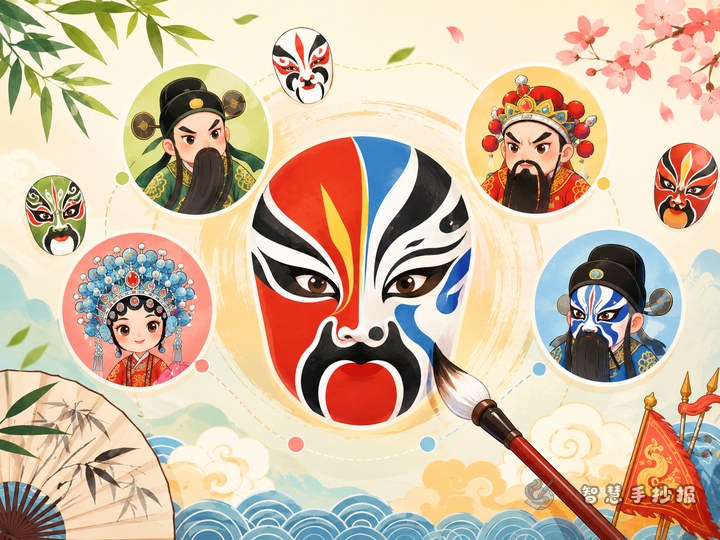
A very effective layout is one large mask in the center with smaller sections around it. Put a full face outline in the middle, then place color notes, cultural facts, and a short personal reflection around the sides or corners. Decorative borders such as cloud patterns, stage-style lines, or fan shapes can add a traditional touch, but keep them simple.
Good main colors include red, black, gold, and blue. These shades create a strong opera feeling and help separate different sections. If you want to keep improving the layout, color matching, and decorative details, you can continue in the Zhihui Shouchaobao WeChat mini program.
Short closing text for the poster
Traditional opera masks turn personality into color and pattern, helping the audience understand a role at a glance. Their bold designs and rich meanings show the beauty of Chinese opera culture. By making a handwritten poster about mask art, students can learn about traditional culture while enjoying drawing, writing, and creative page design.