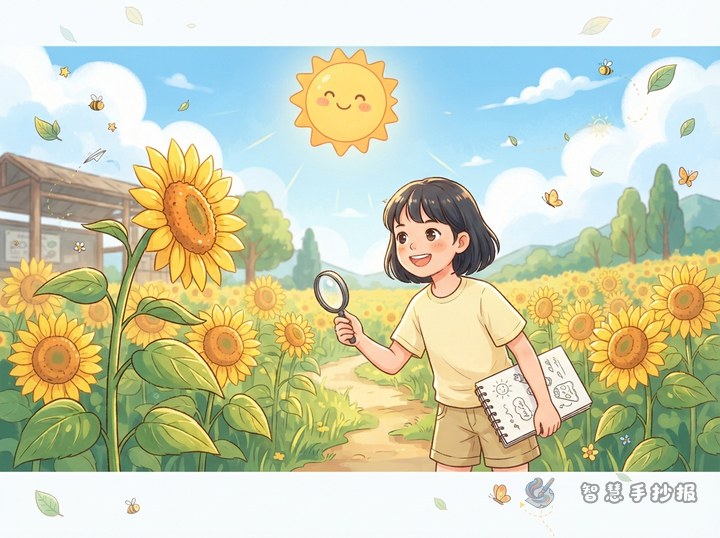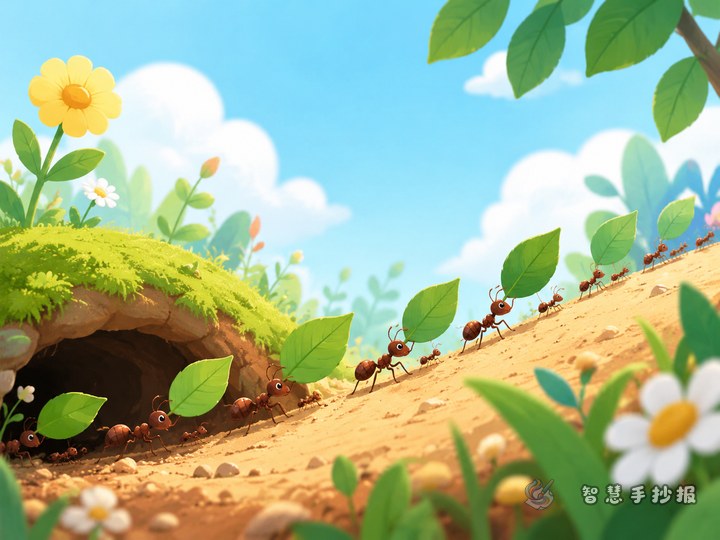
Start with a clear focus
A poster about common insects on campus works well because the topic is specific, easy to observe, and meaningful for children. Instead of collecting random facts, the poster should answer a simple question: what insects can we find around school, what do they look like, where do they appear, and why do they matter in nature?
You can use titles such as Common Insects on Campus, My Campus Insect Observation, or Discovering the Insect World at School. A short subtitle like “nature study” or “science observation record” can make the layout feel fuller.
What to include on the poster
1. Insect profile cards
- Name: ant, butterfly, ladybug, dragonfly, bee, cricket
- Appearance: wing shape, body color, antennae, legs
- Where seen: flower beds, grass, tree roots, corners, near the playground
- When active: morning, afternoon, after rain, evening
2. Short observation notes
Add a few simple first-hand records. For example: “I saw two ladybugs resting on a leaf near the flower bed. Their red backs had black spots.” Or: “After the rain, I could hear crickets more clearly from the grass beside the playground.” These details make the poster feel real and lively.
3. Why insects are important
- Bees help pollinate flowers
- Dragonflies catch some small flying insects
- Ladybugs eat aphids and help plants
- Ants show that the environment is full of life and activity
4. Observation rules
You can include reminders such as “look without catching,” “observe quietly,” “do not damage plants,” and “do not touch unfamiliar insects.” This adds both science awareness and good behavior to the poster.
A simple layout that works well
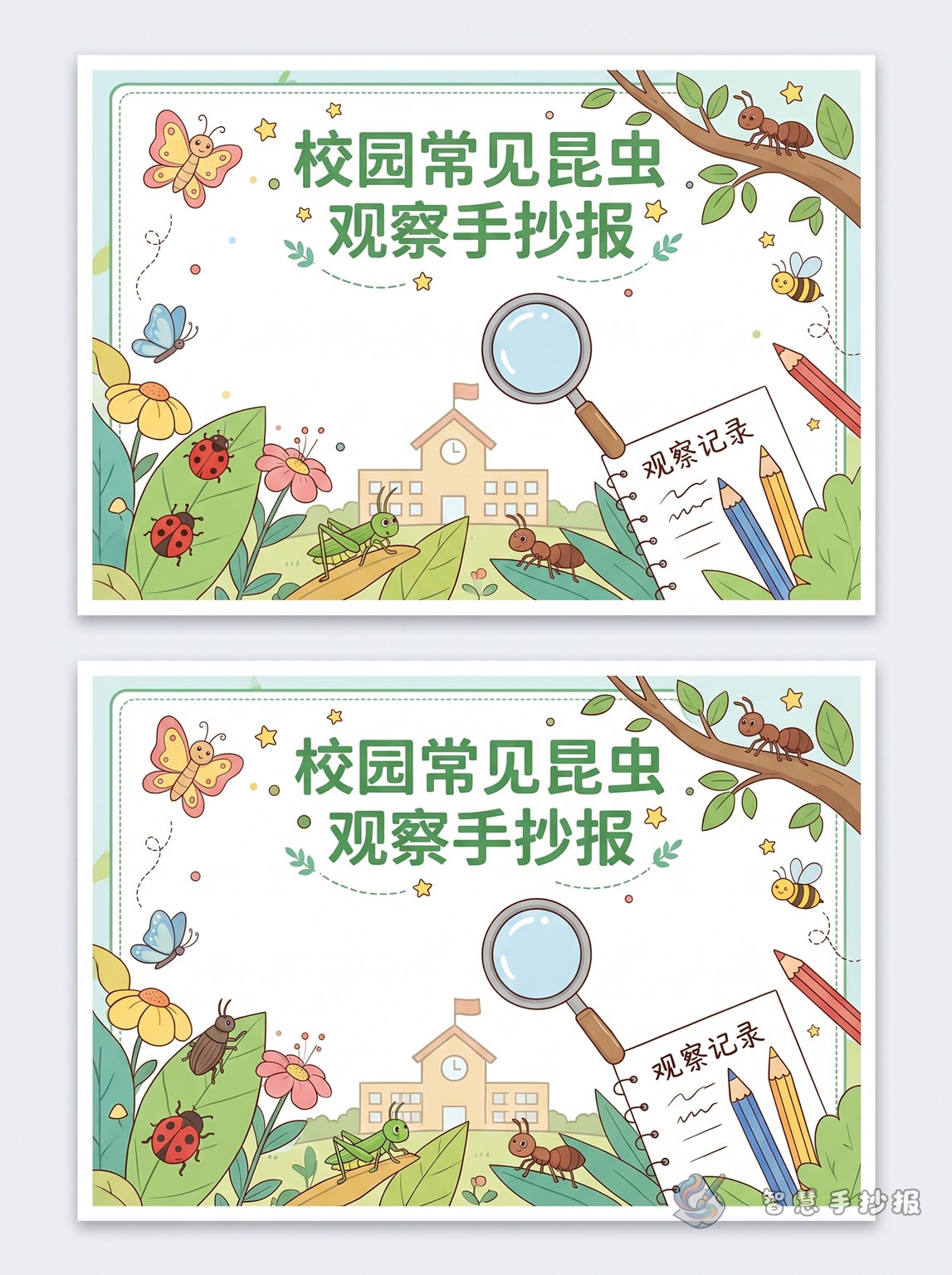
Use a large title in the center or top area, then divide the page into sections. One side can be for insect profile cards, another for observation notes, and the lower part for insect roles and nature care tips. This structure is easy for primary school students to write and decorate.
- Top: title with small drawings like leaves, magnifying glasses, or insect tracks
- Left: 3 to 4 common campus insects
- Right: time, place, weather, and what was observed
- Bottom: short protection tips and a conclusion
If there is still extra space, add a small box called “The insect I want to observe next” to make the work more personal.
Ready-to-use text ideas
Opening: A school campus is not only made of classrooms and playgrounds. In flower beds, under trees, and among the grass, many tiny insects are busy living their lives. Careful observation helps us discover a wonderful natural world.
Conclusion: Insects may be small, but they are an important part of nature. By observing insects on campus, I learned to notice details and to respect every small living thing around me.
Call to action: Let us become young nature observers, protect the environment, and learn more from the living world around our school.
Color and decoration tips
Choose green, light yellow, and sky blue as the main colors for a fresh natural feeling. For decoration, draw leaves, grass, flowers, and simple insect sketches. Butterflies, ladybugs, and dragonflies are especially good because they are easy to recognize and make the poster look bright and lively.
If you want to keep improving the layout, change the title style, or add more sections, you can continue your design in the Zhihui Shouchaobao WeChat mini program.