Build the page around the life cycle of a frog
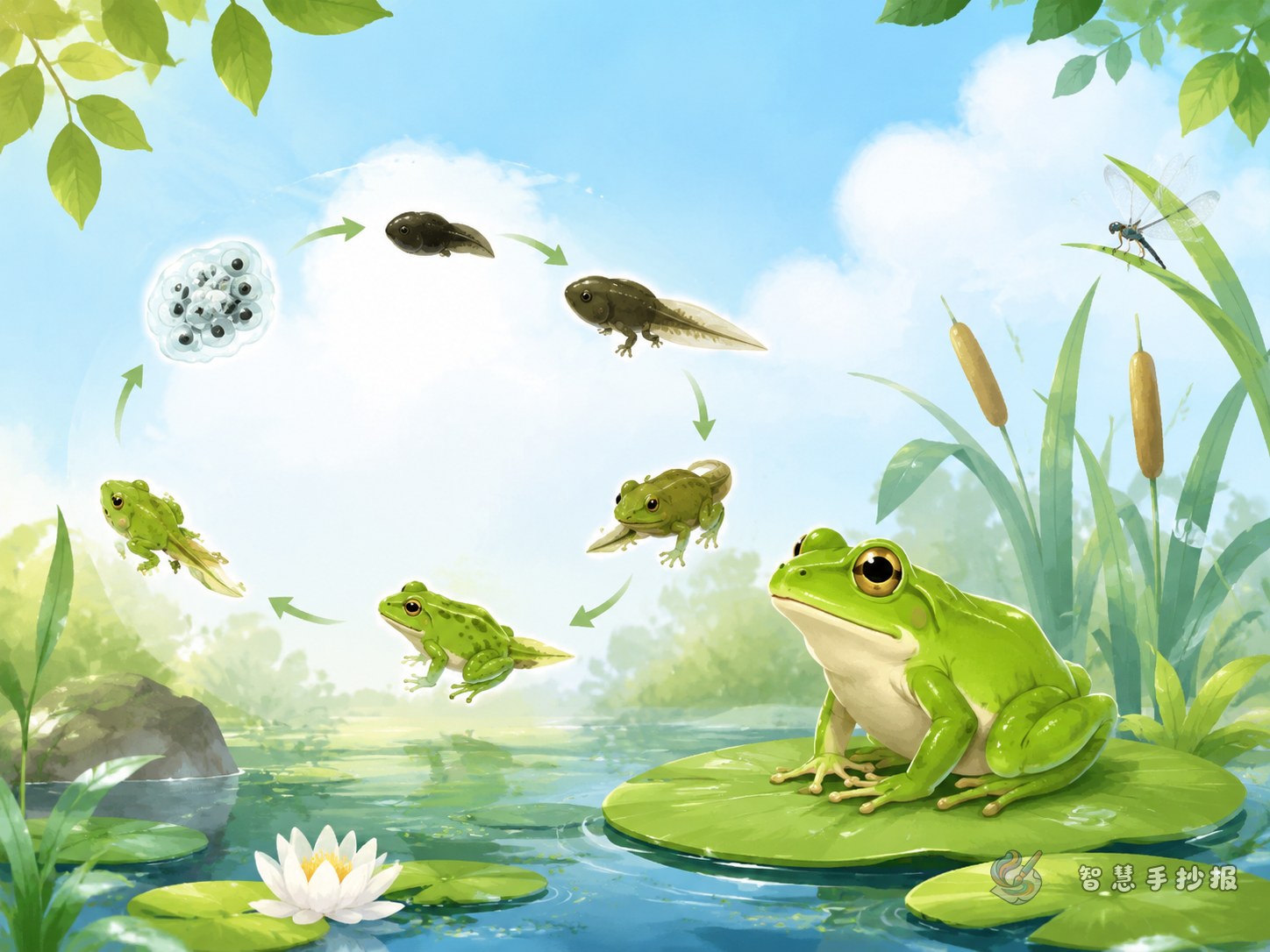
This topic works best when the whole handwritten newspaper follows one clear line: egg, tadpole, legs growing, tail shrinking, and adult frog. A life-cycle theme makes the page easy to read and helps students organize both facts and drawings.
You can add a short opening sentence under the title, such as A frog begins life in water and changes step by step into an adult that can jump and catch insects.
Useful sections you can place on the page
Section 1: Stages of growth
- Frog eggs are usually laid in water and protected by a jelly-like layer.
- A young tadpole looks a bit like a tiny fish and swims with its tail.
- Tadpoles usually grow back legs first and then front legs.
- As they grow, the tail becomes shorter and shorter.
- An adult frog can live near water and move well on land.
Section 2: My observation notes
Students can write simple observation-style sentences to make the page feel more lively. For example: The tadpoles were dark and round with long tails. After some time, I noticed their bodies became bigger and small legs began to appear.
Section 3: Why frogs matter
Frogs eat mosquitoes and other small insects, so they are helpful in nature. This section gives the handwritten newspaper a stronger science and environmental meaning.
Section 4: How to protect frogs
- Do not catch frogs or tadpoles casually.
- Do not throw trash into ponds or ditches.
- Protect wet places and waterside plants.
- Observe quietly without disturbing animals.
Try a pond-map layout for the design
A great layout idea is to arrange the stages like a path across the page. Put eggs on one side, then tadpoles in the middle, and the adult frog at the end. Use arrows to connect each stage so the change is easy to understand.
Decorations can include water ripples, lotus leaves, reeds, bubbles, and tiny pond details. Soft green, blue, and light yellow work well for this nature science theme.
If the page feels empty, add these small materials
- Useful words: swim, grow, change, observe, tail, legs, jump, insect.
- Simple sentence: A tadpole slowly changes into a frog through several stages of growth.
- Science fact: Frogs are amphibians. They live in water when young and can move on land when older.
- Protection slogan: Protect frogs, protect our natural home.
How to make the final page neat and clear
Sketch the sections lightly in pencil first, then write the title, add short text blocks, and finish with borders and drawings. Keep each paragraph short so the page stays clean and easy to read. If you want more layout ideas, title styles, or matching designs, you can continue creating in the Zhihui Shouchao Bao WeChat mini program.