Why Grade 1 and Grade 6 Should Not Use the Same Layout
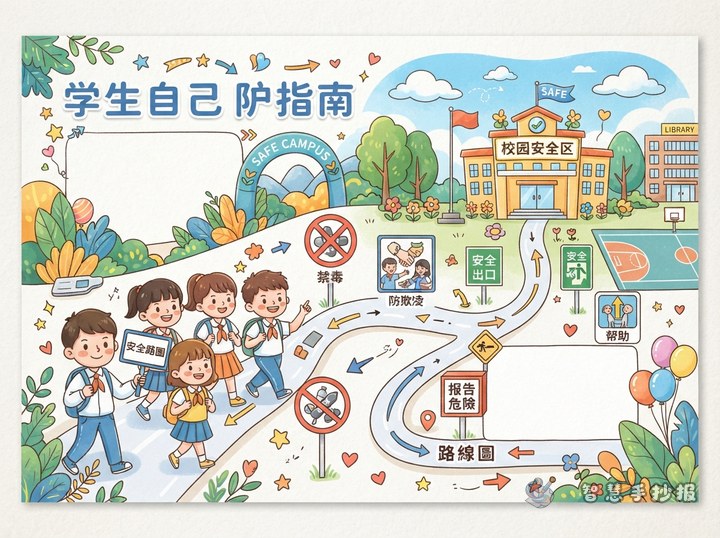
A handwritten newspaper about staying away from drugs and standing up to bullying works best when it matches the person writing it. Younger students write slowly and recognise fewer characters, so their page should shout the few most important lines. Older students can follow cause and effect, so their page should answer "what happens, and what can I do?" Decide this first, and the columns, wording and drawings will all fall into place.
- Lower grades: large letters, short lines, more pictures, three or four boxes.
- Upper grades: paragraphs with real methods and steps, five or six boxes.
- Both: keep one box for "who I can ask for help".
For Younger Students: Big Letters, Short Lines, Three or Four Boxes
There is no need to fill every corner. Divide the paper into three or four areas, let each area explain one thing, and keep the sentences to about ten characters so the child can copy them without getting tired.
Column ideas
- Title banner: across the top, for example "Say no to danger, protect yourself", in the largest letters.
- Things I will not do: add simple warning signs and write "I do not take sweets from strangers" and "I do not walk off with strangers".
- If someone bullies me: write "say no loudly", "tell my teacher", "tell my parents".
- My safety handprint: draw a hand and write the name of one helpful adult on each finger.
Short lines to copy
- Never accept things from people I do not know.
- If someone hits or pushes me, move away first, then report it.
- If someone calls me names, I do not laugh and I do not join in.
- When I feel scared, I must speak up.
For Older Students: Show the Steps, Not Only the Slogan
A page filled with slogans looks thin. Split the content into three steps: recognise, refuse, report. Write a short paragraph for each step so a reader immediately knows what to do.
A column set that works
- Spotting danger: what should never be touched, and which jokes have gone too far.
- Three ways to say no: refuse directly, find a reason to leave, or walk away together with a friend.
- Who to ask, in what order: first person, then second person, written as a clear sequence.
- What bystanders can do: do not crowd around, do not cheer, go and fetch an adult.
- My promise: one sentence in your own words, with a signature and date.
What to put inside
For the drug prevention part, focus on attitude and action rather than description: never accept drinks, pills or sweets of unknown origin; if someone says "just try it once" or "you are not a real friend if you refuse", answer "I do not need it" and walk away. For the anti-bullying part, write that pushing, hiding someone's things, cruel nicknames and being left out of a group are not jokes. Note the time and place, and tell a trusted adult.
Layout Rules That Help Both Grades
- Give the title banner about the top third of the page and keep it away from the edge.
- Draw the column lines lightly in pencil first, then erase them at the end.
- Limit the colours to three or four: blue, green and orange for blocks, red only for the most important warning.
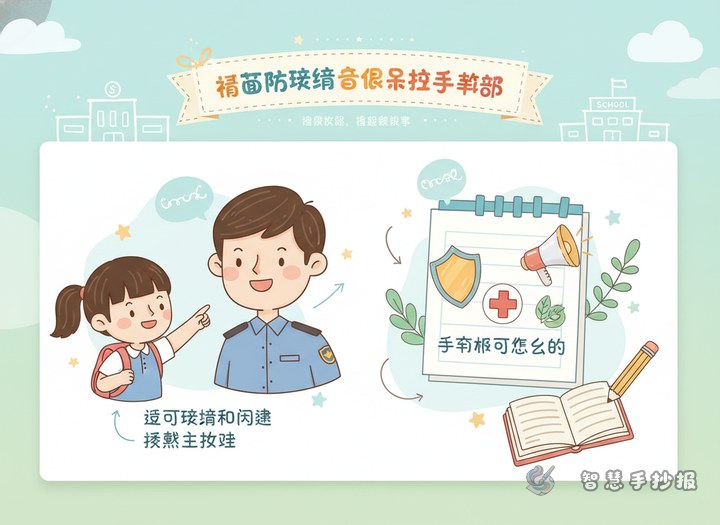
- Choose easy shapes for drawings: a shield, a traffic light, a hand, a warning sign, a small megaphone.
- Alternate text blocks and picture blocks instead of putting all the words on one side and all the art on the other.
The Order to Build the Page
- Decide the title words and position, and sketch the outline in pencil.
- Divide the page into columns and note how many lines each one needs.
- Write the text first, and draw the pictures last so nothing covers the words.
- Check for missing or wrong characters, then go over the lines and colour them in.
- Add your class and name, and press the paper flat.
If you are not sure how to start, open the Smart Handwritten Newspaper mini program in WeChat, choose a theme and a layout style, and look at where the columns and information blocks sit. Then copy the idea onto real paper in your own handwriting, which saves time and keeps the fun of drawing it yourself.