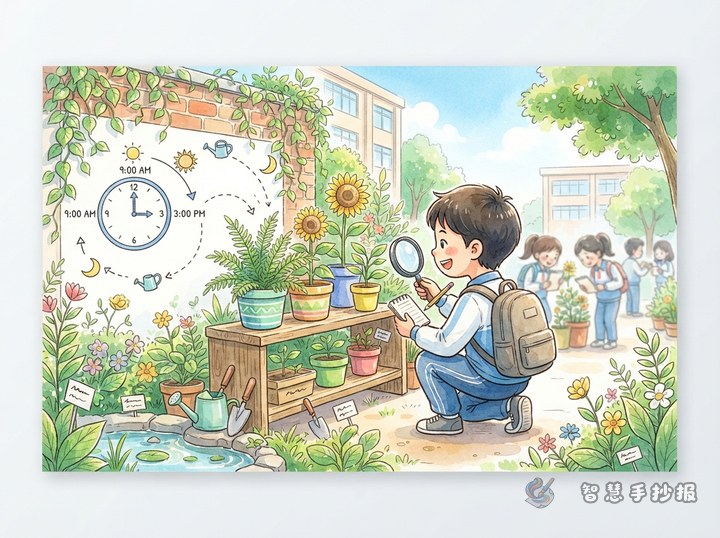
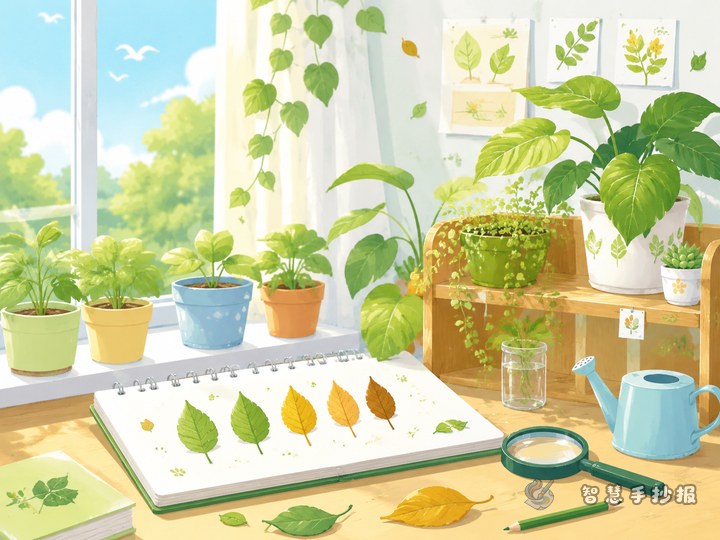
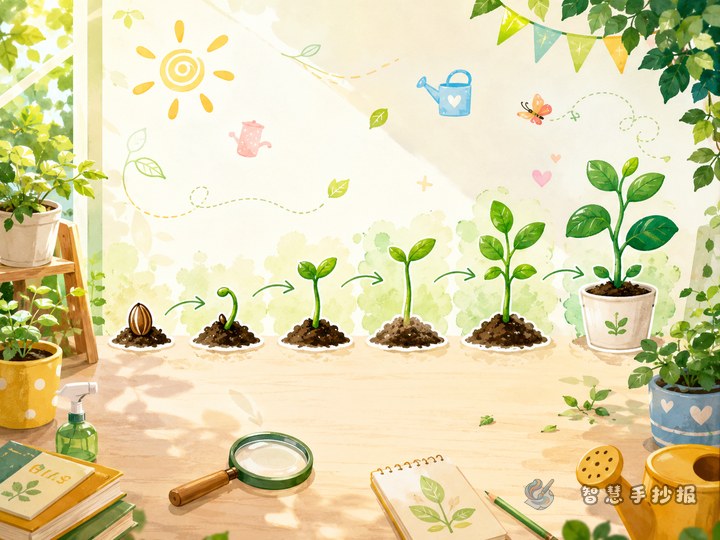
Build the poster around the idea of sprouting
A school plant corner offers many things to observe, but a poster does not need to include everything. If you center the work on germination, the content becomes easier to organize. You can follow the plant from seed to sprout through stages such as before planting, shell cracking, first root, and tiny leaves opening.
You may also add a short subtitle near the main heading, such as “Watching a seed wake up” or “From seed to little sprout,” to make the page feel more child-friendly.
Useful sections that fit this theme well
Plant profile
- Name of the plant
- Date of planting
- Observation place
- Preferred growing conditions
This section works well in a corner of the page because it is short and helps readers understand the topic quickly.
Growth timeline
- Day 1: no obvious change
- Day 3: the seed coat starts to crack
- Day 5: a small white sprout appears
- Day 7: the sprout gets longer and greener
- Day 10: tiny leaves begin to grow
A timeline gives the poster a clear order and looks nice with arrows, dots, or soft line decorations.
What I discovered
- The seed sprouts faster with enough water
- Leaves look brighter with more sunlight
- Even the same plant can change a little differently each day
This section sounds more natural when written in the first person, like a real school observation diary.
Short writing lines you can use directly
If you do not know what to write, start with simple sentences:
- The little seed rested quietly in the soil and then slowly cracked open.
- At first the sprout was pale, and later it turned light green.
- Plants do not speak, but they grow a little every day.
- Observing the plant corner taught me to be patient and careful.
You can also add a personal line such as “I learned that sprouting does not happen all at once, but through small daily changes.”
Keep the layout clear instead of crowded
A germination observation poster looks good with a center title and four surrounding sections. Put the main title in the middle, then arrange the plant profile, timeline, notes, and reflections around it. This makes the page tidy and easy to read.
For colors, light green, pale yellow, and soft brown work especially well. Decorations can include leaves, flowerpots, water drops, and sunshine, but they should support the text rather than overpower it.
Small details that make the poster stronger
If you want the final work to feel more complete, remember these details:
- Write the date for each observation
- Use numbers for height or leaf count when possible
- Keep each section to about three to five lines
- Highlight key words like sprout, grow taller, and turn green
If your content is ready and you want a cleaner final layout, you can continue making the poster in the Zhihui Shouchao Bao WeChat mini program for a more polished result.