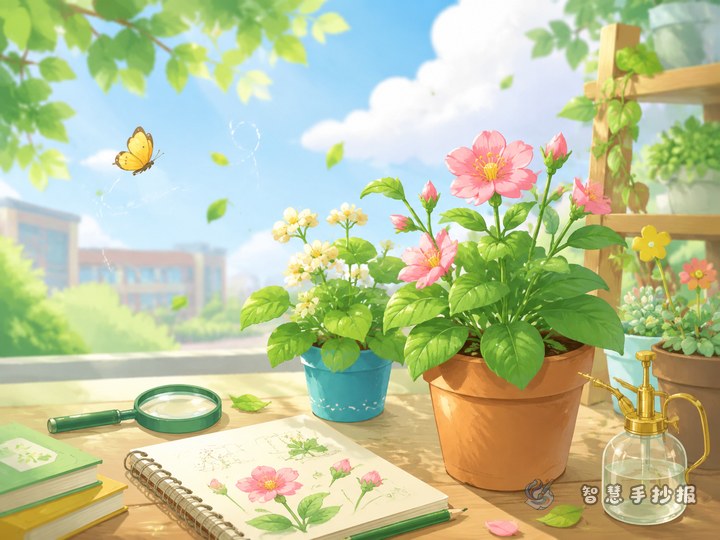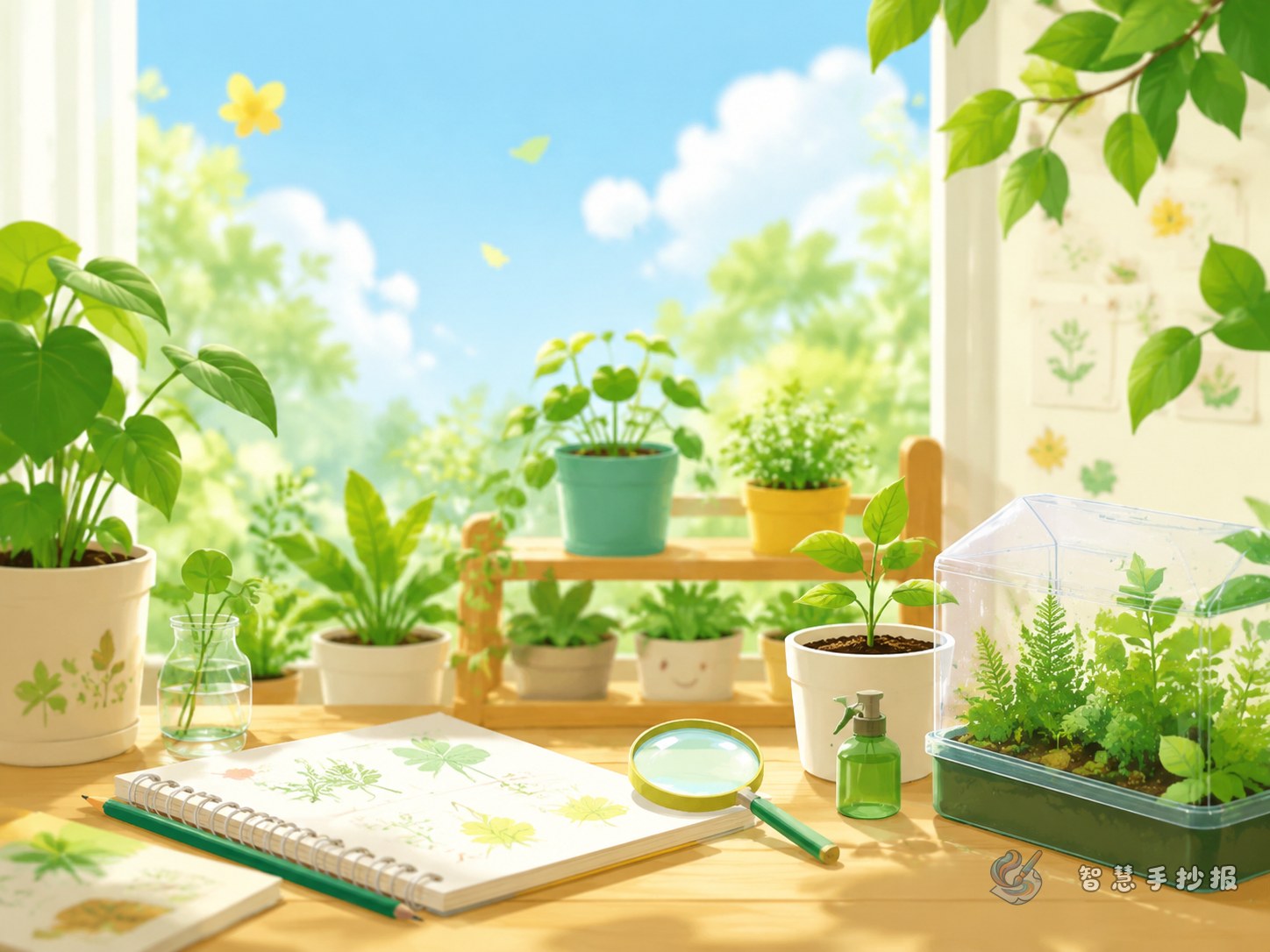
How to build a weekly plant observation page
A strong handwritten newspaper works best when one plant becomes the main focus. Instead of describing many plants at once, students can choose one pot and follow it through a week. This makes the content more specific and easier to organize.
- Plant profile: name, location, and basic features
- Weekly notes: daily or every-two-day changes
- Care record: watering, sunlight, and loose soil
- My discovery: what changed the most
Useful text ideas students can write
Good observation writing should be simple but detailed. Young students do not need complex scientific terms. They only need to note what they really saw.
- The leaves became greener than last week.
- A small new bud appeared near the stem.
- The soil looked dry, so we watered it in the morning.
- The plant leaned toward the window where the light was stronger.
Layout ideas that match the diary theme
A weekly theme looks neat with a timeline design. Students can place Monday to Friday in order and add one sentence under each day. Another option is a four-block layout: plant profile, observation notes, changes, and reflection.
- Top area: title and plant name
- Middle left: observation notes by date
- Middle right: comparison of leaves, height, or buds
- Bottom area: what I learned from taking care of the plant
Decoration that fits a school plant corner topic
Keep the decoration fresh and light. Small leaf borders, watering cans, flowerpots, and sunshine icons are enough. The focus should stay on the observation content, not on crowded drawings.
Colors such as green, light yellow, and sky blue help the page feel natural and clean. If students want a faster result, they can continue adjusting the layout in the Wisdom Handwritten Newspaper WeChat mini program.
How to make the content feel more thoughtful
To improve the quality of the page, students can add one short conclusion after the weekly notes. For example, they may write that plants need regular water, enough sunlight, and careful watching. This shows not only what they saw, but also what they learned from the observation process.