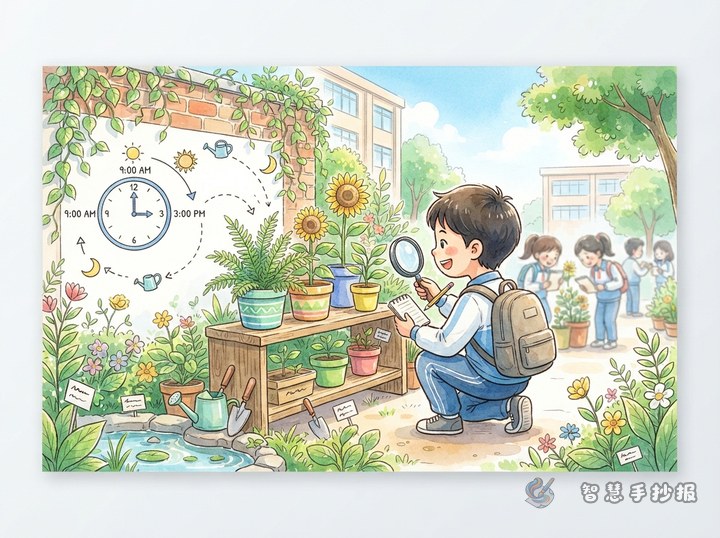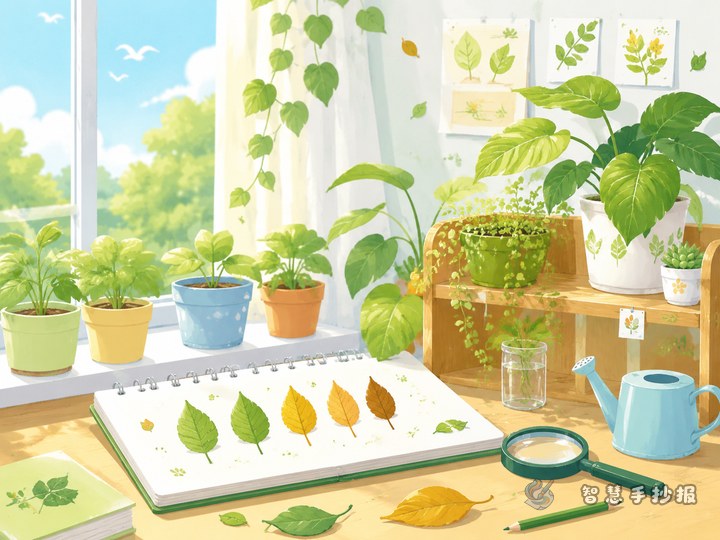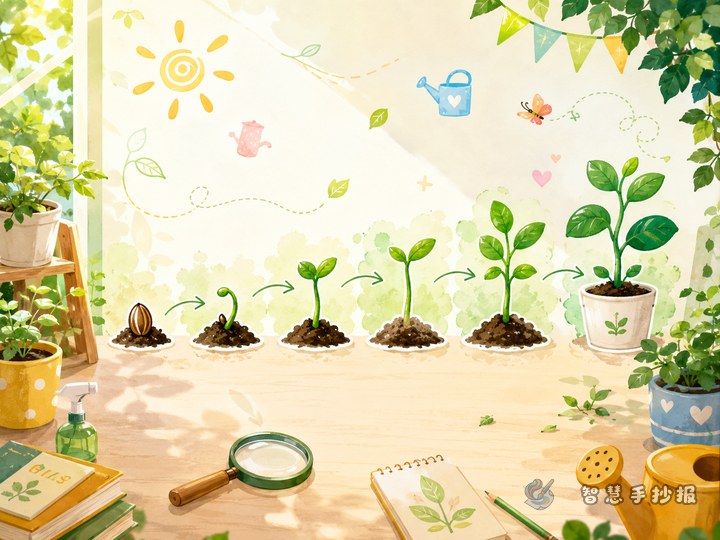
Start by deciding the main focus
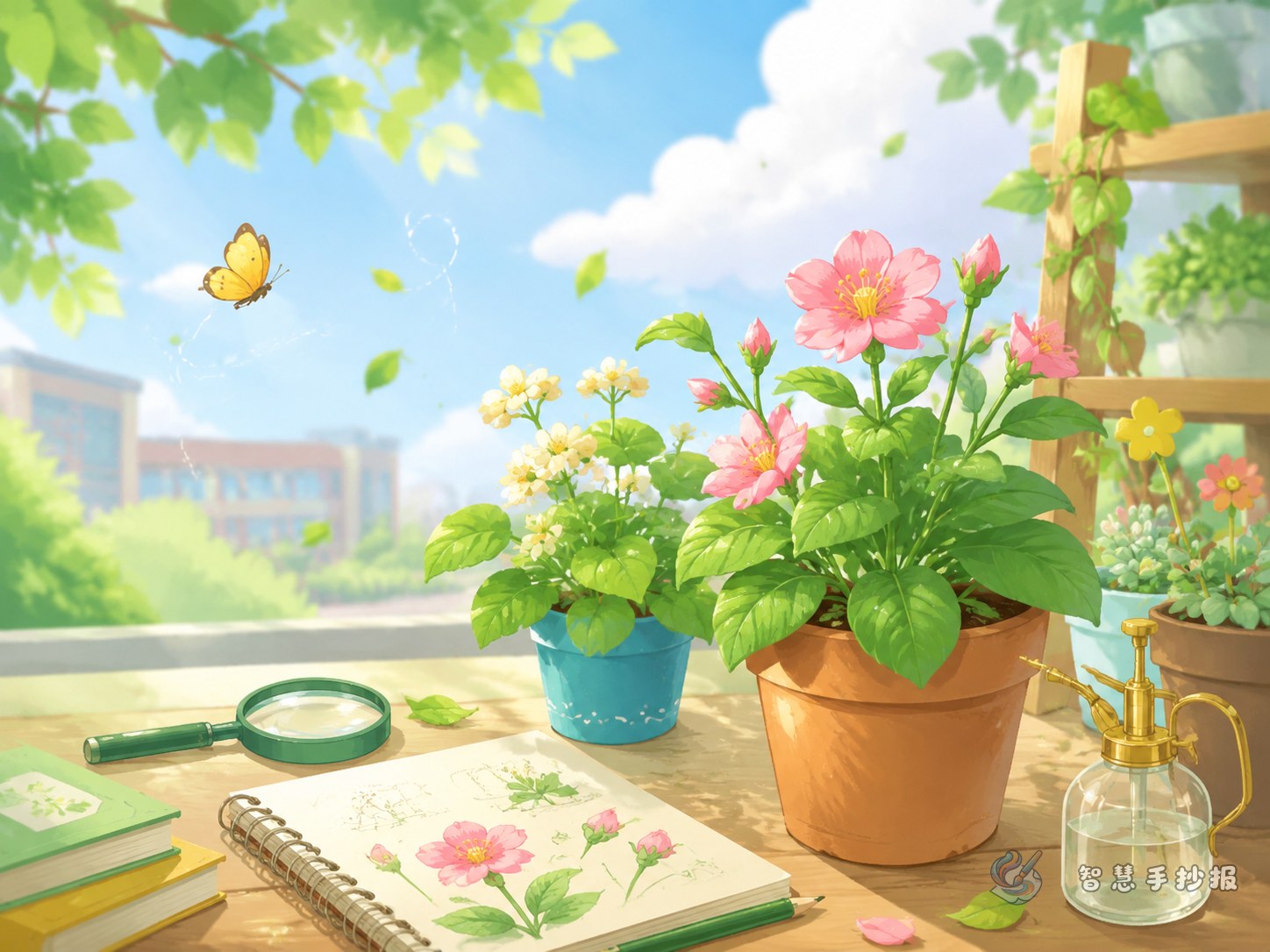
A campus plant corner flowering observation handwritten newspaper works best when the theme is how a flower slowly opens. This kind of topic is stronger when it shows a process, not just the final result. Try to record the stages from bud to full bloom.
You do not need a rare plant. A classroom flowerpot, a small rose, or any blooming plant in the school plant corner can become a good subject if your observation order is clear.
Details worth noticing during blooming
- When the bud first appears: small, tightly closed, and often pale in color.
- Right before blooming: larger bud, deeper color, and a looser top.
- On the opening day: petals begin to unfold little by little.
- After full bloom: the flower shape becomes clearer and the color looks brighter.
- Your feelings: surprise, curiosity, excitement, or a stronger wish to care for the plant.
These details make the handwritten newspaper feel like a real observation diary.
Section ideas that feel fresh
Option 1: Follow the timeline
- I found a flower bud
- The bud grew day by day
- The moment it bloomed
- What I learned
Option 2: Write like a young nature reporter
- Plant profile
- Before and after blooming
- My daily notes
- Care reminders
Both structures are easy for students to use and can be adjusted for different grade levels.
Ready-to-use writing lines
Observation sentence examples:
- A few days ago it was only a tiny bud, but today it looks full and ready to open.
- The edge of the petals can now be seen, and the color is brighter than yesterday.
- When I checked the plant corner in the morning, I found that the flower had quietly opened halfway.
- The blooming flower looks like a smiling face and brings a spring feeling to the classroom.
- I enjoyed this observation because the plant changed a little every day.
Short ending example:
A flower does not bloom all at once. It changes little by little in quiet time. By observing it carefully, I found that the plant corner is not only a decoration in the classroom, but also a living nature diary.
How to arrange the page
A timeline layout fits this theme very well. You can place three stages such as bud, half-open flower, and full bloom from left to right or top to bottom. Under each picture, add one or two short observation lines.
- Put the title in a flower-shaped frame for a lively look.
- Keep the text in clear blocks instead of one long paragraph.
- Green, pink, and yellow work well for a fresh plant-corner style.
- If your text is short, add a small “My Discovery” box to balance the page.
Final checklist before finishing
- Did you describe change, not only the final bloom?
- Did you include your own feelings and observations?
- Are the section titles easy to understand at a glance?
- Is the page balanced with enough white space?
If your notes are ready but you want a neater final handwritten newspaper, you can continue making it in the Zhihui Shouchao Bao WeChat mini program.