Build the whole poster around leaf changes
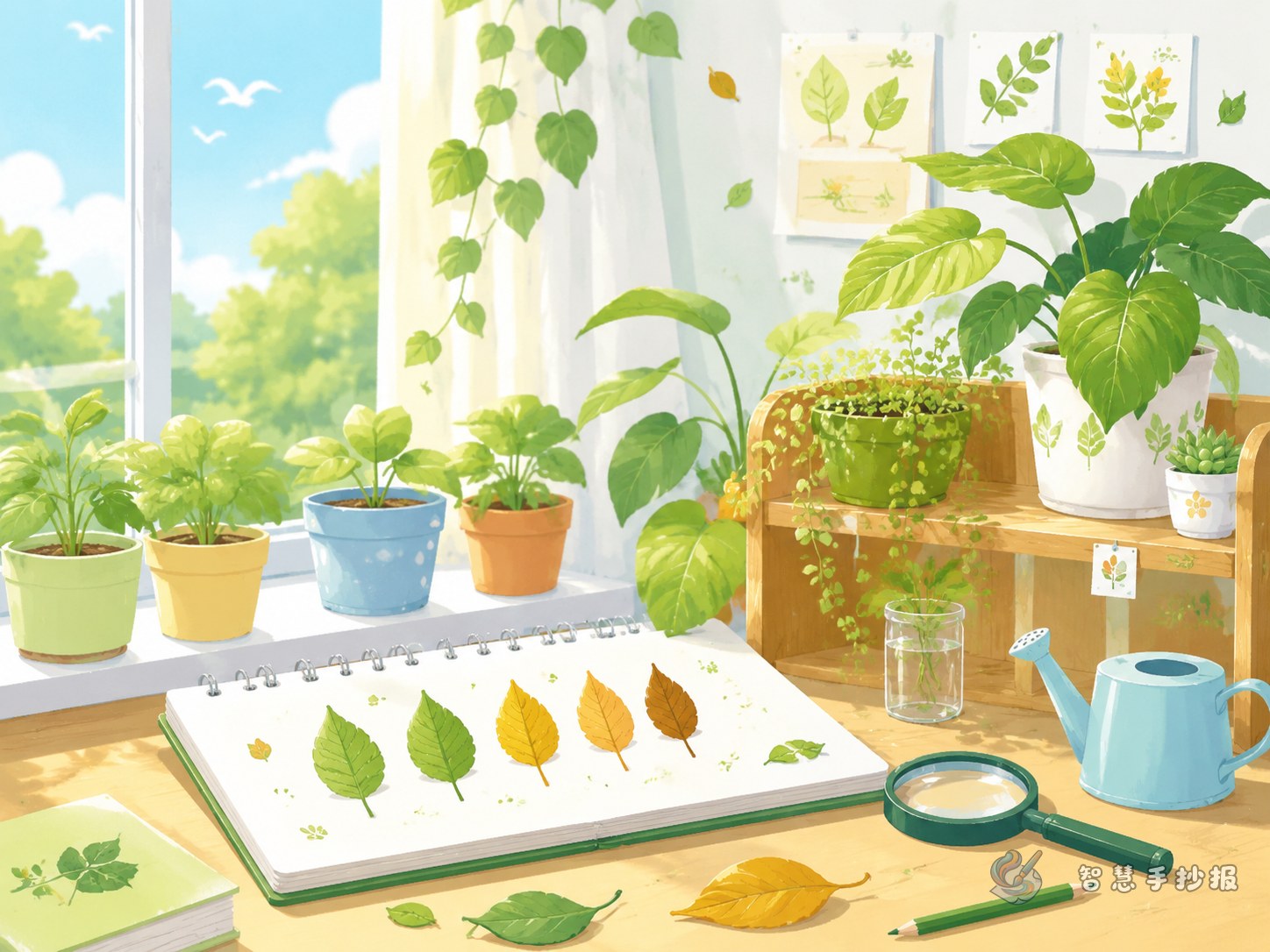
If you are making a campus plant corner observation diary poster and do not know where to begin, leaf changes are one of the easiest angles to use. Leaves often show small but clear differences, such as deeper color, larger size, curled edges, or a smoother surface. These details are perfect for a real observation-based handwritten newspaper.
A simple title like “Leaf Change Observation in Our School Plant Corner” or “What I Found on the Leaves” works well. It gives the page a clear focus and makes it easy to arrange dates and notes.
Useful sections you can place on the page
1. What I saw today
Write two or three short sentences about the most obvious change you noticed that day.
- The leaves looked greener than last week.
- A tiny new leaf appeared beside the stem.
- The leaves near the window were brighter and bigger.
2. Leaf change timeline
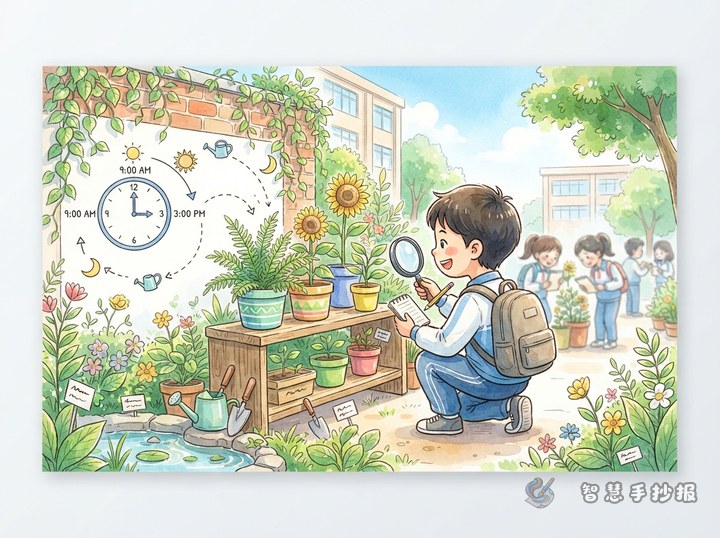
Divide the observation into three or four dates. One sentence for each date is enough and looks neat on a poster.
- Day 1: The leaves were small and light green.
- Day 4: The leaves opened more and felt soft.
- Day 7: The color became darker and a new tip appeared.
3. Little plant facts
This part does not need difficult science. You can write simple facts such as leaves need sunlight, water, and air, or that yellow leaves may be caused by too much sun or not enough water.
4. How I care for the plant
Add a short section about watering on time, not pulling leaves, and reminding classmates to observe gently. This gives the poster a caring school-life feeling.
Sentence ideas for young students
These lines can be copied or adapted to make the content sound natural and lively.
- I found that the plant looked more energetic each day.
- The new leaves were lighter in color and full of life.
- Some leaf edges curled a little, as if asking for careful care.
- After several days, I noticed that leaves in sunny places grew faster.
- Plants do not speak, but their leaves tell many secrets.
You can also end with a short feeling, such as learning to observe carefully and to take care of living things patiently.
Layout ideas that make it feel like a real diary
The key point of this kind of poster is not too much decoration, but showing continuous observation. A timeline layout or note-card layout works especially well.
- Put the main title at the top in green, light yellow, or light brown.
- Use the center area for a timeline that connects different dates.
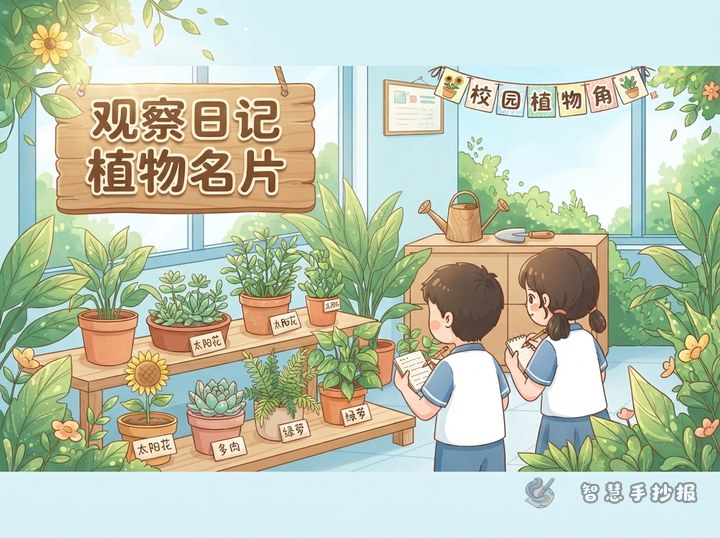
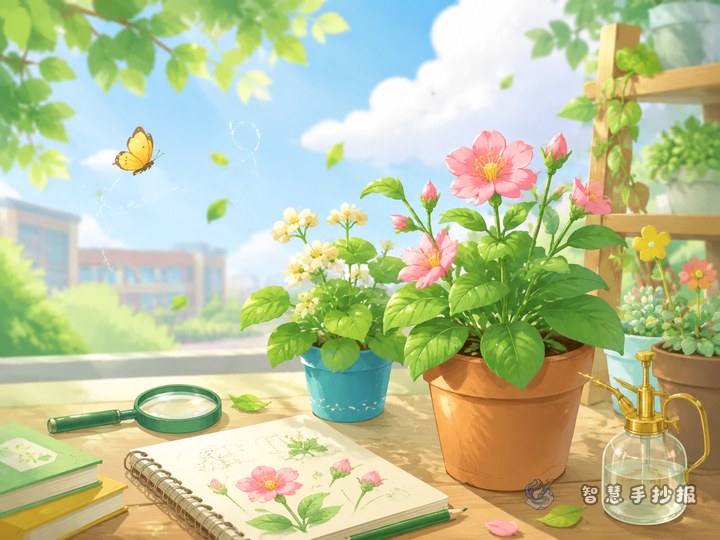
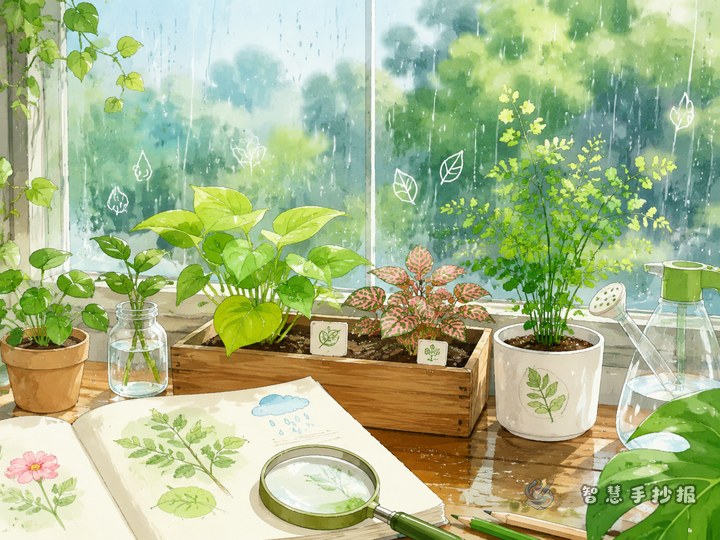
- Decorate the edges with leaves, flowerpots, watering cans, or a small magnifying glass.
- Use bold mini-headings so teachers and classmates can read the key parts quickly.
If you want the page to look more lively, write each observation inside a leaf-shaped note box.
Small details that improve the final result
Many students turn this topic into a general plant introduction, but a better way is to place “what I observed” first and “what I learned” second. That keeps the focus on the diary style.
- Do not only write the plant name. Write the changes you saw.
- Do not fill the whole page with long paragraphs. Short sentences work better.
- Do not make every section the same size. A clear main part looks nicer.
- Do not forget dates, because they make the observation feel real.
If you already have your topic and notes but want a faster way to finish the layout, you can continue in the Zhihui Shouchaobao WeChat mini program and turn your ideas into a cleaner, more attractive poster.