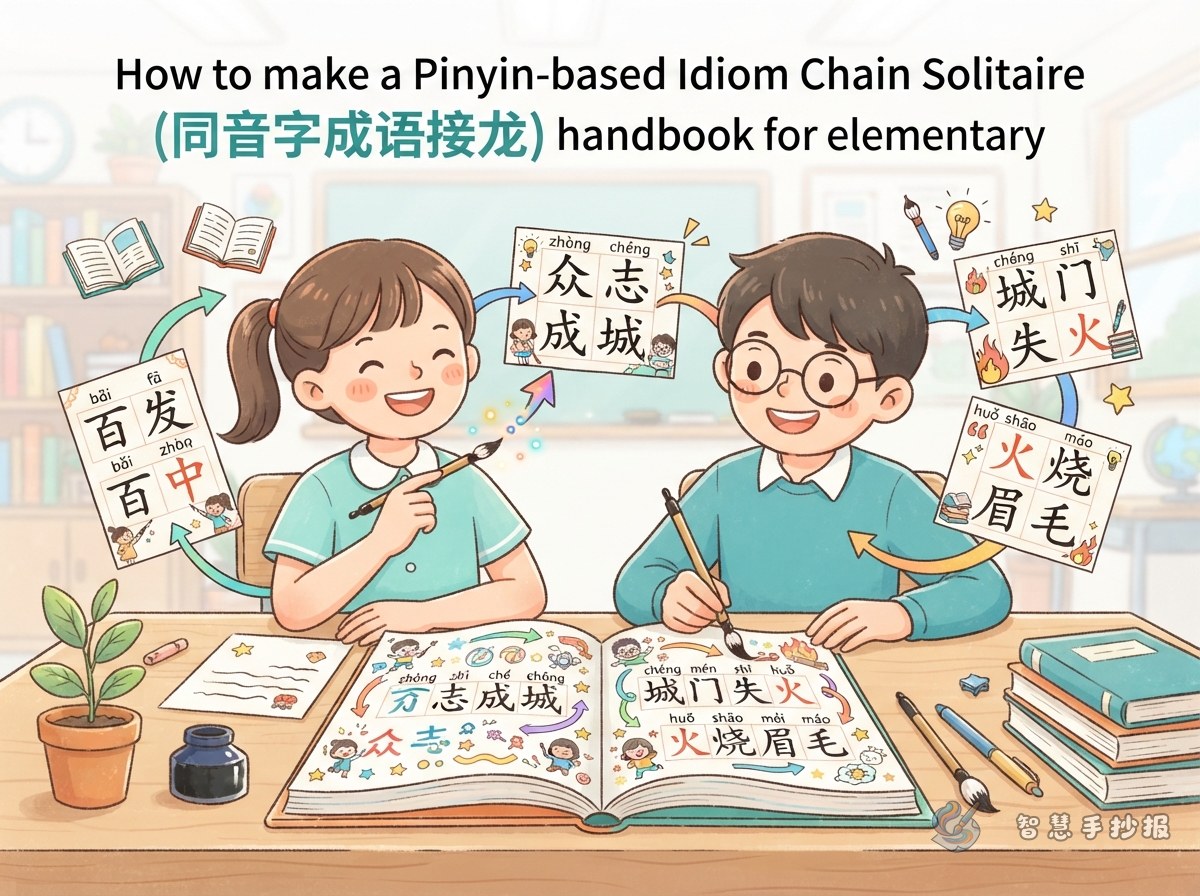
Set One Clear Homophone Rule
The main feature of this poster is the way one idiom leads to another through matching sounds rather than matching written characters. Under the title, explain that the final character of one idiom and the first character of the next must have the same pronunciation. Decide in advance whether the tones must match as well.
- Use standard idioms: Choose familiar and correctly formed four-character expressions.
- Show each link: Color the connecting characters alike and add their pinyin.
- Stay consistent: Do not switch between exact-character, homophone, and near-sound rules halfway through the chain.
Build the Design Around a Sample Chain
A central chain can use these idioms: 万事如意, 义不容辞, 辞旧迎新, 心想事成, 成竹在胸, 雄心壮志, 志同道合, and 和风细雨. The links 意–义, 新–心, 胸–雄, and 合–和 clearly demonstrate how different characters can share a sound.
Write yì, xīn, xióng, and hé over the relevant arrows so readers can immediately understand each transition. Younger pupils can use six to eight idioms, while older pupils can extend the chain and add concise definitions.
Add Small Vocabulary Cards
Place a few short explanations beside the chain instead of filling the page with long paragraphs.
- 万事如意: A wish that everything will go as hoped.
- 义不容辞: A duty that one should not refuse.
- 成竹在胸: To have a complete plan in mind before acting.
- 志同道合: To share similar goals and beliefs.
You can also select one idiom for a usage note or a short example sentence. This turns the poster into both a word game and a useful vocabulary review.
Draw a Track Made of Sounds
Use a wavy path, circular track, or curling arrows to connect the idioms. Let the main chain occupy about half of the page, with a rule box on one side and vocabulary cards on the other. Books, pencils, and speech bubbles make suitable decorations, but they should not cover the key characters or pinyin.
- Sketch the title, main chain, and supporting sections in pencil.
- Copy the idioms and check every sound link before outlining.
- Add color last, using one color for the idioms and another for connecting characters.
Read the Entire Chain Aloud
Check the first and last character of every neighboring pair, paying special attention to polyphonic characters and tones. Replace uncertain expressions with familiar standard idioms rather than inventing phrases simply to lengthen the chain. To continue arranging the sections and layout, open the WeChat Mini Program and choose a suitable template for your homophone idiom-chain poster.