Choose One Starting Idiom to Build the Whole Page
An idiom-chain handwritten newspaper becomes much easier when it begins with one clear starting idiom. Students may choose simple and familiar idioms such as wholeheartedly, full of spirit, or work hard to improve. From that starting point, the idioms can be connected one by one like a learning path.
The page title can be playful, such as “My Idiom Train,” “A Vocabulary Growth Tree,” or “An Idiom Chain Map.” This makes the topic lively while still showing the goal of vocabulary building.
Sample Idiom Chain Content for the Page
The following chain can be placed in the center or on the left side of the handwritten newspaper. It is short enough for students to copy and understand:
- Wholeheartedly: doing something with full attention.
- Full of spirit: energetic and confident.
- Work hard to improve: make a strong effort to become better.
- Argue without reason: insist on being right even without a good reason.
- Confident because one is right: speak strongly because the reason is fair.
- Have great ambitions: hold big and positive goals.
If there is enough space, students can add one short sentence for selected idioms, such as “I will work hard to improve by reading every day.” This turns the page into both an attractive display and a useful language exercise.
Turn the Columns into Small Learning Stops
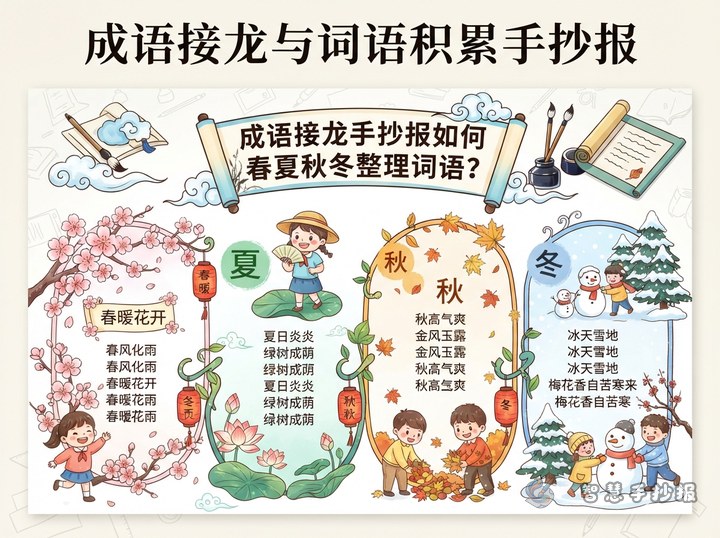
Instead of writing a long list only, divide the page into several small stations:
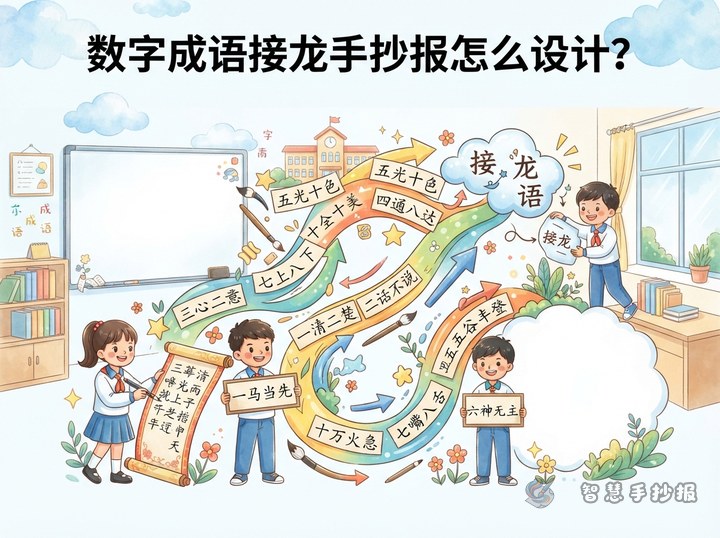
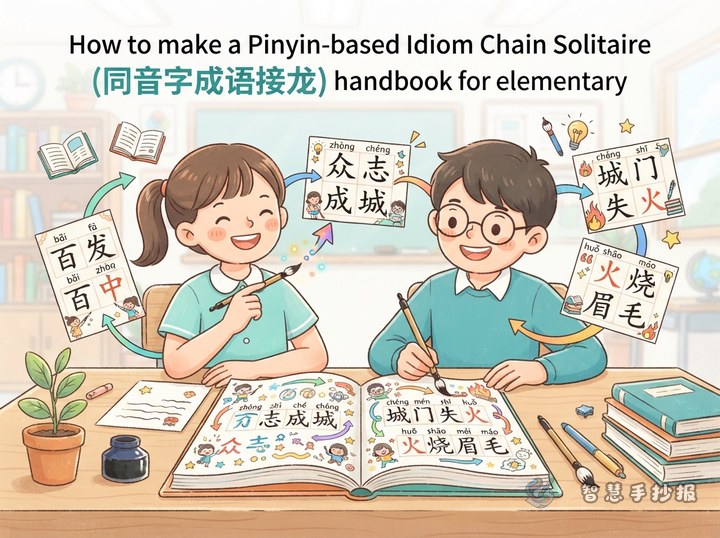
- Idiom Chain Line: connect the idioms with arrows.
- Meaning Cards: explain each idiom in one short sentence.
- Sentence Corner: choose two or three idioms and write simple example sentences.
- Vocabulary Pocket: add related words, similar meanings, or opposite meanings.
This structure is friendly for primary school students and helps show that they can read, understand, and use the idioms.
Make the Layout Move Like a Route
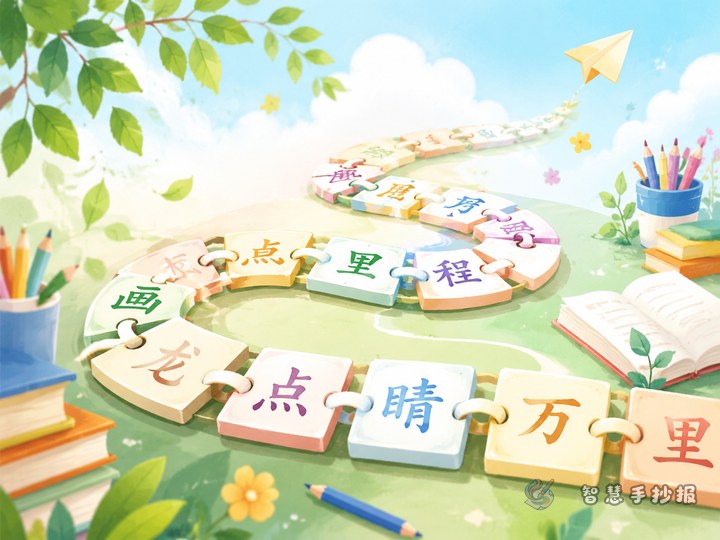
A good layout idea is to place the main route in the middle and supporting content around it. Students can draw a winding road, a train track, or a vine, then write the idioms on carriages, road signs, or leaves. Meanings and examples can be arranged around the main line.
Use bright and gentle colors such as light blue, fresh green, and warm orange. The title should be large and clear. Books, pencils, magnifying glasses, and small flags can be used as decorations. Leave enough space between idioms so the page does not look crowded.
Small Tips Before You Start
- Plan the idiom order on draft paper before writing on the final page.
- Keep explanations short and easy to read.
- Use example sentences related to study, reading, daily life, or teamwork.
- For more layout ideas, students and parents can open the Zhihui Handwritten Newspaper WeChat mini program and continue making the page with suitable themes and columns.