Begin with a clear purpose for the page
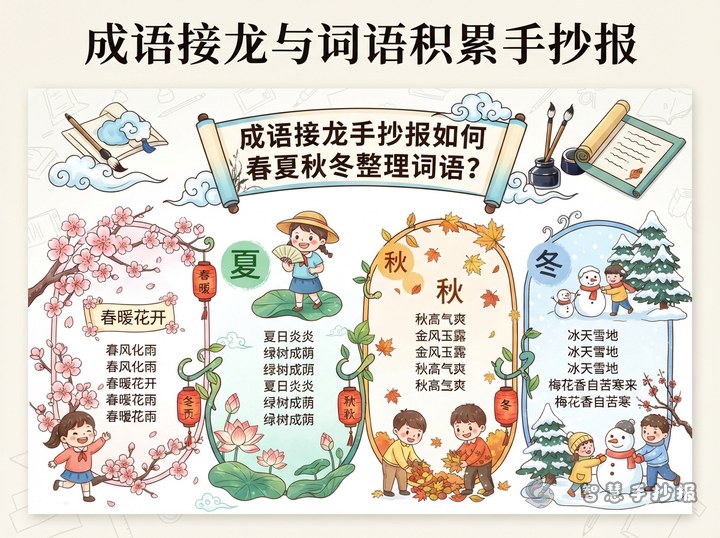
The most common mistake in this kind of handwritten newspaper is filling the page with a long chain of idioms but not showing what students can learn from it. A better idea is to give the page two jobs at once: show an idiom chain and help with vocabulary building.
You can choose a lively title such as “Idiom Chain Challenge” or “Fun with Idioms and Words.” Under the title, place one main chain, then add supporting sections for meanings, grouped words, and simple activities.
Best section ideas for this theme
1. The main idiom chain
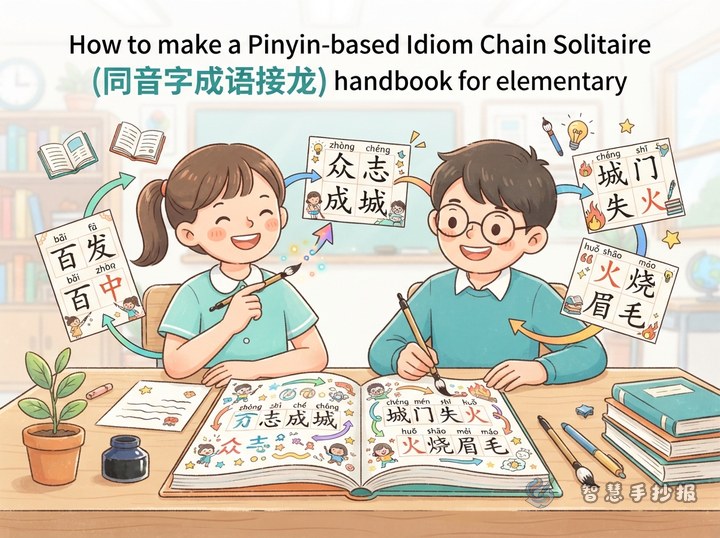
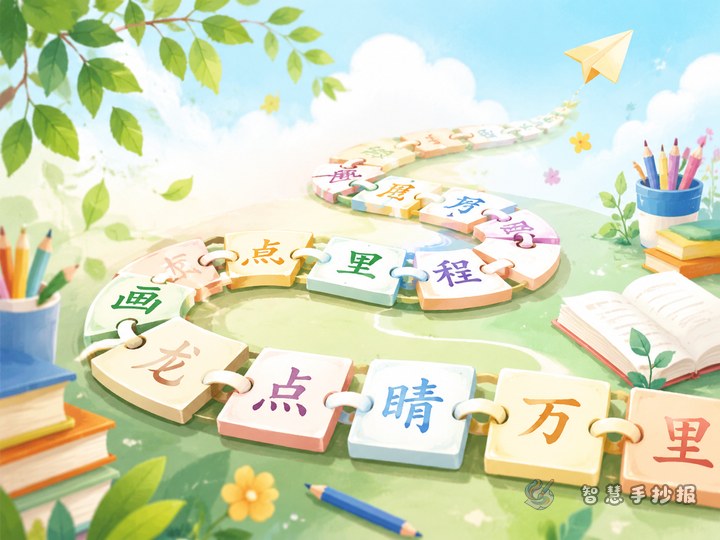
Pick a chain that is easy to understand and easy to follow. The chain does not need to be very long. Five to eight idioms are enough for the main visual area. Next to each idiom, add a short meaning so the content is not just decorative.
2. Vocabulary note cards
Choose several idioms from the chain and turn them into small study cards. Each one can include:
- the idiom
- a simple meaning
- a synonym or antonym
- a commonly confused character
This makes the handwritten newspaper more practical for review and classroom display.
3. A fun challenge corner
To make the page feel active, add one small quiz area. You can include tasks like:
- Continue the idiom chain with one more item.
- Find the wrongly written character.
- Name two more idioms about spring or study.
This section makes the newspaper more interactive for classmates and teachers.
What kind of written material works well
Group idioms by topic
- About spring
- About learning
- About good character
Grouped vocabulary is easier to remember than a random list of idioms, and it fits the idea of vocabulary building very well.
Use very short idiom story notes
You do not need long paragraphs. One or two sentences are enough to explain the meaning behind a well-known idiom. Short notes save space and keep the layout clean.
Add a writing mistakes section
A small box for commonly mistaken characters is very useful. It helps the newspaper support real learning, not just decoration.
A layout idea that feels lively
This topic works especially well as a route-map style page. Put the title in the center, connect the idioms with arrows or paths, and place extra sections around the outside. The page can include:
- top area for the title and a short introduction
- middle area for the main idiom chain
- side sections for word meanings and grouped idioms
- bottom area for mini questions and writing tips
Use two or three main colors only, such as blue, green, and orange. Small decorations like speech bubbles, stars, books, or flags can make the page feel brighter and more student-friendly.
A short ending line for the newspaper
You can finish with a simple learning message such as:
Idiom chains make vocabulary learning fun, and vocabulary practice helps us read, speak, and write better.
If you want to expand the chain, improve the layout, or adjust the content for a different grade level, you can continue creating your work in the Zhihui Shouchao Bao WeChat mini program.