Start with the right focus: a pagoda is not just a tall building
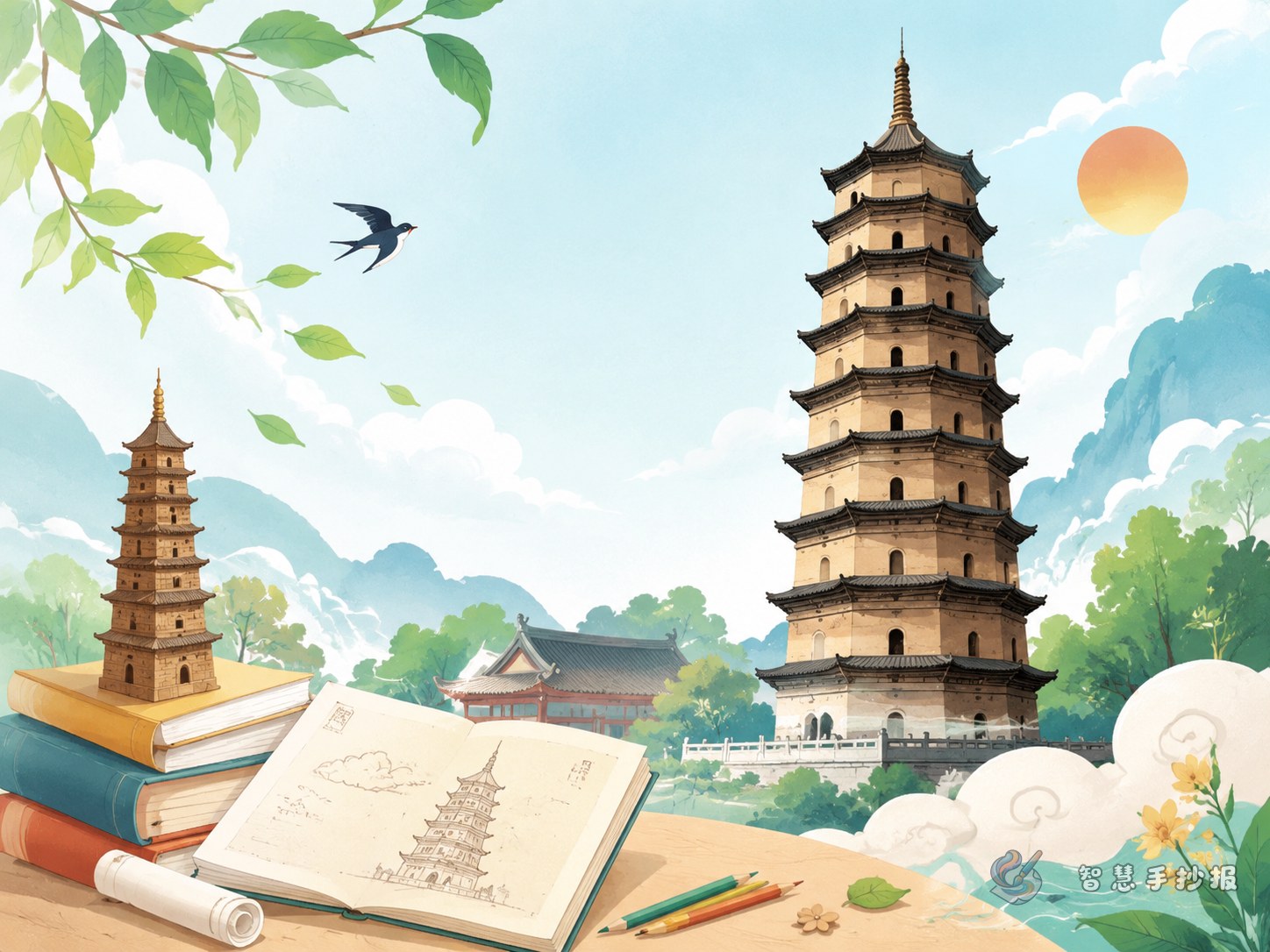
An ancient pagoda theme works especially well for a handwritten newspaper because it belongs to traditional Chinese architecture and has a very recognizable shape. Unlike palaces or gardens, pagodas are tall, layered, and easy to draw as the visual center of the page. Instead of writing only that pagodas are old, it is better to mention features such as levels, roof eaves, the top spire, and whether the tower is made of brick or wood.
For younger students, a simple topic like “Getting to Know Chinese Ancient Pagodas” or “The Beauty of Ancient Pagodas” is easier to organize and present clearly.
Section ideas you can use directly
- Pagoda Fact File: Explain what a pagoda is, where it is often found, and what it looks like.
- Parts of a Pagoda: Introduce the base, main body, eaves, and top in simple words.
- Famous Pagodas in China: Pick one or two examples instead of listing too many.
- Cultural Meaning: Write about dignity, protection, memory, and architectural wisdom.
- How to Draw a Pagoda: Explain how to start with a center line and then add each level step by step.
These sections make the page feel complete without becoming too crowded.
Short text materials for students
Simple description
Ancient pagodas rise layer by layer and often become the most noticeable landmark in a historic site. They show both traditional building skill and the long history of Chinese culture.
Cultural sentence
An ancient pagoda is like a history book standing upright. After wind and rain, it still remains, reminding us of the wisdom and beauty of traditional Chinese architecture.
Personal impression
I like the neat layers and lifted roof corners of ancient pagodas. From far away they look solemn, and up close they show many careful details that make them beautiful and impressive.
These lines can be copied directly or simplified for lower grades.
Try a layout that grows upward like a tower
This topic is perfect for a page with a strong vertical feeling. Put the main pagoda drawing in the middle so the eye moves upward, then arrange the text sections on both sides like different levels of the tower. This makes the layout match the subject naturally.
- Place the title at the top with a bold and steady style.
- Draw the main pagoda in the middle, about two thirds of the page height.
- Put fact sections on one side and famous examples or personal thoughts on the other.
- Add clouds, stones, trees, or distant hills at the bottom to finish the page.
If drawing feels difficult, start with a simple outline and use repeated lines to show each roof level. You do not need too many details for it to look effective.
Color and decoration tips
A pagoda-themed handwritten newspaper looks better with calm traditional colors instead of bright fluorescent shades. Use dark red or golden yellow for the title, brown or gray for the tower, and soft green or beige for small decorations. This helps the page feel traditional without overpowering the text.
- Use simple border patterns such as clouds or geometric lines.
- Add pine trees, rocks, or birds in small amounts.
- Keep handwriting neat and make each text block similar in length.
Before coloring, check whether the title stands out and whether the sections are balanced. If you want to turn your draft into a more complete design, you can continue in the Smart Handwritten Newspaper WeChat mini program.