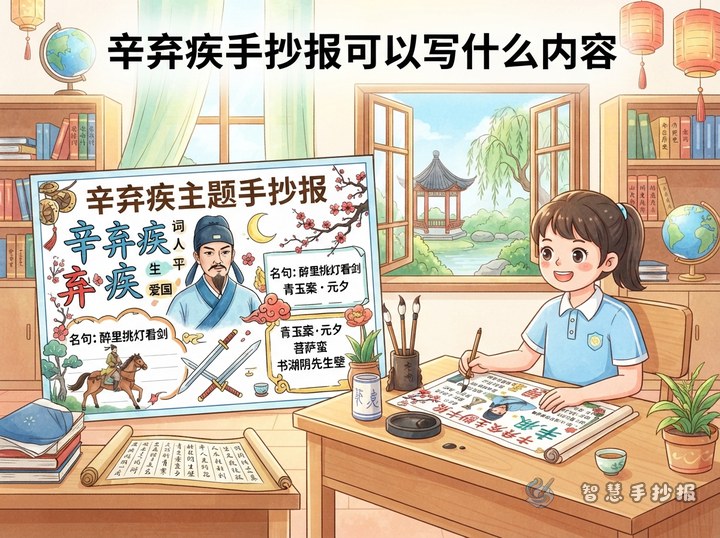
Begin with a Question About Tune Patterns
Open the poster with the question, “Is a cipai the title of a poem?” A cipai, or tune pattern, is the musical form used to compose a ci poem. It usually determines features such as line count, character count, rhythm, and tonal pattern, while the poet chooses the subject and emotion. This simple distinction gives the poster a clear focus.
Explore Three Tune Patterns with Distinct Moods
Ru Meng Ling: Light and Delicate
Ru Meng Ling is short and lively. Students can quote the closing lines from Li Qingzhao's poem about returning from an evening outing and startling a bank of egrets. A small boat, lotus leaves, and water birds make suitable illustrations.
Nian Nu Jiao: Grand and Powerful
For Nian Nu Jiao, introduce Su Shi's famous Red Cliff poem. Its opening image of the great river flowing east creates a sweeping historical atmosphere. River waves, cliffs, and the silhouette of an ancient boat can reinforce that mood.
Bu Suan Zi: One Form, Different Feelings
The same tune pattern can carry very different subjects. Place the titles of Su Shi's lonely night poem and Lu You's plum blossom poem side by side. This comparison helps readers understand that sharing a cipai does not mean sharing the same theme or emotion.
Create Mini Tune-Pattern Profiles
- Name: Clearly label each tune pattern.
- Representative poets: Choose one or two familiar writers for each pattern.
- Memorable lines: Copy a short, accurate quotation from a well-known poem.
- Reading mood: Add words such as delicate, bold, quiet, or graceful.
An interactive section called “Which One Is the Tune Pattern?” can mix tune patterns, poets, and poem titles for readers to match.
Arrange the Page Like an Unrolled Scroll
Place the main heading at the top center and use small seal, bamboo, scroll, or water motifs around it. Divide the body into three columns: a central profile section with quotations and questions on either side. Black, vermilion, and pale blue create a restrained classical palette. Leave open space around featured lines so the page remains easy to read.
Build the Poster in a Practical Order
- Select three tune patterns and verify every poet, title, and quotation.
- Sketch the sections lightly in pencil and reserve space for the heading.
- Write the main text before outlining headings and borders.
- Add small decorations last, then check spelling and spacing.
To adjust the number of sections, heading style, or page arrangement, continue the design in the Smart Handwritten Poster WeChat Mini Program and refine it for the chosen paper size.