Start with a Familiar Lunchtime Scene
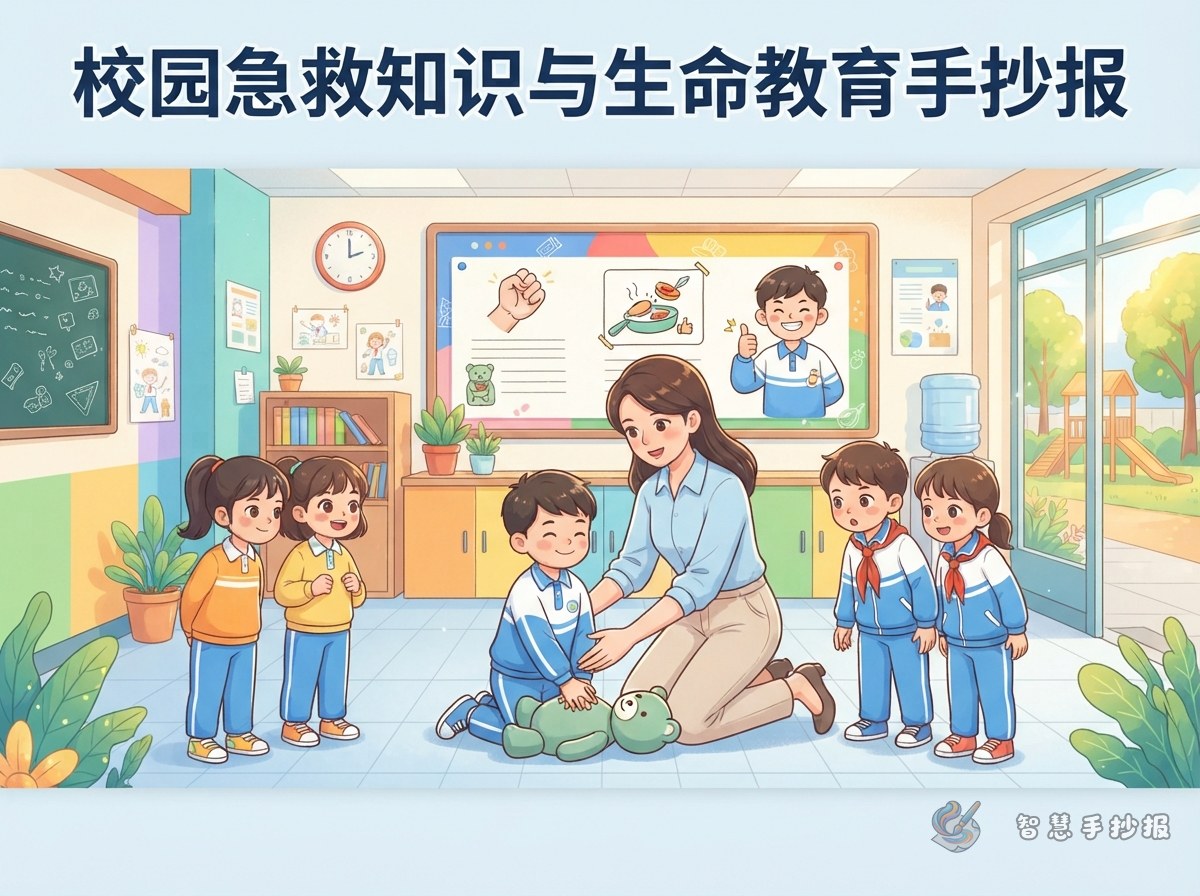
Build the poster around a simple question: “What should we do if someone suddenly cannot speak while eating?” Use familiar settings such as the cafeteria, a classroom snack break, or a school trip. Connect first aid with life education by reminding students to eat calmly, avoid running with food, and never place small objects in their mouths.
Turn the Response into a Clear Decision Path
If the person can cough strongly
If the student can breathe, speak, or cough forcefully, encourage continued coughing and notify a teacher or school nurse immediately. Keep watching the student. Do not offer water or use random first-aid actions.
If the person cannot speak or breathe
Clutching the throat, being unable to make a sound, ineffective coughing, breathing difficulty, or unusual lip color may indicate a severe airway blockage. Shout for help at once, bring a teacher, school nurse, or trained adult, and call the local emergency number.
If the person becomes unresponsive
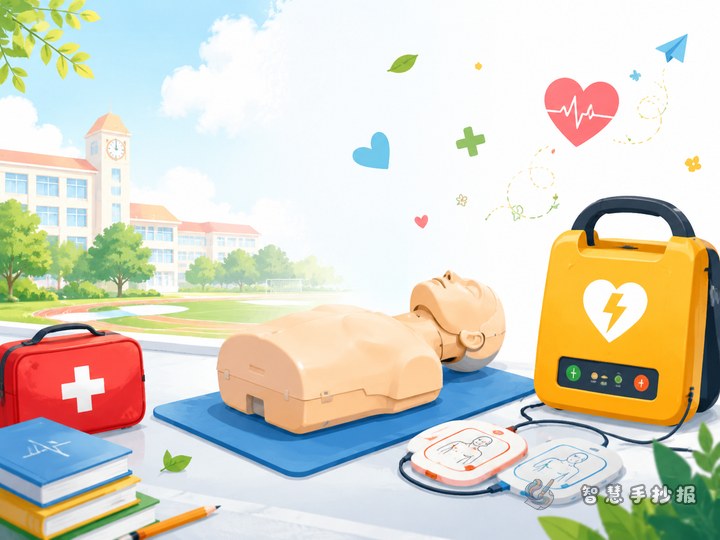
An adult should call emergency services immediately. A trained responder should begin appropriate CPR and obtain an AED as soon as possible. Students should clear the area, follow instructions, and avoid attempting techniques they have not been trained to perform.
Short Safety Notes for the Poster
- Check first: Can the person speak, breathe, or cough effectively?
- Get help fast: Alert a teacher, school nurse, or nearby adult immediately.
- Do not give water: Water will not wash away an airway blockage and may delay proper care.
- Do not sweep blindly: Never put fingers into the mouth when the object cannot be seen.
- Do not crowd around: Make room for trained adults and emergency responders.
Add a memorable line such as “Take small bites, eat without rough play, and call for help when choking is suspected.” Keep every statement short and avoid presenting untrained children as the main rescuers.
Design It Like an Emergency Route Map
Use a three-column portrait or landscape layout. Decorate the title area with a lunch tray, an alert bell, and a heart-shaped shield. In the center, connect “notice the signs,” “call an adult,” “contact emergency services,” and “trained care” with large arrows. Place warning signs on one side and actions to avoid on the other.
Use red for urgent warnings, green for correct actions, and pale blue for the background. Small corner drawings can show eating slowly, staying seated while chewing, and keeping tiny objects away from younger children. Ask a teacher or school nurse to check the wording before display, since a poster is not a substitute for certified first-aid training.
Make the Message Useful at School
During a class presentation, students can follow the arrows and repeat four ideas: assess, call for help, follow adult instructions, and keep the area clear. To continue choosing borders, colors, and section layouts, students and parents can use the Smart Handwritten Poster WeChat Mini Program to complete the poster.