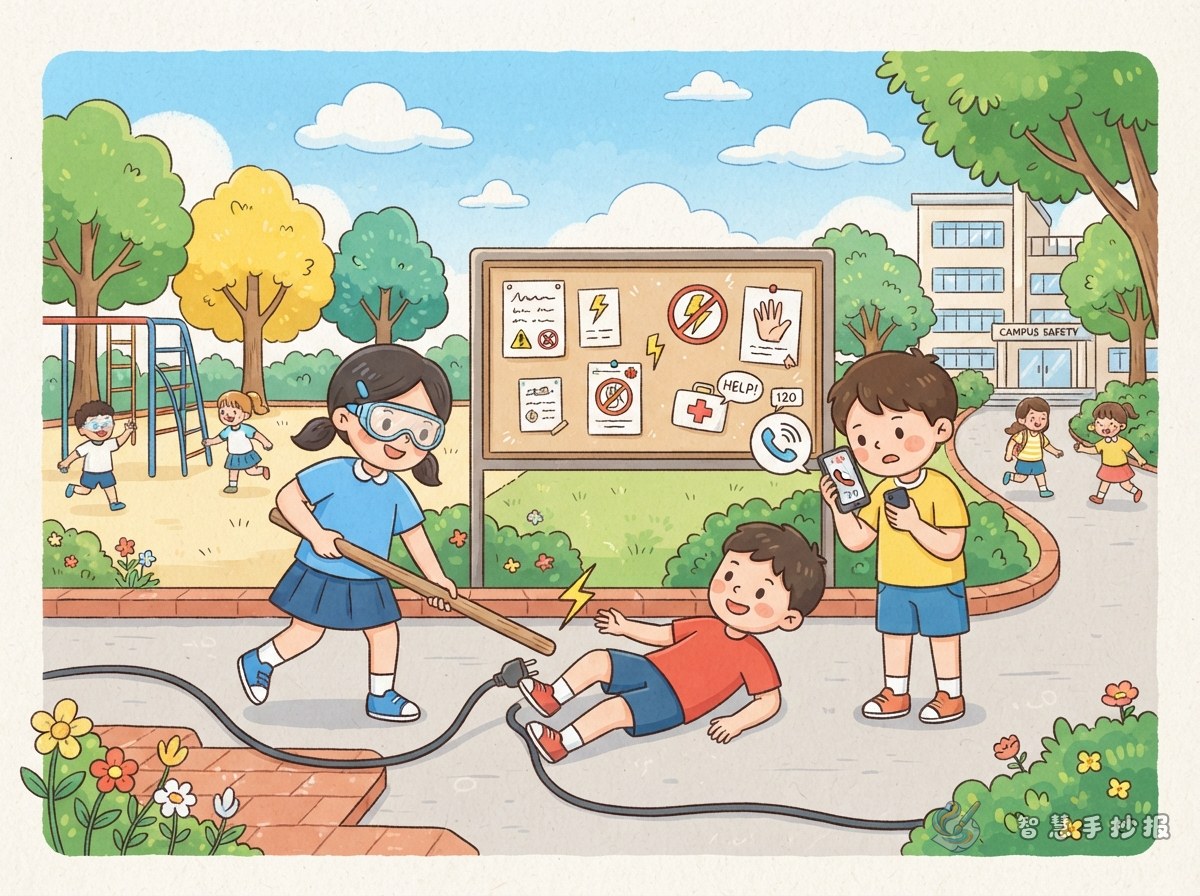
Build the Page Around a Safety Route
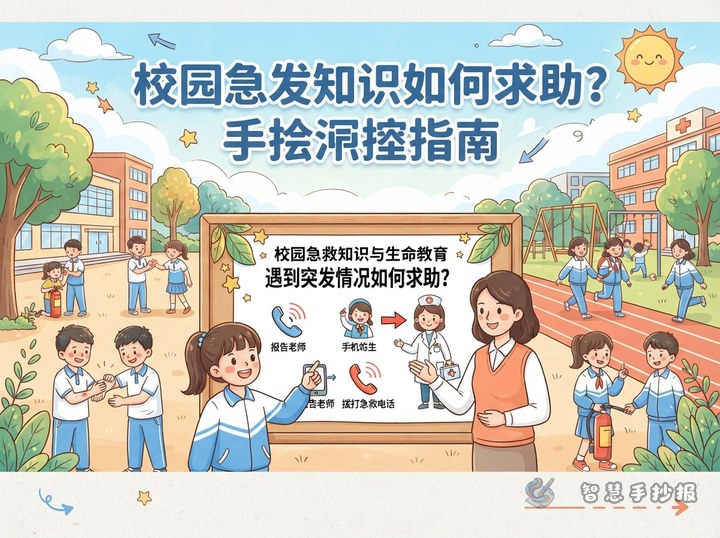
Center the handwritten newspaper on one question: how can a student protect themselves and call for help when someone receives an electric shock? Draw a clear arrow route in the middle: cut off the power, call for help, never touch the person directly, and wait for professional assistance. Connect the steps with small drawings of a plug, wire, phone, and first-aid kit.
The Four Essential Steps
- Protect yourself first: Do not pull the person with your bare hands or step into water. Observe the power source and the surrounding area.
- Cut off the power safely: Turn off the circuit breaker or unplug the device only when it is safe to do so. Never take risks if the situation is unclear.
- Call for help immediately: Ask a classmate to notify a teacher, school nurse, or parent, and call 120 with the location and basic details.
- Wait for help: Further assistance should begin only after the power is confirmed off and the area is safe, preferably under adult or professional guidance.
Add a side reminder: “When you are not sure it is safe, stay away from the danger and get an adult.” This connects first-aid knowledge with the life-education message of protecting yourself.
Useful Text for the Newspaper
Create a “Safe Electricity Tips” section with reminders such as keeping wet hands away from outlets, staying away from outdoor wires during thunderstorms, never putting metal objects into sockets, and never repairing electrical devices without permission. Add a true-or-false corner: What should you do when you see a damaged wire? The answer is to stay away, warn others, and report it to a teacher or adult.
A short “Emergency Reminder” can say: “Cut the power, do not pull; call for help, call 120; help only when the area is safe.” Keep the words accurate and short. Do not present complicated rescue actions as something every child can perform without training.
Make the Warning Easy to Read
Try a two-column or circular layout. Use a warning color on the left for unsafe actions such as pulling someone by hand, pouring water, or approaching an exposed wire. Use green or blue on the right for the safe route: cut off the power, call for help, keep away, and wait. Shape the title like an electrical plug and finish with “Cherish Life, Use Electricity Safely.”
Keep the text more prominent than the decoration. Limit each section to a few lines and leave clear space between steps. After sketching, open the WeChat mini program and use “智慧手抄报” to organize sections, adjust the layout, and refine the colors for classroom display.