Start by breaking the topic into simple sections
When students make a wetland ecology handwritten newspaper, the hardest part is often not finding information but deciding where everything should go. A clear poster usually comes from dividing the topic into a few easy-to-read sections instead of placing all the text in one large block.
- Main title area: You can use titles like “Protect Wetlands, Protect Bird Homes” or “Little Guardian of Wetland Ecology.”
- Knowledge section: Explain what a wetland is and why it matters.
- Living things section: Introduce wetland plants, fish, insects, and migratory birds.
- Protection section: Describe why wetlands and birds need protection.
- Action section: List small things students can do in daily life.
With this structure, the whole page becomes easier to read and the key message stands out right away.
Useful section names you can place on the page
If you are not sure how to label each part, you can use ideas like these:
- Wetland Basics: A wetland is an area such as a marsh, lake edge, riverbank, or tidal flat with plenty of water.
- Bird Stopover Station: Many migratory birds rest and find food in wetlands during migration.
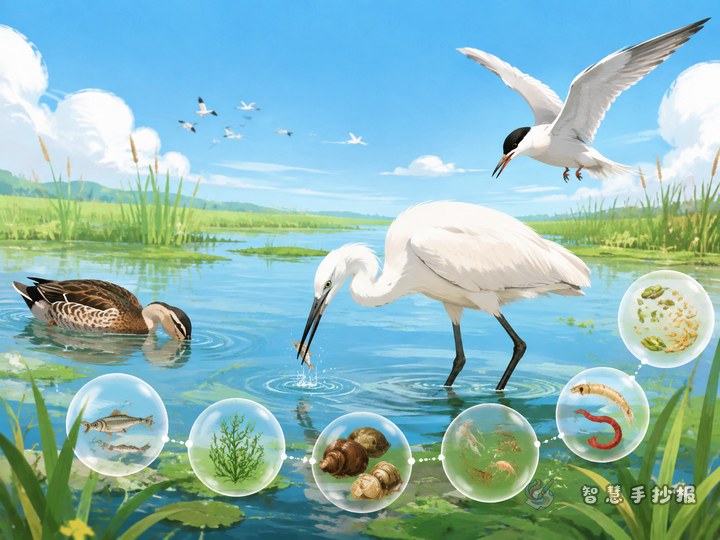
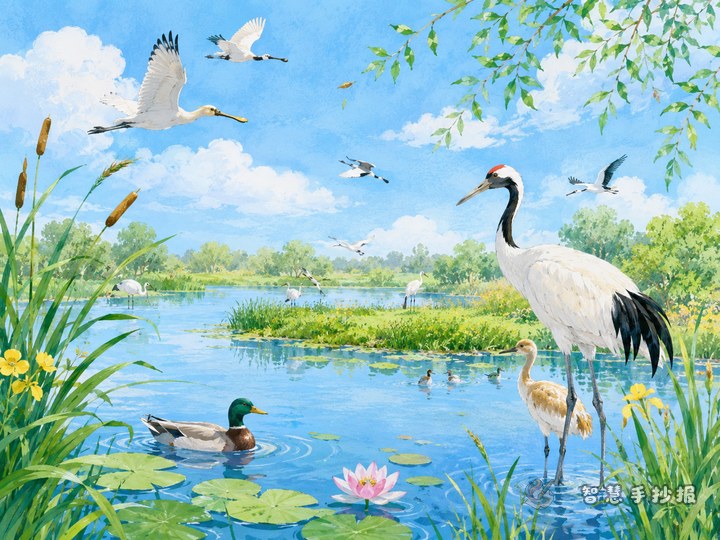
- Wetland Residents: Reeds, aquatic plants, fish, frogs, egrets, and ducks may all live in or around wetlands.
- Ecological Role: Wetlands store water, help clean water, and support many kinds of life.
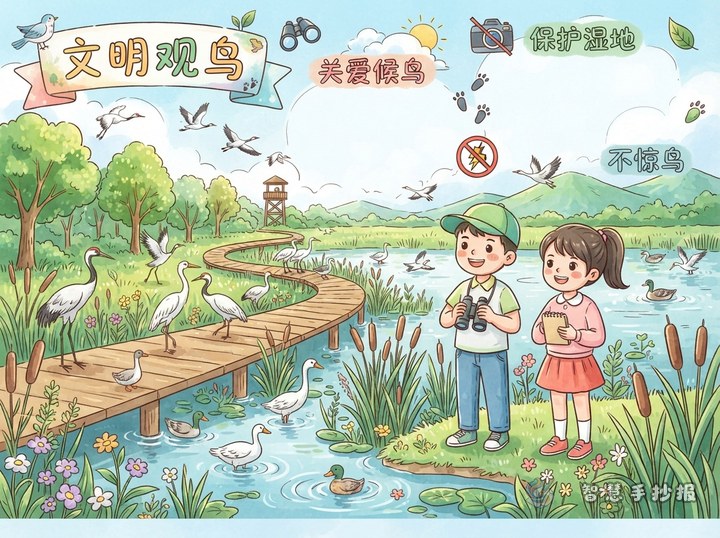
- Protection Tips: Do not litter, do not disturb birds, and do not damage plants.
Short section titles are easier to arrange and look better inside decorative borders.
Short writing materials ready to use
About wetlands
Wetlands are like natural helpers for water and life. They hold water, support biodiversity, and create living space for many animals and plants. Wetlands are beautiful, but they are also very important to ecological balance.
About migratory birds
Migratory birds travel with the seasons. Wetlands offer food, water, and safer resting places, so they are important stopover and wintering sites for many bird species.
About protection
Protecting wetlands means protecting birds, plants, and the shared home of many living things. When we care for nature, migratory birds can have safer places to rest during their long journeys.
About action
We can start with simple actions: save water, avoid feeding wild birds casually, stay away from protected areas, and help keep natural spaces clean and quiet.
A practical layout that looks neat
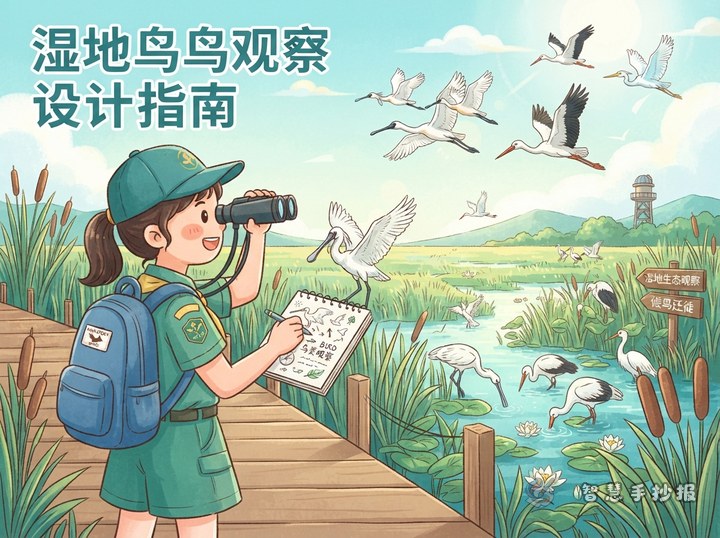
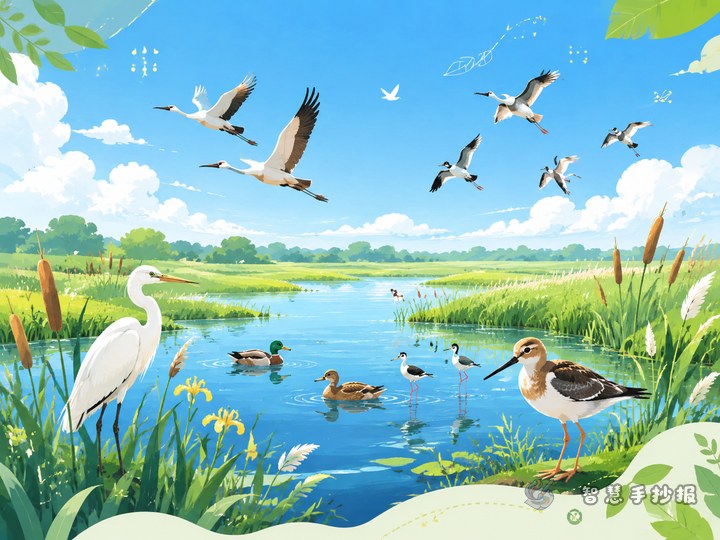
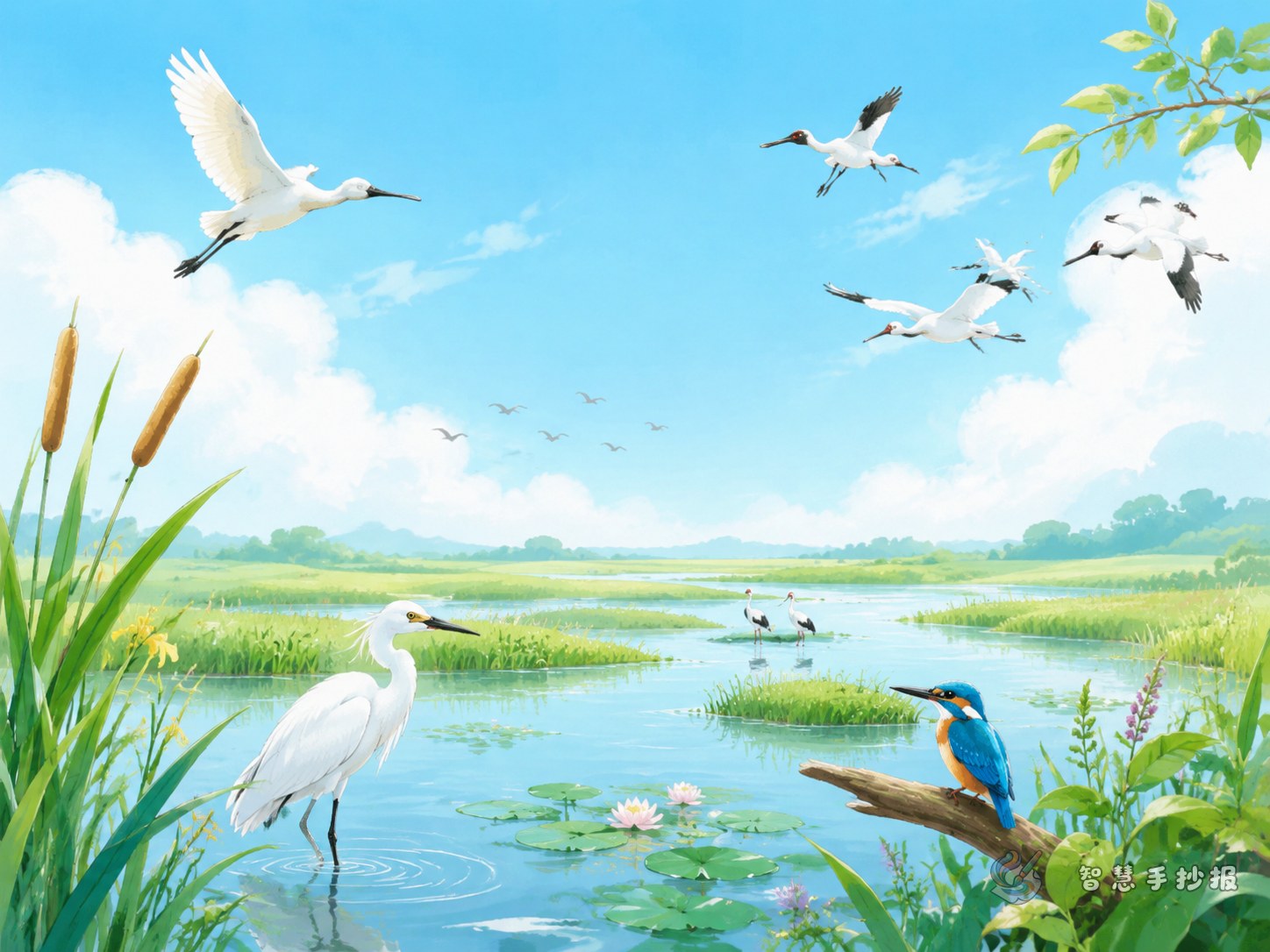
This theme works especially well with a center picture and surrounding sections. Draw a lake, reeds, or a flying bird in the middle, then place different text areas around it.
- Put the main title at the top in large, clear letters.
- Draw a wetland scene in the center with water, reeds, lotus leaves, or birds.
- Place “What Is a Wetland” and “Wetland Functions” on the left side.
- Place “Migratory Birds and Wetlands” and “Protection Ideas” on the right side.
- Add “What I Can Do” or a short slogan at the bottom.
If you have more text, a two-column layout with a bottom strip also works well and keeps the page tidy.
Small details that make the poster better
To make the handwritten newspaper look more complete, pay attention to a few small details:
- Border ideas: Water drops, waves, reeds, feathers, and clouds match the topic well.
- Title colors: Blue and green are ideal for the main title, while dark green works nicely for subtitles.
- Highlight key terms: Emphasize words like “water purification,” “bird habitat,” and “protect together.”
- Ending slogan: Try lines such as “Protect wetlands, start with me” or “Give birds a home, keep nature beautiful.”
After finishing your draft, check which parts feel crowded and which parts feel too empty, then add simple icons or leave more space where needed. If you want to refine the layout and wording further, you can continue in the Smart Handwritten Newspaper WeChat mini program.