Begin with a “wetland table”
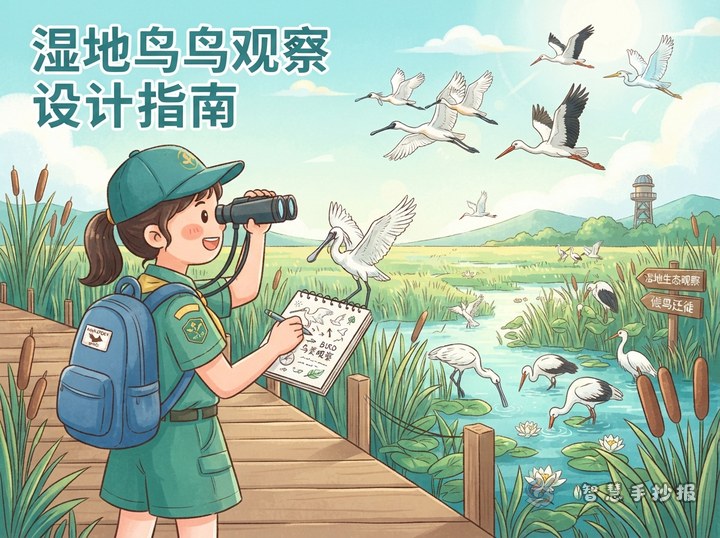
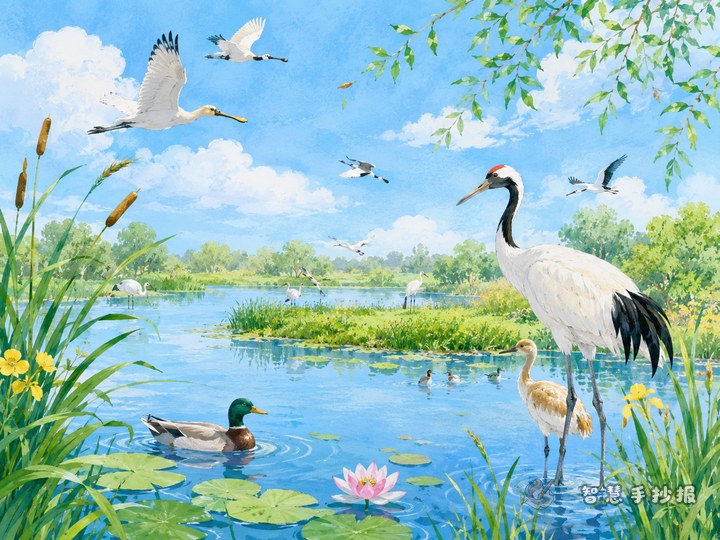
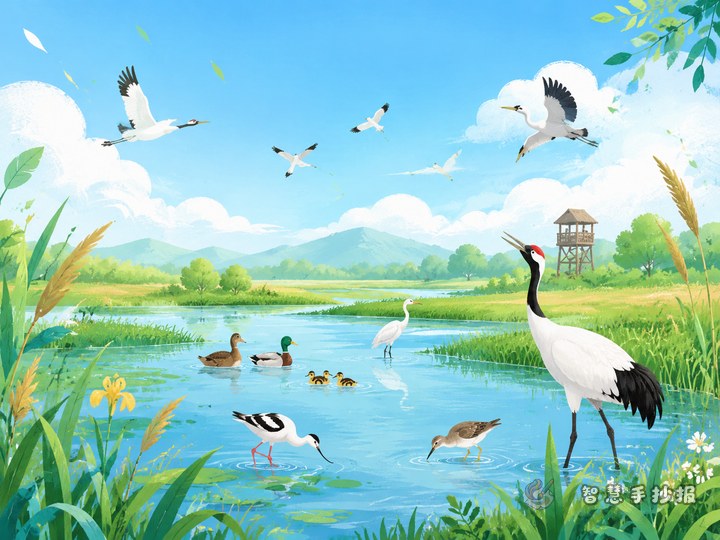
This handwritten newspaper can begin with a clear picture instead of a long definition. Draw the wetland as a table where migratory birds look for food. Place flying or resting birds near the top, then add shallow water, mudflats, reeds, and water plants in the center. A short note can explain that wetlands provide both food and resting places.
Suggested theme sentence: “A wetland with plenty of food also needs our careful protection.” It answers the main question while leading naturally to the conservation message.
Turn feeding habits into a visual chain
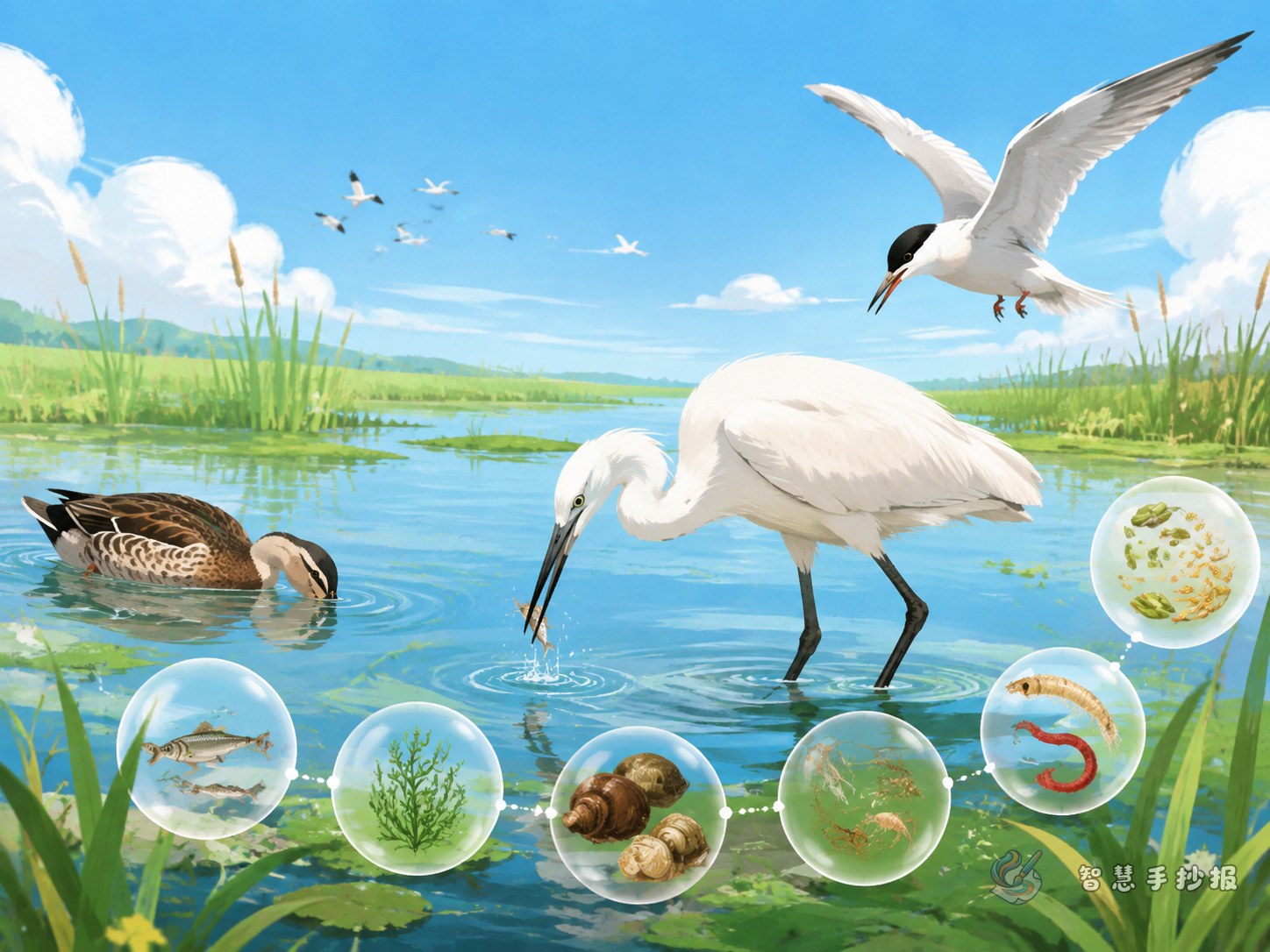
Migratory birds have different bills, feet, and feeding habits. There is no need to list many species; a few typical foods and habitats will make the page easier to understand. Keep every arrow pointing from the food to the bird that eats it.
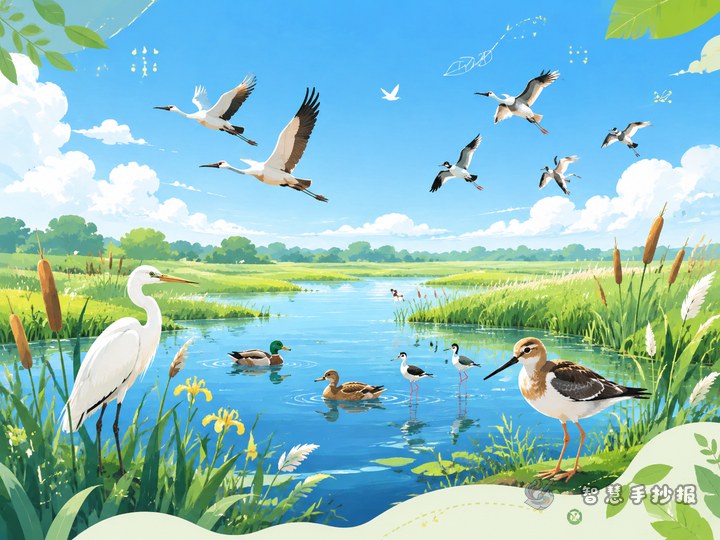
- Shallow water: Draw small fish, shrimp, and other aquatic animals beside a heron-like bird searching near the water's edge.
- Mudflats: Add earthworms, insects, and other small invertebrates to show a bird probing the mud with a long bill.
- Reeds and grass: Include plant seeds, tender leaves, or insects hidden in the grass to show that some birds feed around vegetation.
Labels beside the arrows can say “provides food,” “searches for food,” or “supports the ecosystem.” To stay accurate, use phrases such as “common foods” and “some migratory birds eat,” because every bird does not have the same diet.
Build the story with four small panels
Panel one: What lives in a wetland?
List shallow water, mudflats, reeds, water plants, fish, shrimp, and insects. Add small drawings so the wetland table looks full and lively.
Panel two: How do birds find food?
You can write: “Some migratory birds watch from shallow water, some probe the mud, and some search among grasses for seeds and insects. Their body features help them find the food that suits them.”
Panel three: What happens when food disappears?
Use a simple cause-and-effect message: polluted water, damaged mudflats, and fewer plants can reduce the food available to birds and weaken the wetland ecosystem.
Panel four: My protection checklist
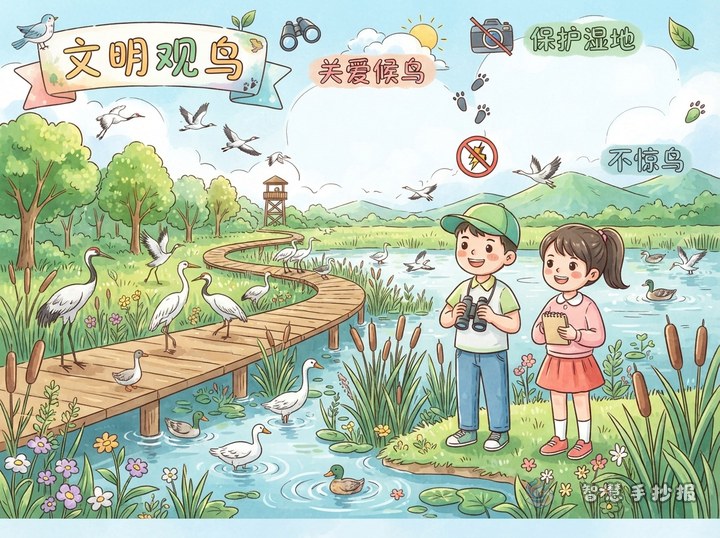
Try short action lines such as “Do not feed wild birds casually,” “Do not catch or take wild animals,” “Keep litter away from the water,” “Protect reeds and water plants,” and “Tell a teacher or parent if you find an injured bird.”
Let the picture unfold from the water
- Leave a noticeable title area at the top. Possible titles include “The Migratory Birds’ Wetland Table” and “Food Makes Flight Possible.”
- Make the central illustration the largest part of the page. Use blue water to connect the mudflats, reeds, and birds, with food-chain arrows spreading around the center.
- Place “What lives in a wetland?” on the left and “How do birds feed?” on the right. Put the food-loss message and action checklist along the bottom.
- Use water blue, reed green, and earth brown as the main colors, with orange or yellow for beaks, flowers, and the title. Leave some white space and use bold borders around key sentences.
Finish with an action children can remember
A strong closing line is: “Clean water, quiet mudflats, and healthy plants give migratory birds a place to find food.” It connects the food chain to wetland protection. Before coloring, check that the title stands out, all arrows point the same way, and every sentence is easy to read. To organize the sections and layout more quickly, continue in the 智慧手抄报 WeChat mini program and turn the idea into a complete handwritten newspaper.