Build the page around one scene that tells a story
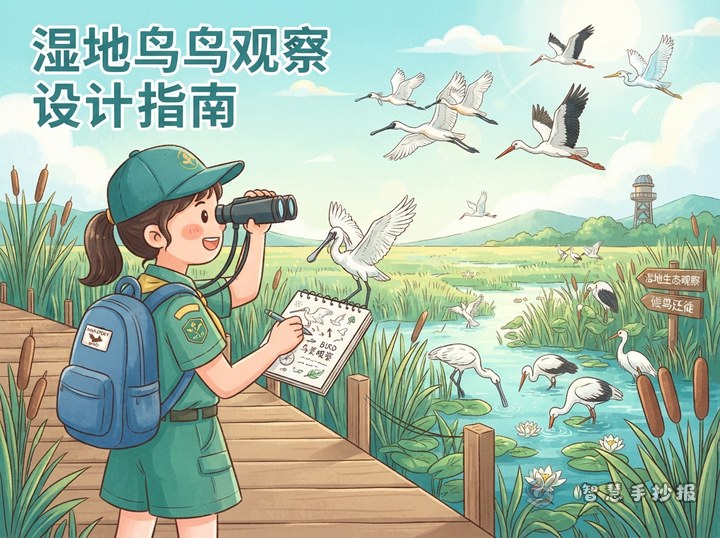
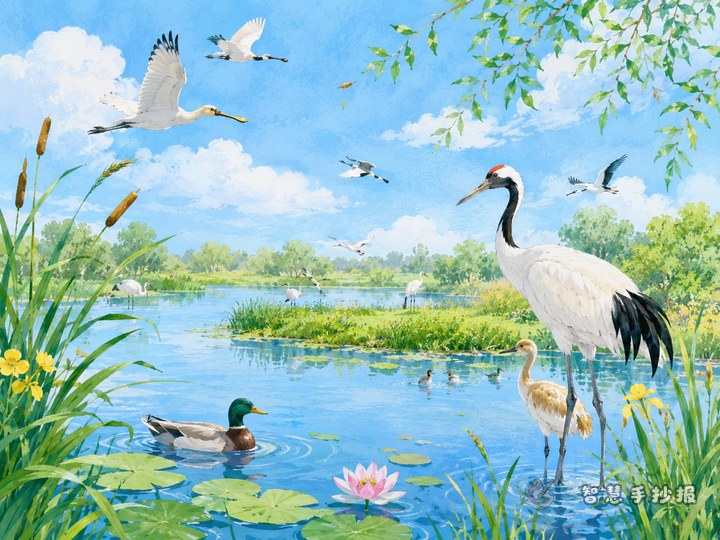
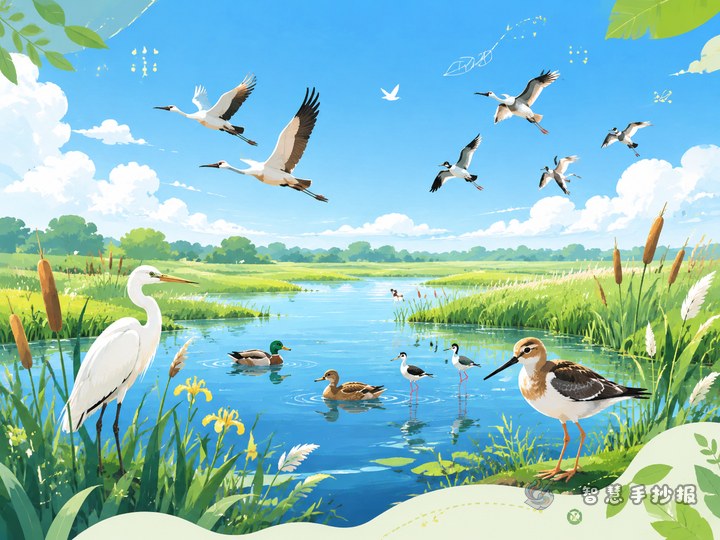
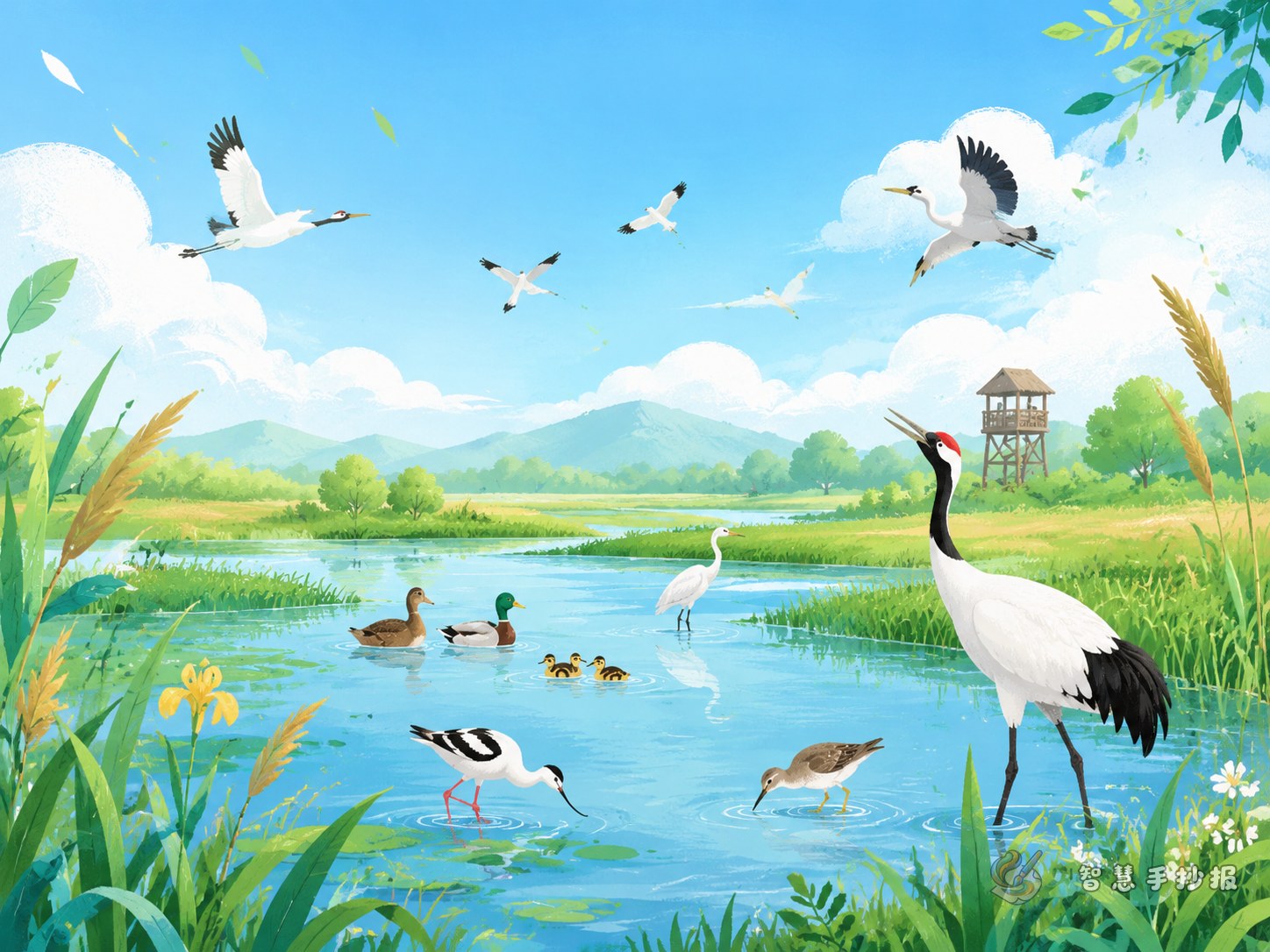
The best posters on this theme help readers understand at a glance that wetlands are a vital home for migratory birds. A central picture can show calm water, reeds, sunrise, and birds resting or flying. Even with short text, this kind of composition makes the idea feel clear and alive.
Your title should show a relationship, not just list two nouns. Phrases like “Wetlands Along the Birds’ Journey” or “Protect Wetlands, Protect Bird Homes” feel more visual and meaningful.
Use four simple sections instead of too many blocks
A student-friendly poster does not need too many sections. Four focused parts are usually enough.
- Wetland Basics: explain that wetlands store water and support many plants and animals.
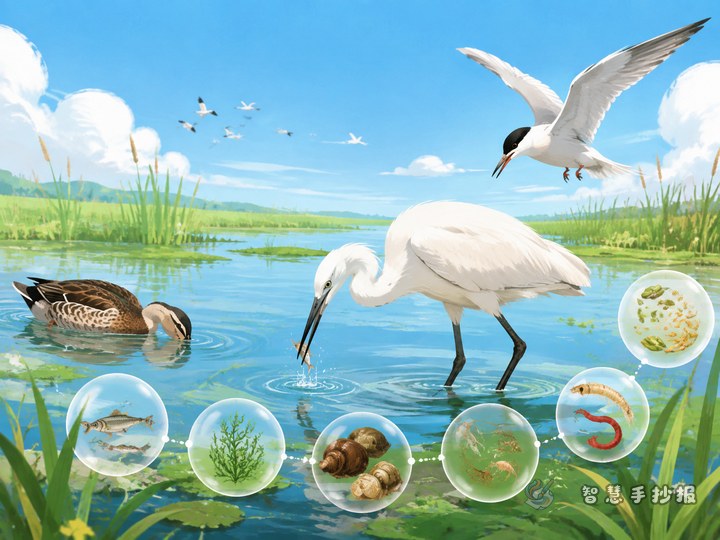
- Why Birds Come Here: mention food, rest, breeding, and seasonal survival.
- What Happens If Wetlands Are Damaged: note pollution, habitat loss, and fewer food sources.
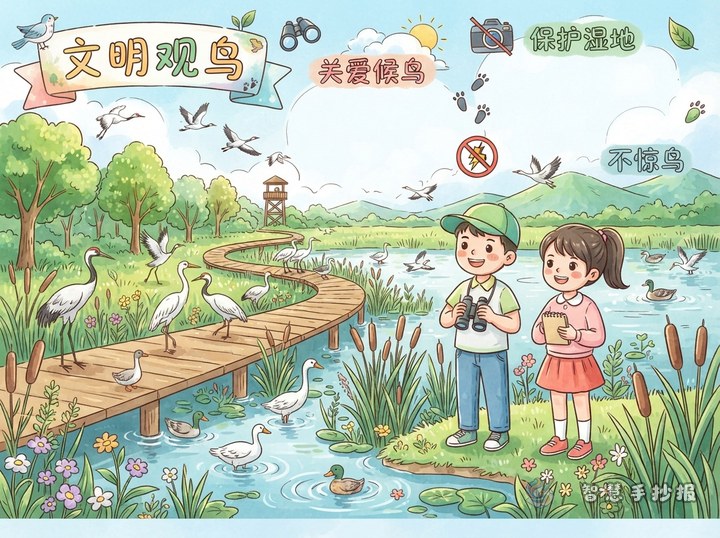
- What We Can Do: include not littering, protecting nature, and not disturbing wild birds.
Each section can be just a few sentences. Short, clear writing works best for a handwritten poster.
Ready-to-use writing materials for the page
Opening paragraph
Wetlands are precious ecological spaces on Earth and important stops along the migration routes of many birds. Clean water, rich plants, and quiet surroundings give birds food and shelter.
Knowledge section text
Migratory birds travel long distances as seasons change. They cross mountains, rivers, and cities, then rest in suitable wetlands to regain energy before continuing their journey. Healthier wetlands mean safer migration.
Ending appeal
Protecting wetlands is not only about saving land and water. It is also about protecting a life route in the sky. Let us start with small actions and help migratory birds return year after year.
Add details that make the poster feel lively
- Decorate the border with water ripples, reeds, clouds, or feather shapes.
- Draw small birds, fish, lotus leaves, grasses, and shallow water scenes.
- Highlight key words such as “migration,” “habitat,” “wetland,” and “ecological balance.”
- Keep the title large and the body text neat so the whole page stays balanced.
If the page still feels empty, add arrows showing a migration route or small note boxes shaped like water drops.
Choose colors and layout for a clean student look
Blue, green, light yellow, and brown work especially well. Blue shows sky and water, green fits plants, yellow can brighten the title, and brown is useful for land or branches. This palette feels natural and not too busy.
A practical layout is a central illustration with surrounding content. You can also place the drawing on one side and the text on the other. Sketch the areas lightly with pencil first, then outline and color after the wording is finished.
Final touches that make the poster easier to understand
A strong poster is not the one with the most words. It is the one with a clear theme, readable sections, and a unified visual style. Before finishing, check three things: whether the page shows the link between wetlands and birds, whether the section titles are easy to understand, and whether the page has enough breathing space. After your draft is ready, you can also refine the design and add more materials in the Zhihui Shouchaobao WeChat mini program.