What to include in this poster
“What kinds of AI can we find at home?” is a practical and child-friendly theme for a technology-and-life handwritten newspaper. Instead of explaining difficult theories, students can start with familiar examples such as voice assistants, robot vacuums, smartwatches, smart locks, and navigation apps. The topic feels close to daily life, so it is easier to write and easier for teachers to accept.
The whole page can focus on finding technology around us, understanding what it does, and learning how to use it properly. This makes the poster informative while still feeling lively and useful.
Column ideas you can use directly
Column 1: AI Around Me
- Voice assistant: can understand simple commands and help play music or tell the weather.
- Robot vacuum: can clean automatically and save time on housework.
- Smartwatch: can record steps, show time, and track some health information.
- Navigation app: can suggest routes and help people travel more easily.
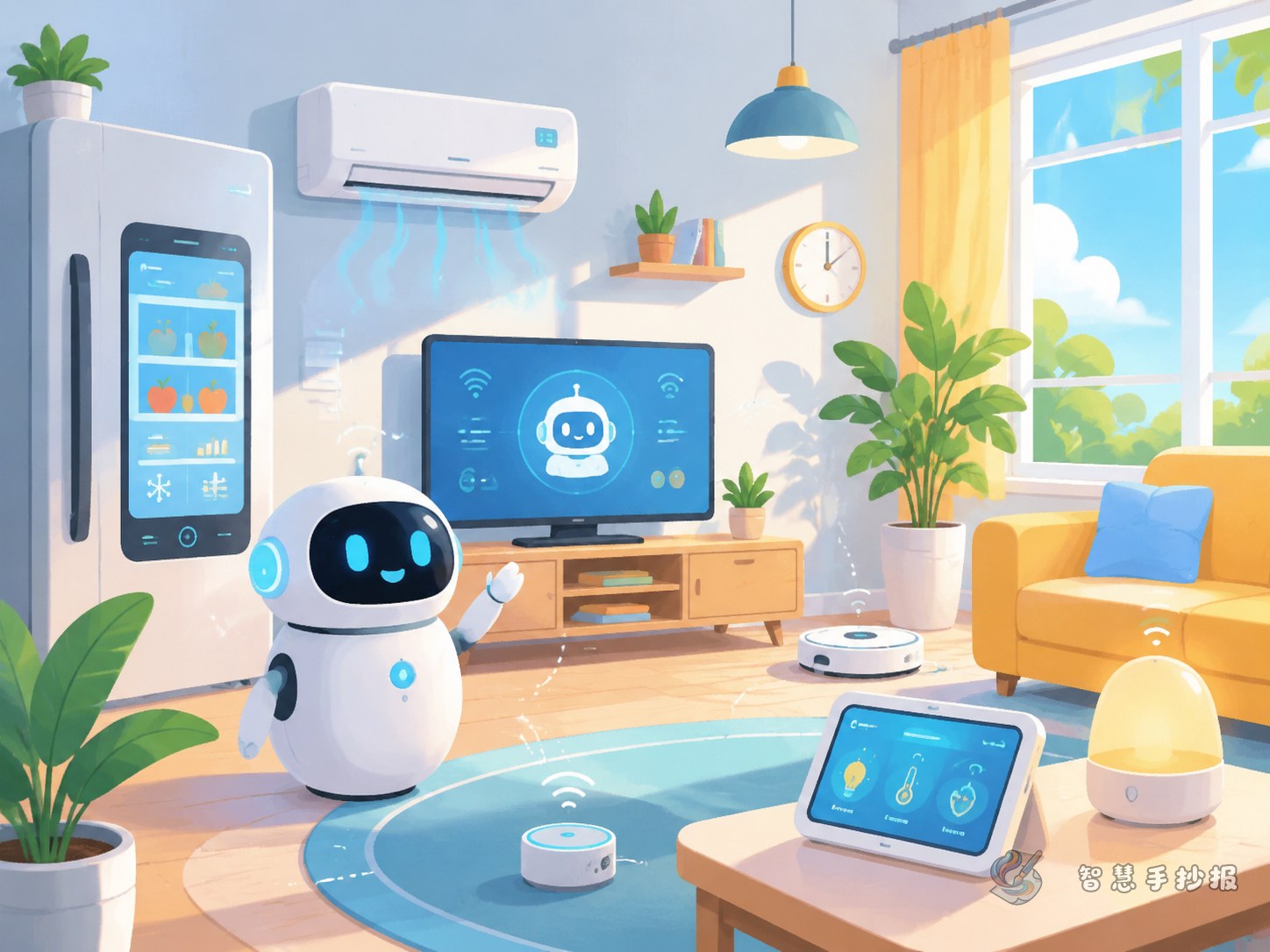
- Smart home devices: some lights, air conditioners, and TVs can be controlled remotely.
Column 2: Why do they seem smart?
Use simple language for children: artificial intelligence does not think exactly like humans, but it can follow programs, use information, and make choices based on what it has learned. It can “listen,” “see,” “calculate,” and “remind,” so it seems very smart in daily life.
Column 3: How technology helps us
- Saves time and improves efficiency.
- Makes life easier for children and older family members.
- Helps with study, travel, and housework.
- Useful for reminders, records, and quick information searches.
Column 4: Safe and proper use
- Do not depend on smart devices too much.
- Protect personal privacy.
- Use apps and online tools with guidance from parents or teachers.
- Technology is a helper, not a replacement for independent thinking.
Short text materials for the poster
Artificial intelligence is quietly becoming part of our daily lives. It may be inside a smart speaker at home or a robot that cleans the floor by itself. Although it does not truly think like a person, it can use programs and data to help us complete many tasks. Technology makes life more convenient, and it also reminds us to use it wisely and responsibly.
The AI around us is often not far-away advanced science. It is usually a helpful tool we can see and use every day. Learning about it, understanding it, and using it correctly are important first steps in technology education.
How to arrange the layout
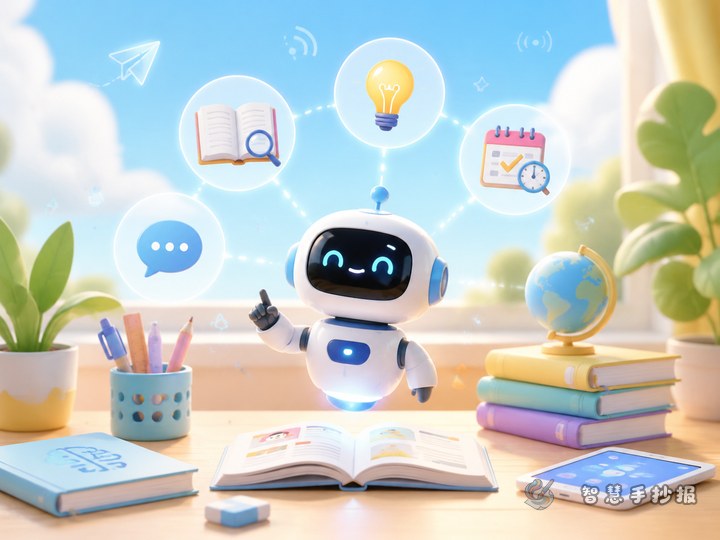
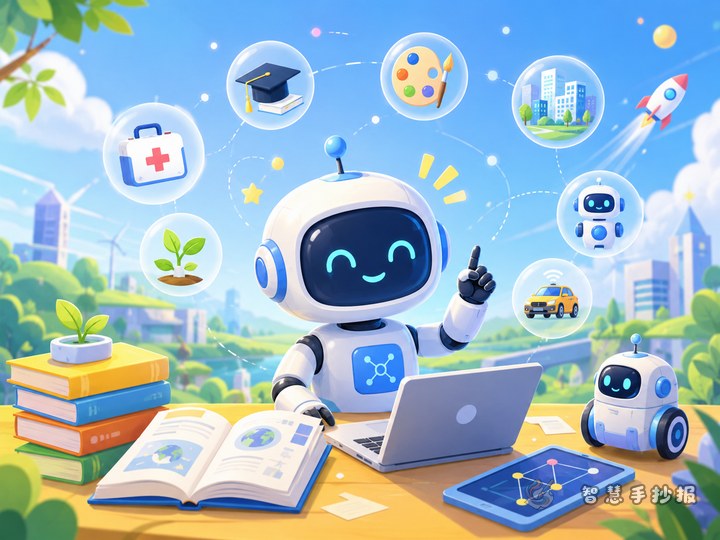
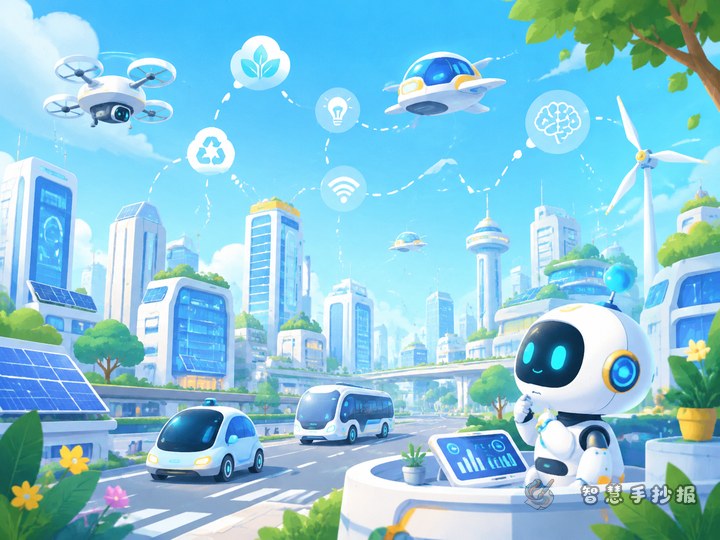
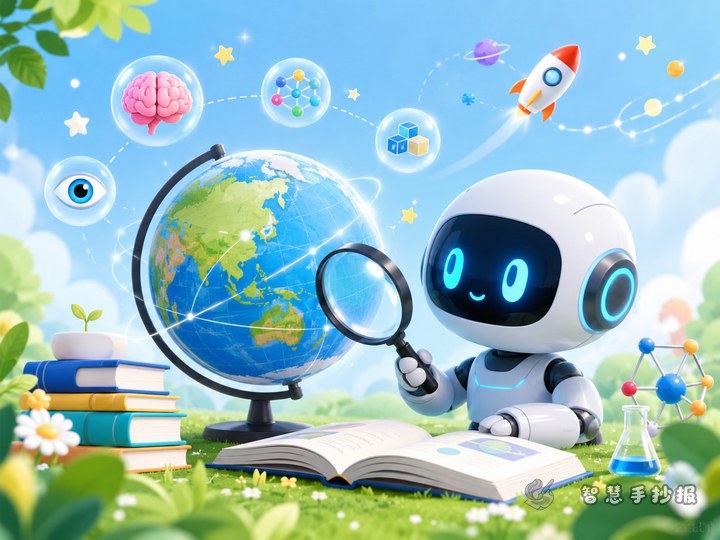
A good layout is a “big title in the center with four life-based sections around it.” Put the title “What kinds of AI are in our home?” in the middle, and divide the rest into four blocks: “common devices,” “why they seem smart,” “how they help,” and “safety tips.”
- Use blue, green, or orange as the main colors for a fresh technology feeling.
- Add small decorations such as speakers, robots, light bulbs, watches, or speech bubbles.
- Keep each section short enough to read at a glance.
- Highlight key words like smart, helpful, learning, daily life, privacy.
A simple ending
Technology makes life better, and artificial intelligence helps many small daily tasks become easier. While enjoying this convenience, we should also learn to use smart tools safely and thoughtfully. If you want to keep improving this theme, you can continue organizing your content and layout in the Zhihui Shouchaobao WeChat mini program.