The Hidden Half of a River Poster
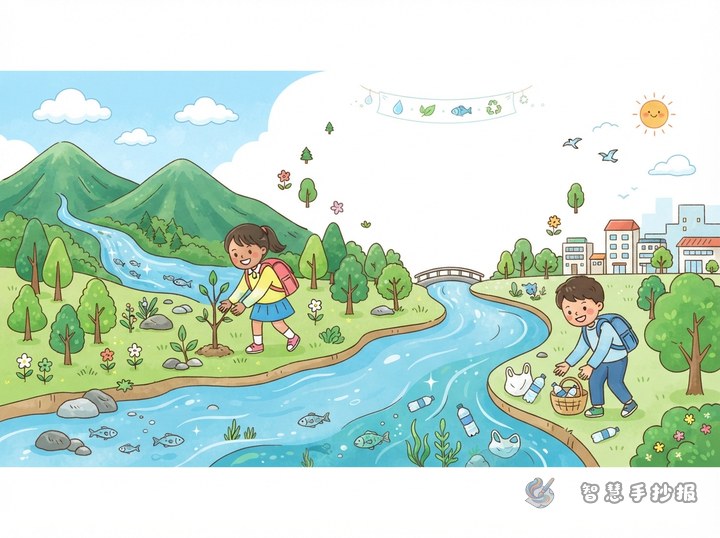
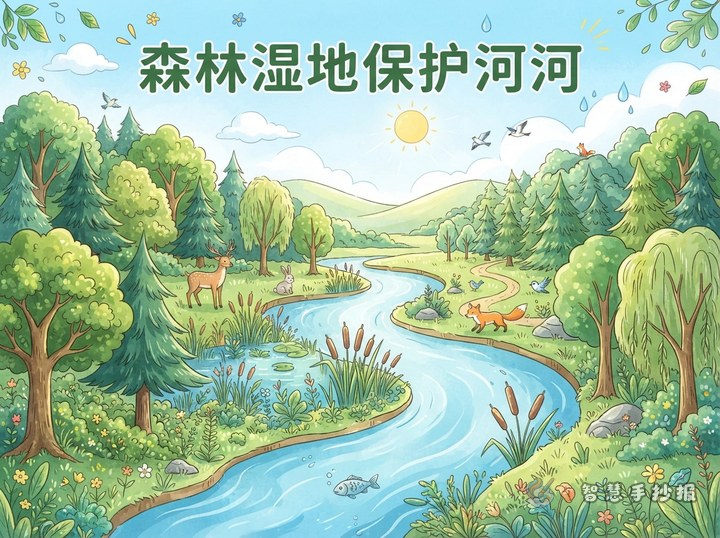
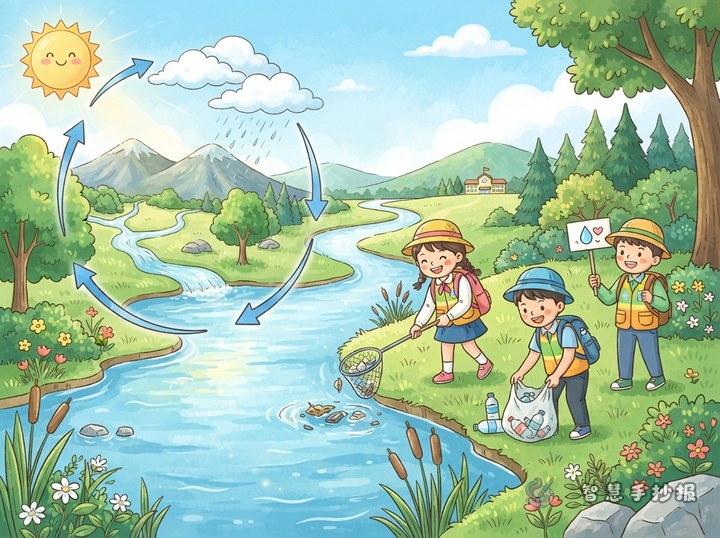
Many river posters show only what we can see: fish, boats, trees and blue waves. That is why so many of them look the same. Under the riverbed there is another world worth drawing - groundwater, stored in the tiny gaps between soil, sand and gravel. Showing that layer gives your poster an angle nobody else in class has.
Three Connections That Fit Neatly Into Three Boxes
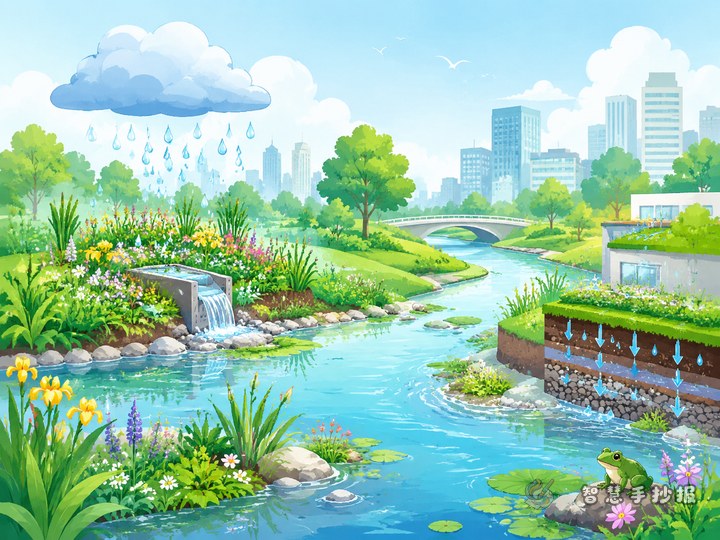
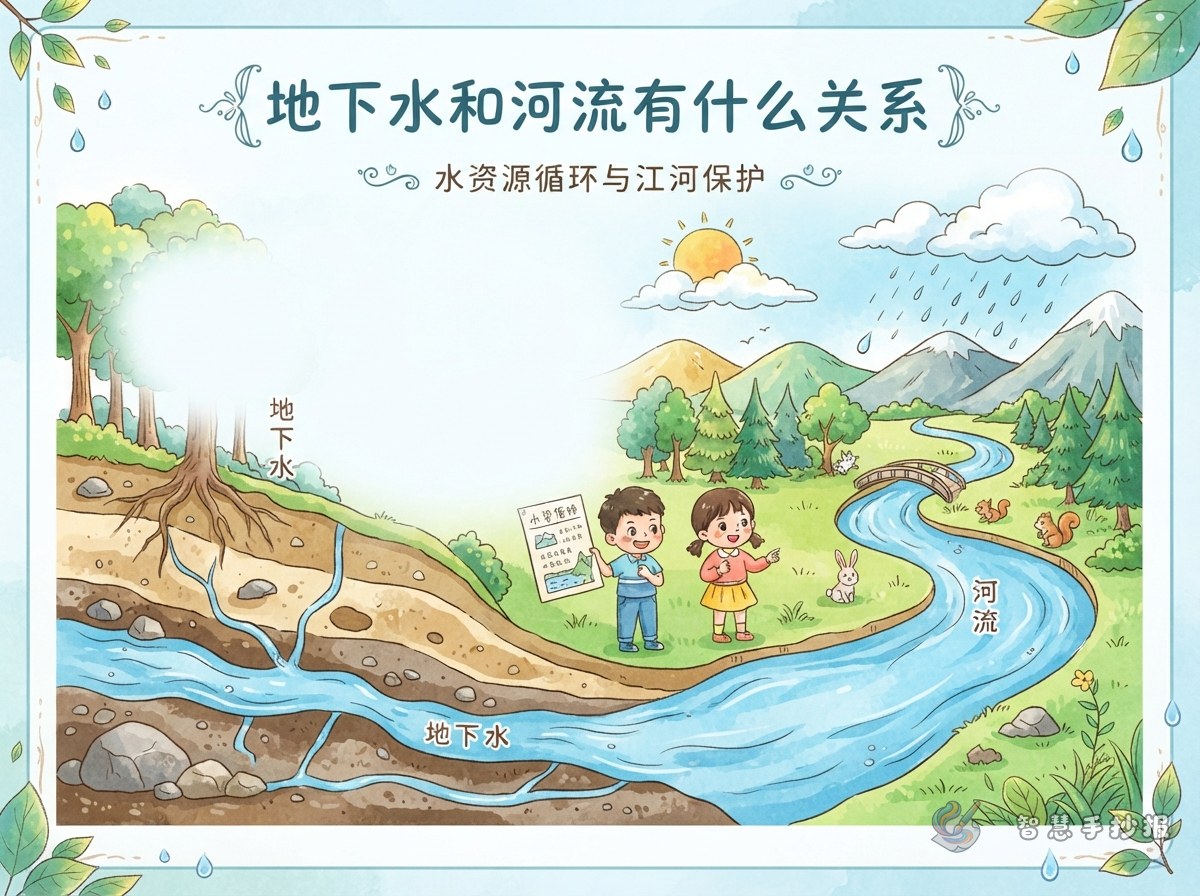
River water slowly seeps down
The riverbed is often made of sand and gravel that water can pass through. Some river water sinks into the ground and is stored there. That is why a river can look low in the dry season while plenty of water still hides underneath.
Groundwater gives water back to the river
When the groundwater level is high, water creeps out from the riverbed or the banks and joins the river again. This is one reason some rivers keep flowing even after a long dry spell.
Take too much, and the river feels it
If groundwater is pumped out faster than it can be replaced, the water level drops, the river receives less refill, and banks can become unstable. Protecting a river is not only about keeping litter out of it - it is also about using groundwater wisely.
A Cross-Section Layout That Holds the Whole Page Together
This topic works best as a layered drawing. Try this order:
- Top half: sky, sun, hills, trees, houses and a curving river.
- Bottom half: brown and grey bands for soil, sand and gravel, with a blue band for the water-bearing layer.
- Blue arrows: water seeping down, groundwater flowing into the river, water being pumped from a well.
- Place your three text boxes beside the drawing and point arrows at the matching spots.
If you want a stronger finish, keep a narrow vertical strip on the right for a short list titled "Three things we can do".
Titles and Column Headings You Can Borrow
- Main title ideas: The Secret Reservoir Under the River / Invisible Water That Keeps a River Alive
- Column headings: Water Travels Downward / The Blue Bank Underground / A Quiet Talk Between River and Groundwater / Pump Less, Keep More
- Closing line: Protecting a river starts with protecting water, and that starts with every drop.
Before You Start Drawing
Sketch the ground line and the underground layers lightly in pencil first, then go over the blue arrows. That way, repeated erasing will not smudge the paper. Keep each text box to three or five lines so it stays readable. If you would rather skip the measuring and ruling, open the WeChat mini program "智慧手抄报", choose a water cycle or river protection template, replace the text with your own, and print it out ready to use.