Turn the River into a Team Relay
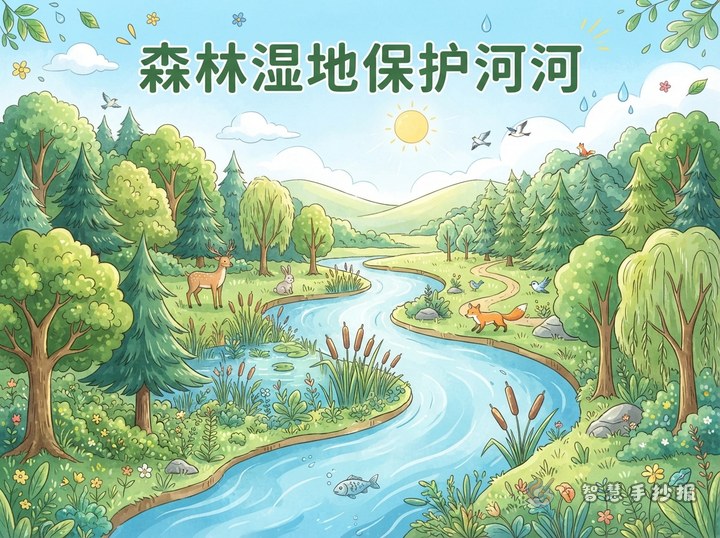
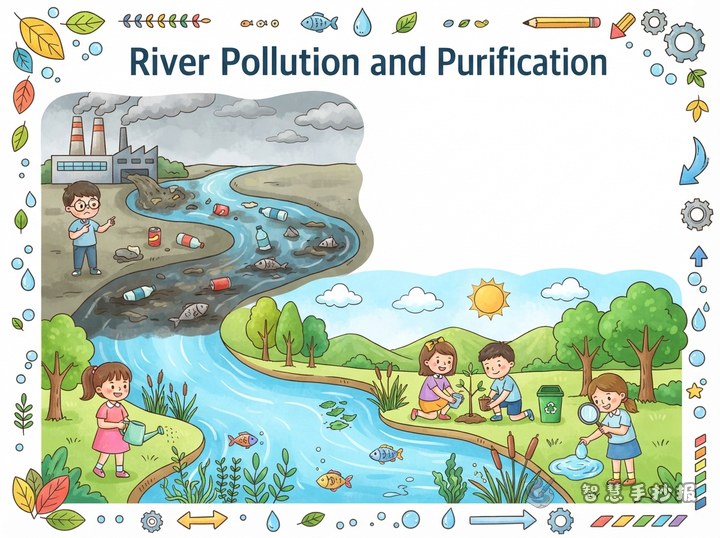
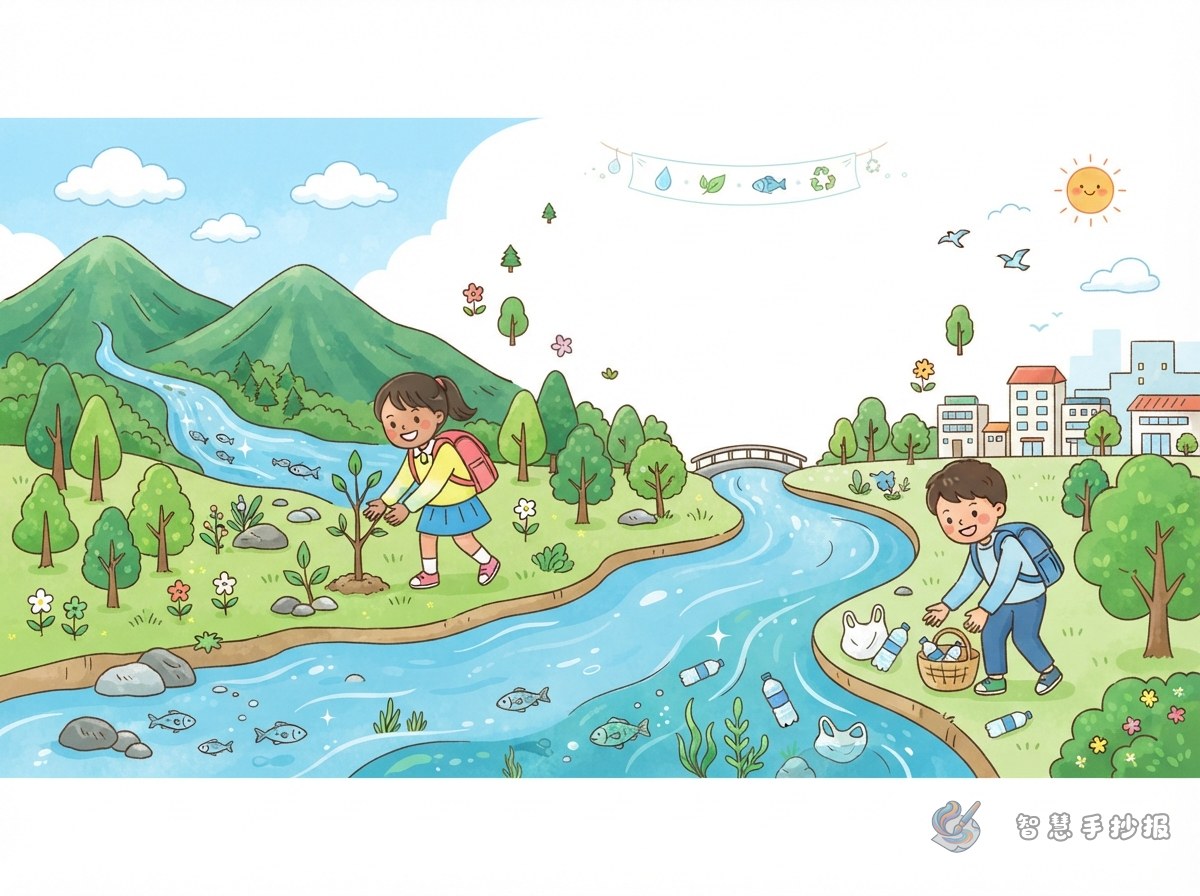
Instead of filling the page with unrelated facts, imagine the whole handwritten poster as one river flowing from its source toward the lower reaches. Draw a winding river from the upper left or upper right across the page. Divide it into upstream, middle-course, and downstream sections, then place the title above the river to create a clear visual path.
In the center, draw a relay baton made of connected water drops. It shows that river protection is not the responsibility of one place alone. Every part of the river and every nearby community can help complete the relay.
What to Write in Each River Section
Upstream: Protect the Water Source
For the upstream section, write about caring for water sources, avoiding unnecessary construction, keeping litter away from streams, and protecting the surrounding land. Add a spring, rain clouds, and a small stream so readers can see that a clean river begins at its source.
Middle Course: Use Water Responsibly
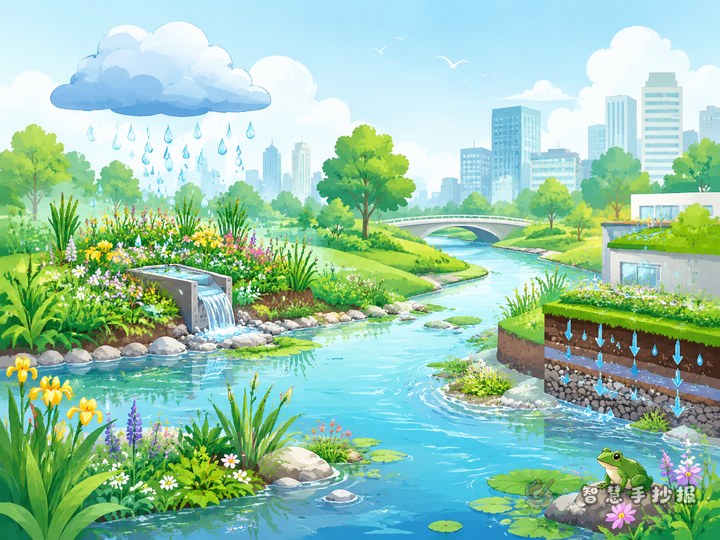
The middle course often connects villages, towns, farmland, and bridges. This section can focus on saving water, taking water responsibly, keeping riverbanks clean, and reducing household wastewater entering the river. Draw a faucet, fields, a bridge, and families to create a lively riverside scene.
Downstream: Protect the River’s Destination
For the downstream section, write about sorting waste, keeping rubbish out of the river, caring for riverside animals, and taking part in simple water-protection actions. Fish, reeds, a river mouth, and waves can show that protection continues wherever the river flows.
A River Protection Message to Copy
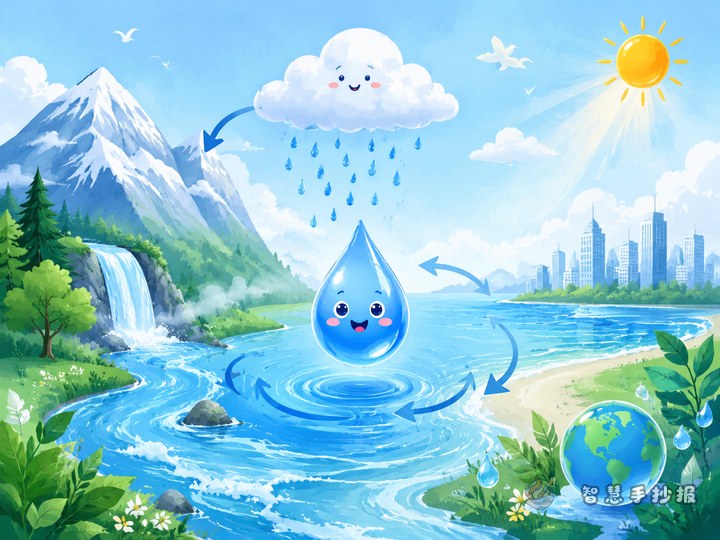
A river is a living line that keeps moving forward. The upstream area protects the water source, the middle course uses water carefully, and the downstream area protects the river’s destination. Water moves through the sky, the land, rivers, and our daily lives. We can begin with small actions such as not littering, saving water, and caring for riverbanks, so clean water can travel farther and rivers can remain full of life.
You can also place a short slogan beside each section: “Disturb the source less, and clean water will flow longer,” “Plan water use, and keep the riverbank cleaner,” and “The river reaches the sea, but protection has no finish line.” Mixing short slogans with longer text gives the page a stronger rhythm.
Connect Four Small Sections with the Water Cycle
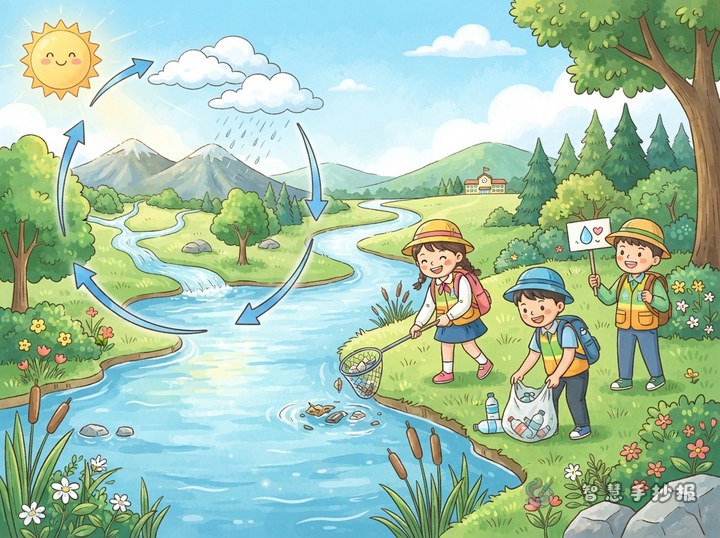
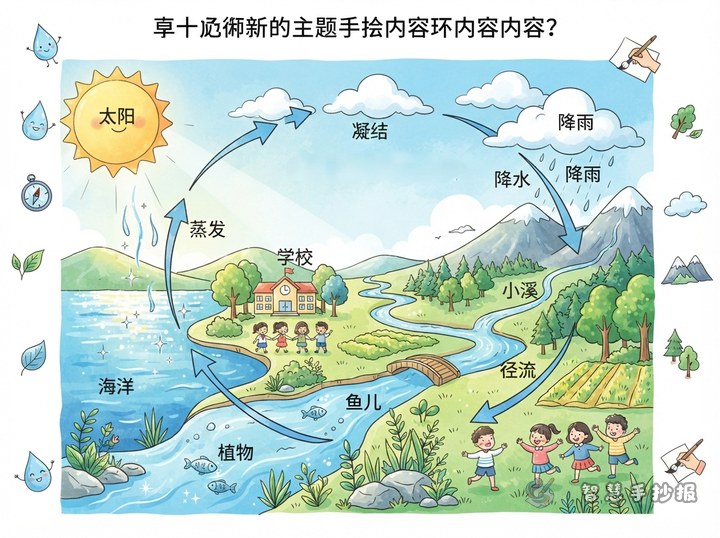
To show the water cycle, add a thin blue arrow strip along the bottom of the page. Write “rainfall—collection—responsible use—return to nature” in sequence. Add a small cloud, river, cup, and leaf beside the words. Keep the explanation short: water keeps circulating, but clean and safe water still depends on everyone’s care.
- Rainfall: Rain and snow add water to rivers.
- Collection: Surface water flows into streams, lakes, and rivers.
- Responsible use: Avoid waste at home, in farming, and in everyday activities.
- Return to nature: Used water should be handled properly to reduce its impact on rivers.
Make the Relay the Visual Highlight
- Sketch the winding river with a pencil first, then place text boxes along both sides so the words do not crowd one another.
- Use light green upstream, blue in the middle, and blue-purple downstream. Let the colors change gently rather than adding too many complicated patterns.
- Use three connected water drops, three pairs of hands passing a drop, or three small bridges to show cooperation between river sections.
- Add a “What I Can Do” card in the lower-right corner with actions such as turning off the tap, keeping rubbish away from rivers, and reminding family members to save water.
Before finishing, check that all three river sections include a protection idea, that the title stands out, and that all arrows point in the same direction. If you want to organize the columns and layout more quickly, you can continue designing in the WeChat mini-program 智慧手抄报 and adjust the content to fit your paper size.