Start with the Big Idea: The City Was Made of Wards
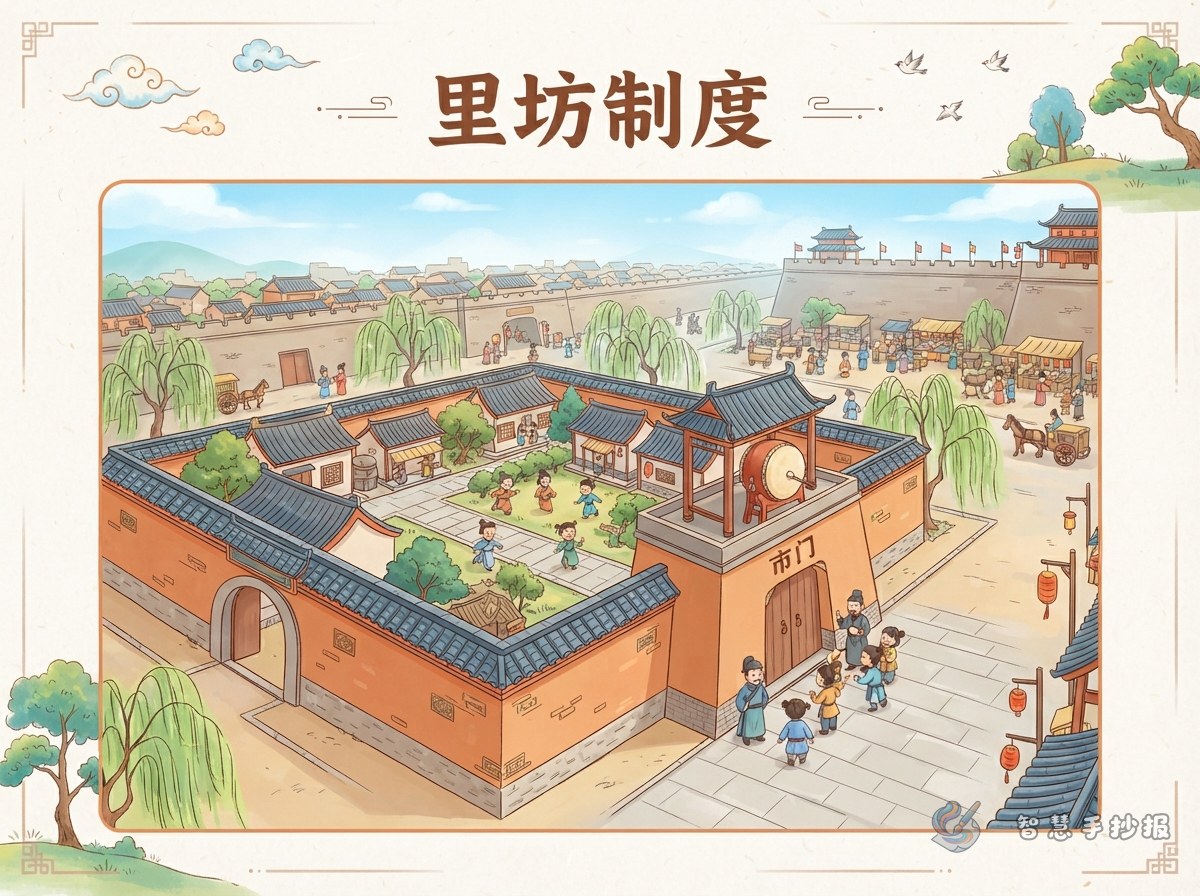
The lifang system sounds academic, but it can be summed up in one sentence: the ancient city was divided by straight streets into blocks, and each block was called a ward. Inside a ward there were homes and small lanes, and around it there was a wall with gates. A poster does not need a long essay; it only needs to show that the city looked like a sheet of grid paper.
- Write a central line: one city, many wards, each with walls and gates.
- Add another: by day the gates were open; when the drums sounded at night, they closed.
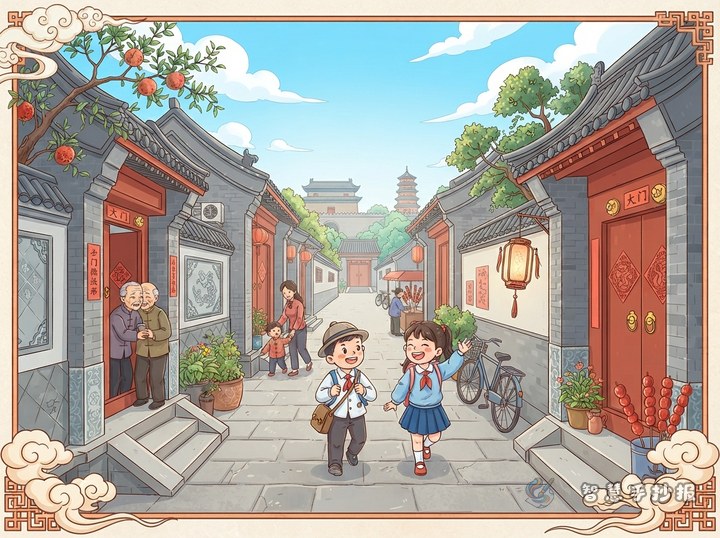
- Finish with the theme: the lanes inside the wards were the early form of neighbourhood life.
Four Words That Carry the Whole Poster
Ward Walls
Ward walls separated homes from the main streets and turned the city into neat blocks. Draw a low wall with two tiles on top and label it “ward wall”.
Ward Gates and Street Drums
The ward gate was the way in and out, and the street drum was the city clock. When the drum sounded, gates opened or closed and daily life followed the beat. Draw a round drum and write beside it: “Drum sounds, gate opens; drum sounds, gate closes.”
East Market and West Market
Shopping took place in fixed markets, and the east and west markets are the best-known examples. In one corner of the poster, draw a row of small shops labelled cloth shop, medicine shop, and cake shop to make the scene lively.
Curfew and Night Markets
At night people were not supposed to wander the streets; this was the curfew. Later, as more streets and lanes appeared, night markets flourished. A small comparison of “the quiet night” and “the busy night” makes an interesting column.
Short Lines You Can Copy onto the Poster
- High ward walls, small ward gates, crossing streets in four directions.
- Three rounds of drums, gates open and close; the city lives by the beat.
- Cloth from the east market, medicine from the west market, stalls in tidy rows.
- By day, lanes are busy; by night, the drums fade and all is still.
- From walled wards to open lanes, the city slowly gained its everyday bustle.
Layout: A Grid Map Plus a Timeline
- Draw a small city map in the middle and divide it with thin lines into squares; write “ward” in each square.
- Draw one main street through the map, place a ward gate at the crossing, and draw a street drum beside it.
- Divide the space around the map into four columns: what a ward is, when the gates open, what the markets sell, and why the night is quiet.
- Add a horizontal timeline below the map: morning drum and gates open, midday market, evening drum and gates close, night curfew.
This arrangement works well because the map provides the visual interest, the columns carry the information, and the timeline links the facts together, so the poster does not look scattered.
Colours and Small Details
Keep the background calm: use cream or pale brown for the city wall colour, vermilion for headings, and blue-grey for lines. Small decorations can include lanterns, shop banners, carts, wells, and stone steps, all common in ancient streets. Do not fill every blank space; a little empty space makes the poster feel more like a real street.
Finishing Touches
If you want a tidier layout, you can look at ward and lane themed layouts in the WeChat mini program “Smart Handwritten Newspaper”, replace the text with your own short lines, then write the title and add your own small drawings by hand. A poster with both knowledge and atmosphere is then complete.