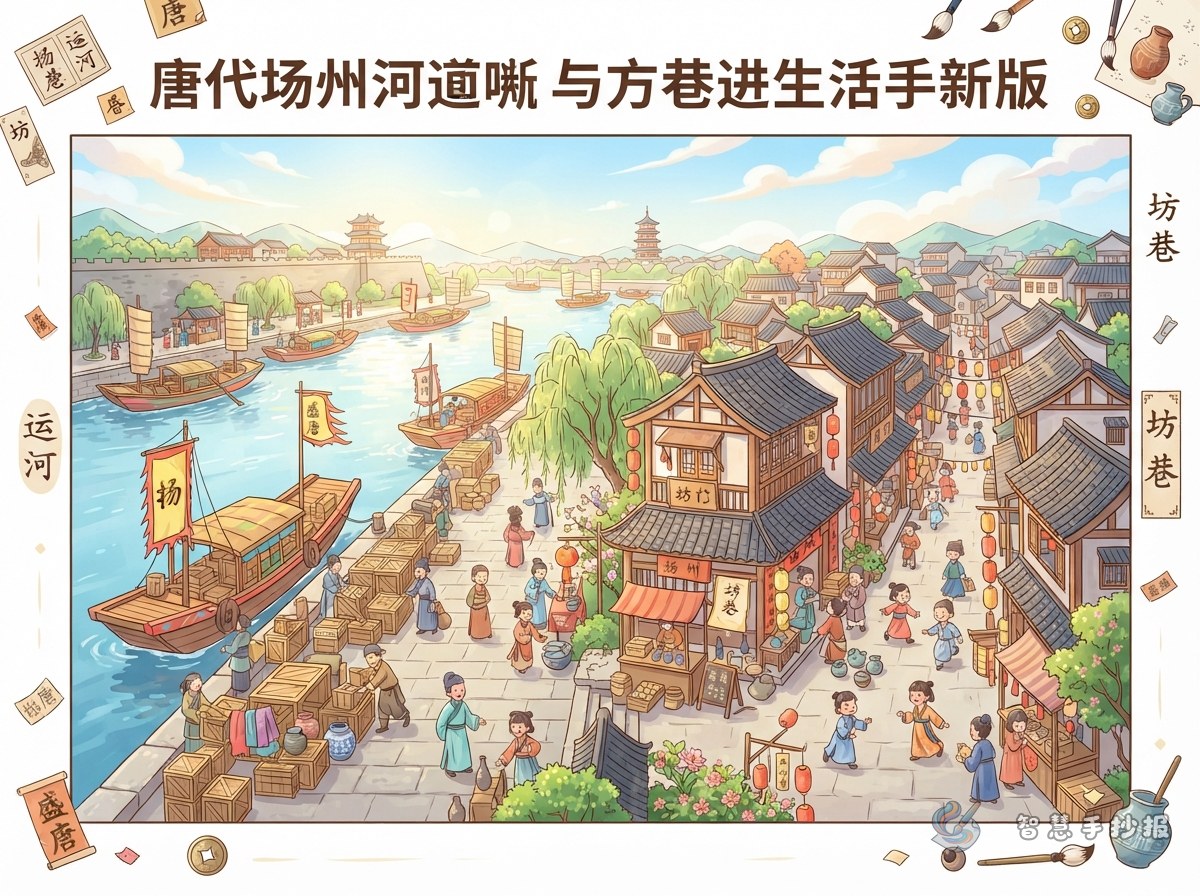
Tell the City’s Story Through One Boat Journey
Instead of listing many dates and names, frame the poster as a boat journey into Tang-era Yangzhou. The boat travels along the canal, reaches a busy wharf, passes commercial streets, and finally enters quieter residential lanes. This route connects transport, trade, food, crafts, and family life in one easy-to-follow story.
Possible main headings include “Entering Yangzhou by Water,” “A Day Beside the Ancient Wharf,” and “From Canal to Neighborhood Lane.” Add a short subtitle explaining that waterways carried both people and goods into the city.
Build the Page Around Four Stops
- Entering by Water: Explain how passenger boats and cargo boats moved along the canal.
- A Busy Wharf: Show boats docking, workers carrying goods, merchants asking directions, and vendors greeting customers.
- Shops Along the Street: Introduce food stalls, teahouses, craft workshops, and stores selling everyday items.
- Life Down the Lane: Add residents sweeping courtyards, neighbors talking, artisans working, and children playing.
Short Text Blocks Ready for the Poster
The Canal Kept the City Moving
Tang-era Yangzhou stood near important waterways. Boats brought travelers and goods from different places, while the wharf linked the canal to streets, shops, and workshops. The waterway was therefore more than a route; it also shaped commerce and everyday urban life.
A Morning at the Wharf
In the morning, boatmen checked ropes as workers carried boxes and sacks ashore. Nearby shops opened their doors, and travelers looked for food or lodging. Footsteps, calls from vendors, and splashing oars created the lively rhythm of the wharf.
Beyond the Crowded Market
The pace became slower inside the residential lanes. People worked near their homes, craftspeople made useful objects, and children played by the lane entrance. Showing both the noisy commercial area and the quieter neighborhood gives the city scene greater depth.
Turn the Canal into a Visual Guide
Use the paper horizontally and draw a narrow canal running from the lower left toward the upper right. Place the arrival section near the left, the wharf scene in the center, and houses with narrow lanes on the right. Keep the river slim enough to leave room for readable text.
- Shape the title like a wooden shop sign and keep the lettering bold.
- Use sails, scrolls, or lattice windows as section frames, but repeat each shape sparingly.
- Add small figures such as a boatman pulling a rope, a vendor arranging goods, or children playing.
- Choose blue-green, ochre, and light brown as the main palette, with vermilion accents.
Check the Story Before Finishing
Make sure the canal, wharf, market street, and lanes form a clear route across the page. The writing should explain urban life rather than becoming a general report about canals. Use broad, reliable descriptions instead of inventing named people or events. To refine the sections, title lettering, and page proportions, continue the project in the 智慧手抄报 WeChat Mini Program.