Tell the Story of Chengdu Through One Street
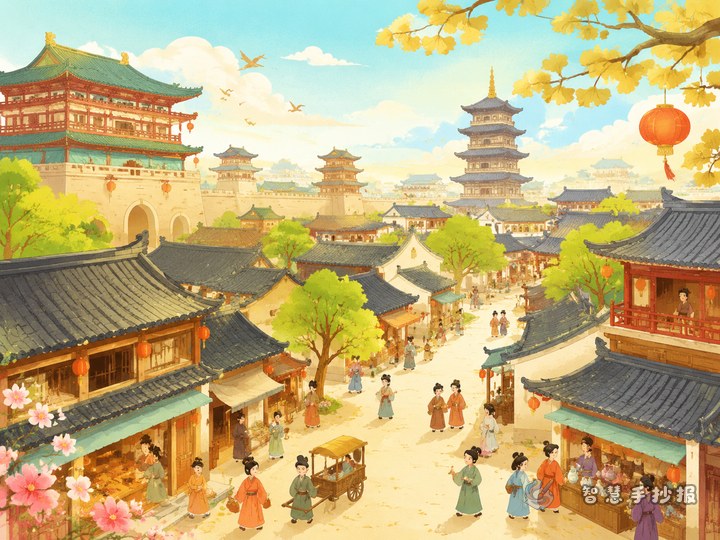
A strong poster can follow one imagined walk through Song-dynasty Chengdu. Begin with shops opening in the morning, visit weaving and book-printing workshops in the afternoon, and end at a teahouse in the evening. This simple timeline gives the page a story instead of turning it into a list of facts.
Four Stops Along the Way
Street Trade
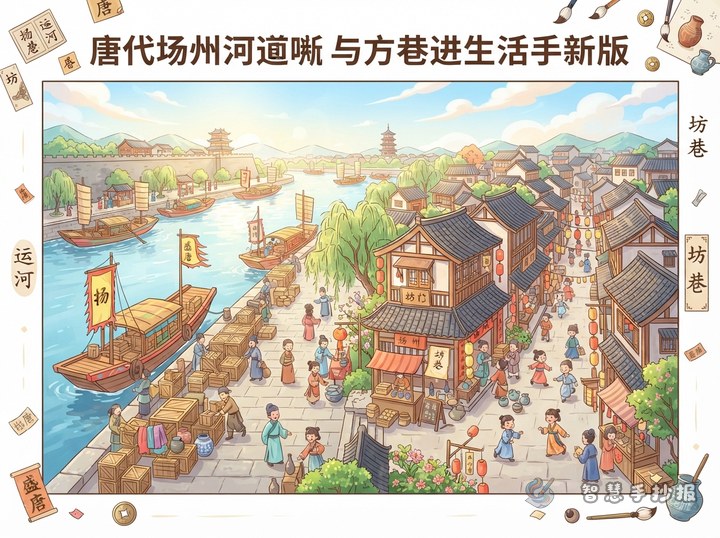
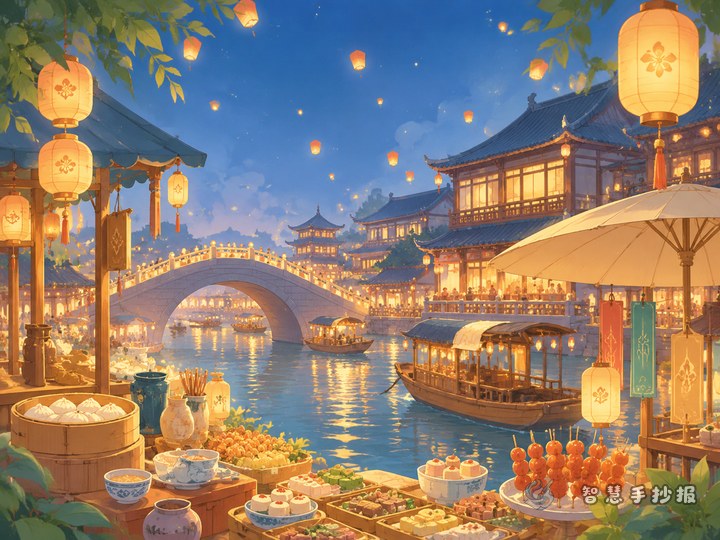
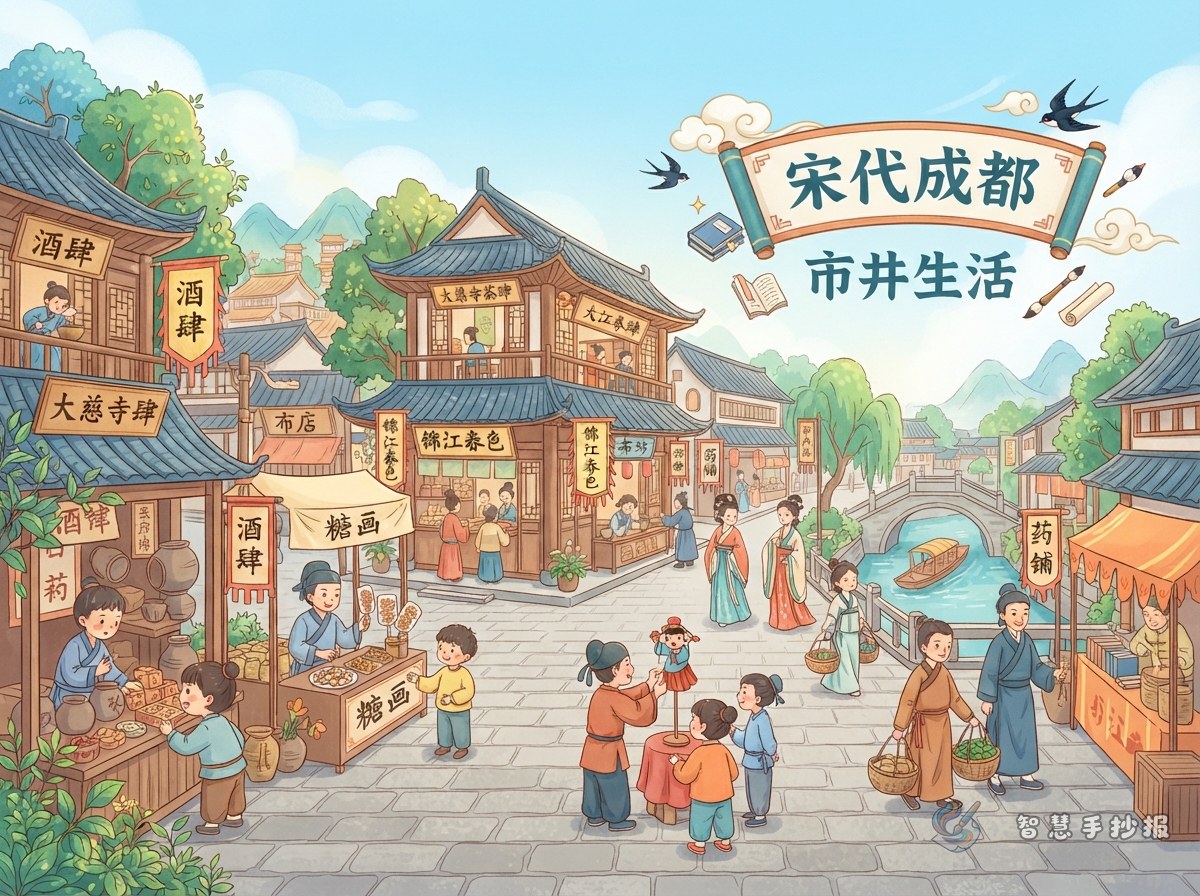
Commerce flourished in Song cities, and trading became less confined by the older ward-and-market system. Shops, food sellers, stalls, and pedestrians can all appear in this section. Use a few clear figures rather than crowding every part of the street.
Brocade Workshops
Chengdu had a long tradition of silk weaving. Explain how skilled workers turned colored threads into patterned fabric. A loom, thread spools, and a brocade-inspired border make useful illustrations.
The Scent of Ink
Sichuan was an important center of woodblock printing during the Song period, while Chengdu was a major cultural city. Show the basic steps as a small sequence: carve the block, apply ink, place the paper, and make the print.
A Rest at the Teahouse
A teahouse adds people and conversation to the city scene. Travelers and residents could drink tea, rest, and exchange news. Focus on the atmosphere of everyday interaction rather than filling the section with difficult dates.
Short Text for the Poster
- Opening line: Along the streets of Song-dynasty Chengdu, shops, workshops, and teahouses formed a lively urban world.
- History note: As commerce expanded, trading space and business hours became more flexible in many Song cities.
- People note: Vendors, weavers, printers, and pedestrians all helped create the character of the old city.
- Closing line: An ancient lane preserves not only a city plan but also memories of work, trade, and community.
Design the Page as a Street Map
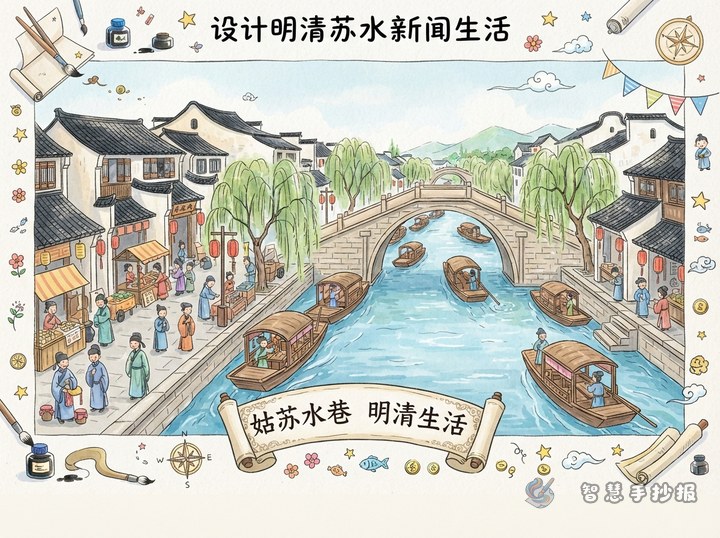
Use a horizontal layout with a winding road through the center. Place the title at the top and arrange the four sections like shops along the street. A gate can mark the beginning on the left, while a teahouse and lanterns close the journey on the right. Eaves, lattice windows, and brocade patterns can separate the text panels.
Brick red, tea brown, bamboo green, and warm cream create a clear historical palette. Keep text panels light and limit each paragraph to a few lines. After selecting the material, users can continue arranging the heading, sections, and layout in the Smart Handwritten Poster WeChat Mini Program.
Final Checks Before Finishing
- Set the reading direction from morning to evening before drawing the text boxes.
- Use simplified historical clothing and architecture without modern signs or vehicles.
- Keep facts concise and do not invent shop names, statistics, or personal stories.
- Check that the title stands out and that illustrations do not cover the writing.