Build the Theme Around a Canal, a Lane, and a Bridge
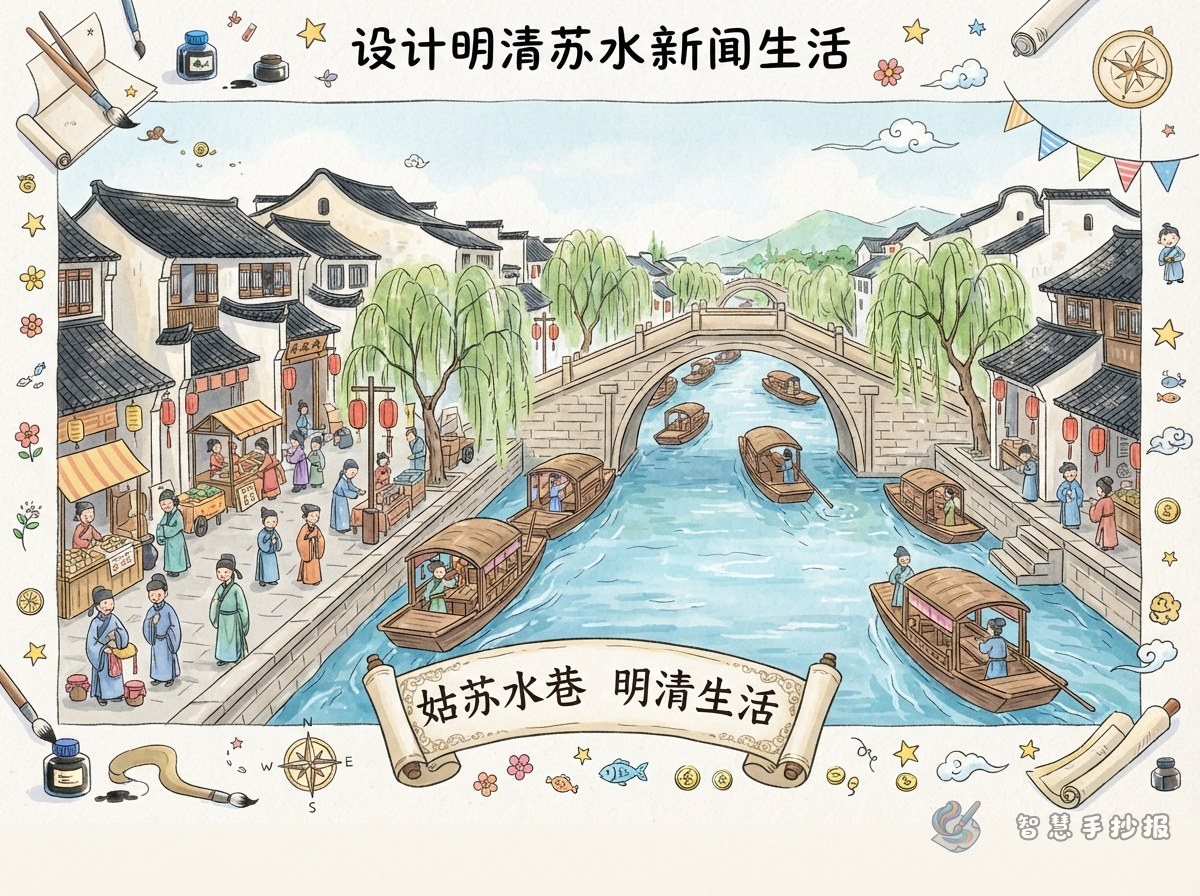
Instead of introducing all of Suzhou's history, focus the project on everyday life along the waterways during the Ming and Qing periods. Use canals, lanes, and stone bridges as the three main clues. Together, they show how residents traveled by boat, lived beside the water, crossed bridges, and visited local shops and markets.
Possible headings include “Homes Along the Water,” “Boats Below, Daily Life Above,” and “A Walk Through Old Suzhou's Water Lanes.” Place a small arched bridge, several waterside houses, and a boat beside the title to establish the setting without crowding the page.
Turn the Page into a Boat Journey
Imagine that the reader is traveling through a water lane. Each stop made by the boat can become a content section, while pale blue ripples, stone paths, or bridge arches can guide the eye from one section to the next.
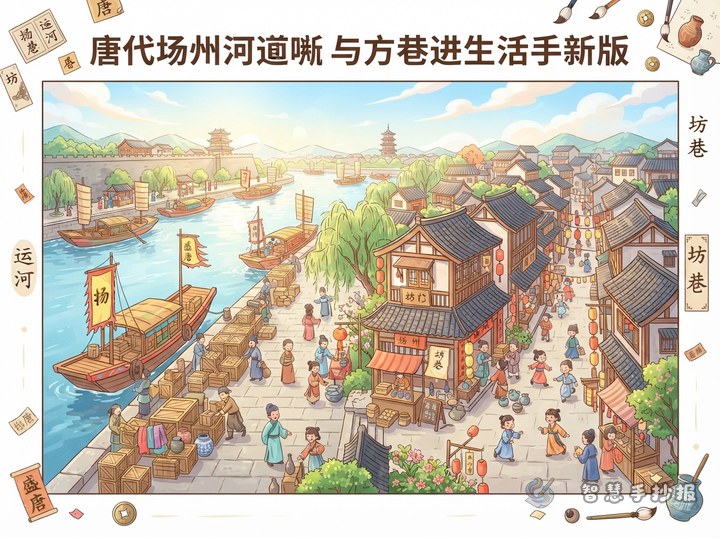
- Water-Lane Map: Explain how waterways and streets often ran beside one another and how bridges connected the two banks.
- Homes by the Canal: Describe waterside homes and everyday activities such as collecting water, washing, and receiving goods by boat.
- Scenes Near the Bridge: Show shops, pedestrians, vendors carrying loads, and boats passing through the neighborhood.
- One Day in the Water City: Follow the city from morning to evening as shops open, boats move, and residents return home.
Short Passages Ready for the Newspaper
Where Canals Met Streets
In Ming- and Qing-era Suzhou, many canals ran beside streets and lanes. People walked on stone paths or traveled by boat beneath bridges. The waterways were not only scenic; they also supported transportation and the movement of everyday goods.
Life Around a Stone Bridge
A stone bridge joined two sides of a canal and offered a lively view of city life. Pedestrians crossed above while boats passed below. Nearby shops and stalls added footsteps, calls from vendors, and the sound of oars to the neighborhood.
Living Beside the Water
Waterside houses connected homes directly with canals and lanes. Residents could see passing boats from their windows, reach the street through a nearby doorway, and receive supplies by water. This layout reflected how the city adapted to its canal network.
Create Depth with Color and Simple Details
- Use pale blue for water, gray-white for walls, and light brown for wooden doors and stonework. Add a small amount of red to the title, seals, or lanterns.
- Draw one curving canal through the center and place text boxes along both banks instead of using a rigid grid.
- Make the closest bridge and boat slightly larger, then reduce the size of distant rooftops to suggest a deep, narrow lane.
- Decorate empty corners with roof tiles, bridge rails, ripples, or oars, but keep all writing easy to read.
Check the Water-City Story Before Finishing
Make sure the title clearly identifies Suzhou's water lanes, the sections include both urban design and daily life, and each illustration supports nearby text. Keep historical statements simple and avoid inventing specific people or events. After drafting the content, students and parents can use the Smart Hand-copied Newspaper WeChat mini program to explore layouts and adjust section placement before copying the final design.