Start With a Question: Why Do Earthworms Come Up After Rain?
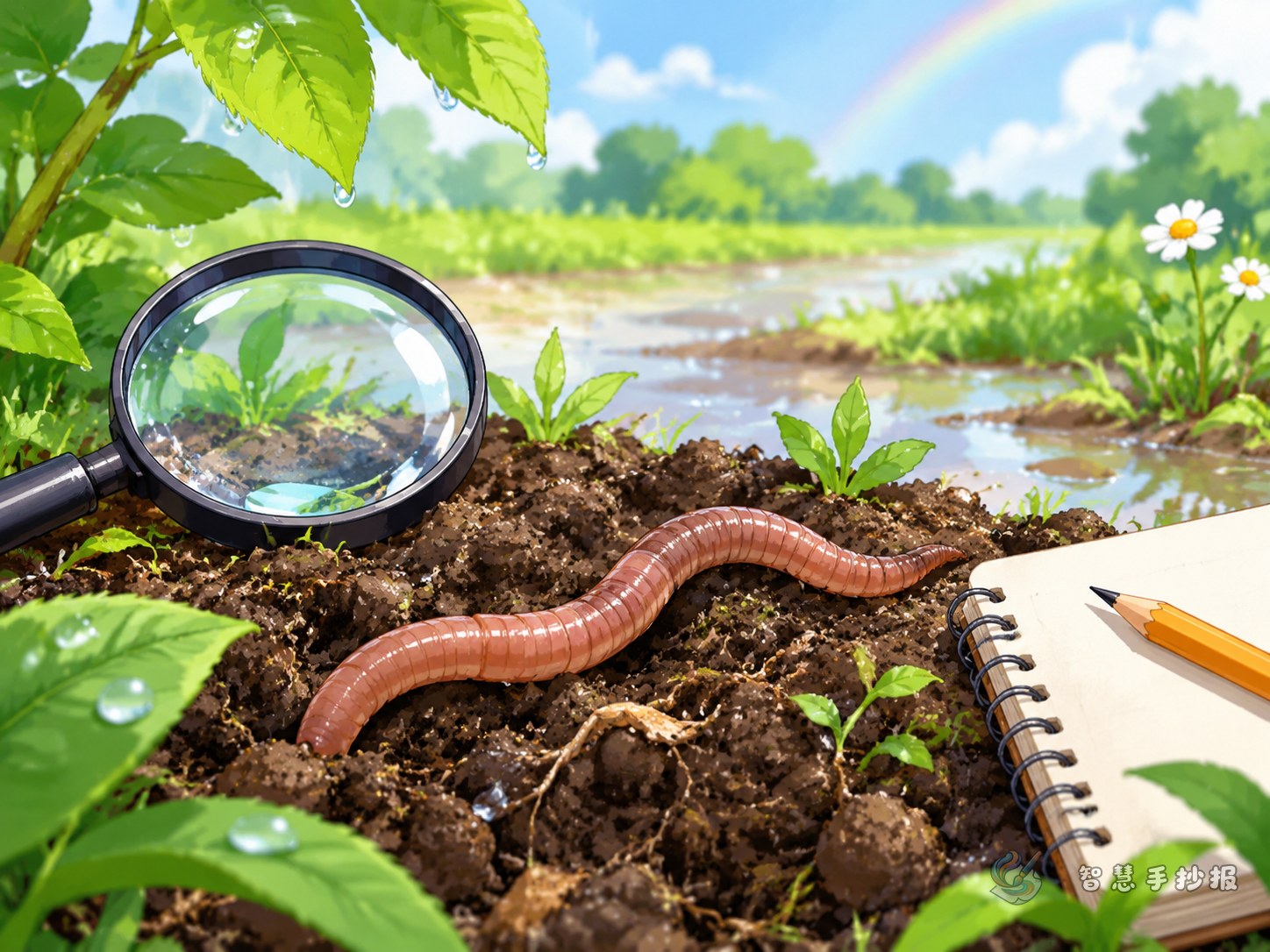
The most engaging opening for an earthworm poster is not a description of the animal but the strange thing you noticed yourself: you never see earthworms on a normal day, yet after one rainstorm they seem to be everywhere along the path and the playground.
Split this into two short blocks. In My Guess, write something like "maybe they come up because the water is uncomfortable." In What I Saw, describe where they actually appeared, for example near puddles or beside damp soil. Earthworms breathe through their skin, and when rainwater fills the gaps in the soil there is less air underground, which is the usual explanation for why they surface. A guess plus a real sighting reads far better than a copied conclusion.
Build an Observation Profile Card
The profile card is the star of the poster. Draw a box or a small card and fill it in one line at a time:
- Time: what time it was and how long after the rain stopped
- Weather and ground: drizzle or downpour, puddles, damp or half-dry soil
- Appearance: length, colour, and whether you spotted the pale band
- Movement: stretching forward, or curled up tight
- Neighbours: ants, fallen leaves or small stones nearby
You do not need to fill every line. Four or five honest details look better than a wall of adjectives.
A Four-Column Table Keeps the Record Honest
A simple table makes the poster look like real fieldwork. Four columns are enough:
- Time: when you first saw it, and whether it was still there ten minutes later
- Place and surroundings: flower bed, under steps, beside a tree, wet or dry ground
- What it was doing: crawling, pausing, burrowing down, blocked by something
- My question: why not head for the dry ground? Can it find its way?
Leaving one row for a period when you saw nothing is valuable too, because it shows your observation was continuous rather than a single lucky glance.
Short Text Blocks You Can Copy Straight Onto the Page
Three small blocks are enough to fill the writing space:
What its body looks like
An earthworm has a long, slender body made of many rings, with a paler band near the head. It has no legs and moves by stretching and shortening its body.
How it helps the soil
Earthworms burrow through the ground, loosening the soil and pulling fallen leaves and other decaying material down with them, which is why people sometimes call them little soil workers.
A detail I noticed
Write about the moment it avoided a puddle or curled up when touched. Small moments like these make readers stop and look, far more than an encyclopaedia paragraph.
Layout Plan: One Ground Line Holds the Whole Page
Earthworms suit a page split into two layers. Draw a horizontal ground line slightly above the middle. Above it, sketch grass, raindrops and puddles; below it, fill in soil colour and winding tunnels.
- Place the title above the ground line in dark brown or deep green
- Put the profile card and table underground, as if they were dug up
- Keep text blocks in separate small boxes rather than one long paragraph
- Stick to soil brown, pale sand yellow and grass green for a clean look
If you have time, add two or three small earthworms inside the tunnels so the page feels alive. When you want a neat layout fast, open the Smart Handwritten Poster mini program, choose a nature observation template, type in your card and table notes, then finish the drawing by hand.
Three Reminders Before You Hand It In
First, gently return any earthworm to damp soil or under fallen leaves instead of holding it for a long time. Second, draw the animal rather than catching it, which protects it and gives you more freedom. Third, leave your open questions as the final block so readers keep thinking after they finish reading, which gives the poster a voice of its own.