Turn One Shared Meal into the Main Story
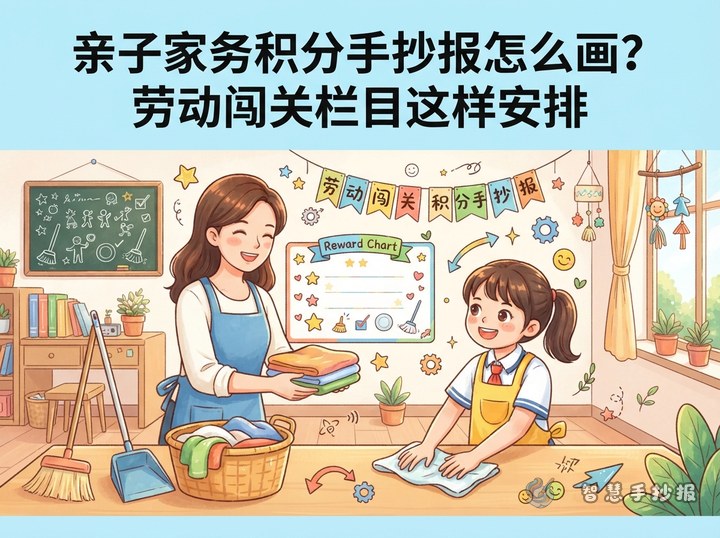
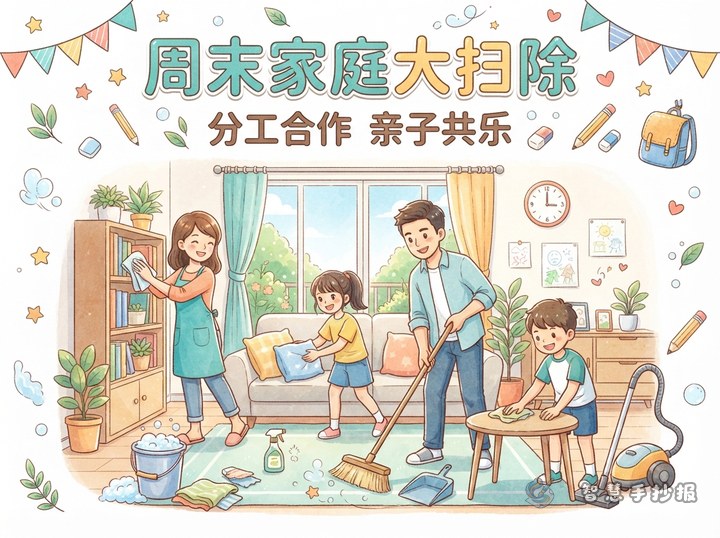
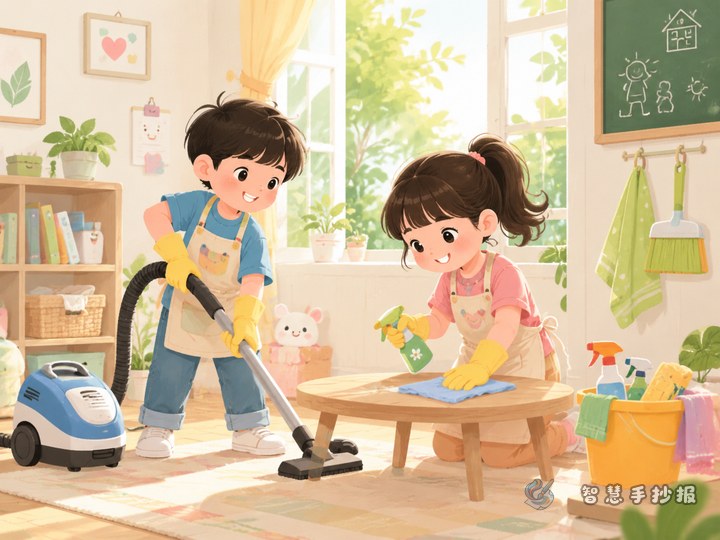
A parent-child cooking handwritten newspaper does not need to list every household task. Build it around one simple question: how did the family work together to prepare a meal? Connect the parent’s guidance, the child’s participation, and the joy of sharing the result. This gives the page a warm everyday story instead of a collection of empty slogans.
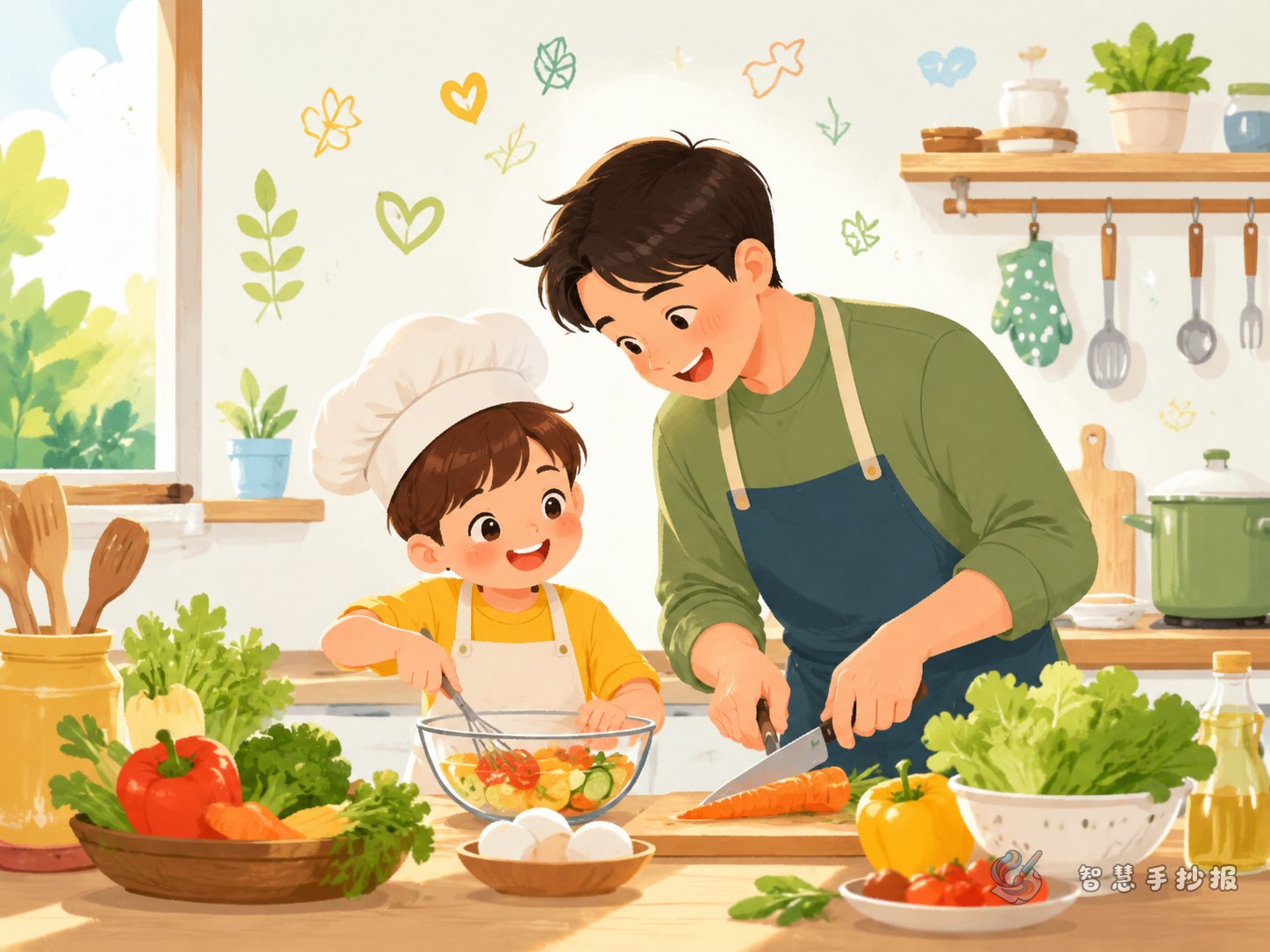
- Preparation: A parent chooses the menu while the child washes vegetables, sorts ingredients, or passes safe kitchen items.
- Working together: The parent handles steps that require extra care, while the child can watch, keep time, or prepare tableware.
- Finishing up: Everyone helps put things away and wipe the work area, showing that cooking includes cleanup as well.
For knives, hot pans, or a gas stove, show adult supervision and safety reminders. Do not depict a child using dangerous equipment alone.
Four Sections for a Clear Family Relay
1. Today’s Menu
Choose a simple dish such as tomato and egg noodles, a vegetable salad, or a family favorite. Add small drawings of the ingredients. The menu does not need to be complicated; it only needs to make the family task easy to understand.
2. What I Can Do
Write in the first person about age-appropriate jobs: “I washed the vegetables,” “I counted the table settings,” or “I put the seasonings in their place.” Short, specific sentences are easy to copy onto the page.
3. What My Parents Taught Me
This section can include practical reminders such as “Wash your hands before cooking,” “Ask before taking something,” and “Keep a safe distance from a hot pan.” These lines show both teamwork and useful safety knowledge.
4. What I Learned
End with a reflection such as “I learned that one meal takes many people working together,” “Food tastes better when we help prepare it,” or “I would like to share another small task next time.”
Short Lines You Can Copy Directly
- Household chores are a family responsibility, not one person’s job.
- I do what I can, while my parents guide me with patience.
- Every step matters, from preparing ingredients to tidying the kitchen.
- We work together, share the meal, and share the warmth of home.
- Small hands can help with small chores, and teamwork brings big smiles.
Design the Page Like a Small Kitchen Worktop
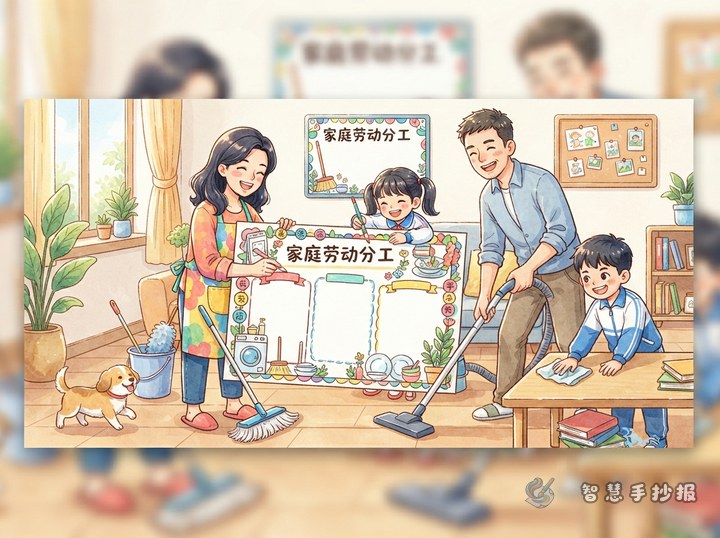
For a horizontal layout, draw a round pot or a dining table in the center as the main illustration. Write “Cooking Together as a Family” inside it. Place “Today’s Menu” and “What I Can Do” on the left, with small icons of vegetables, an apron, or a washing bowl. Put “What My Parents Taught Me” and “What I Learned” on the right, using speech bubbles to show family conversation.
For a vertical layout, use a curved colored path to show the order: choose the menu, prepare ingredients, cook together, and tidy the kitchen. Leave a small text area beside each step so the page does not become crowded. Orange, yellow, and green work well for a warm kitchen feeling while highlighting food and family work.
Check These Details Before You Finish
- Make sure the title shows both parent-child cooking and shared household work.
- Keep the child’s tasks specific and age-appropriate, without showing the child alone with dangerous equipment.
- Leave enough space between words, drawings, and sections so the main content stands out.
After choosing the theme, sketch the section positions on paper first. You can then continue arranging the wording and layout in the 智慧手抄报 WeChat mini program and finish this record of family teamwork more smoothly.