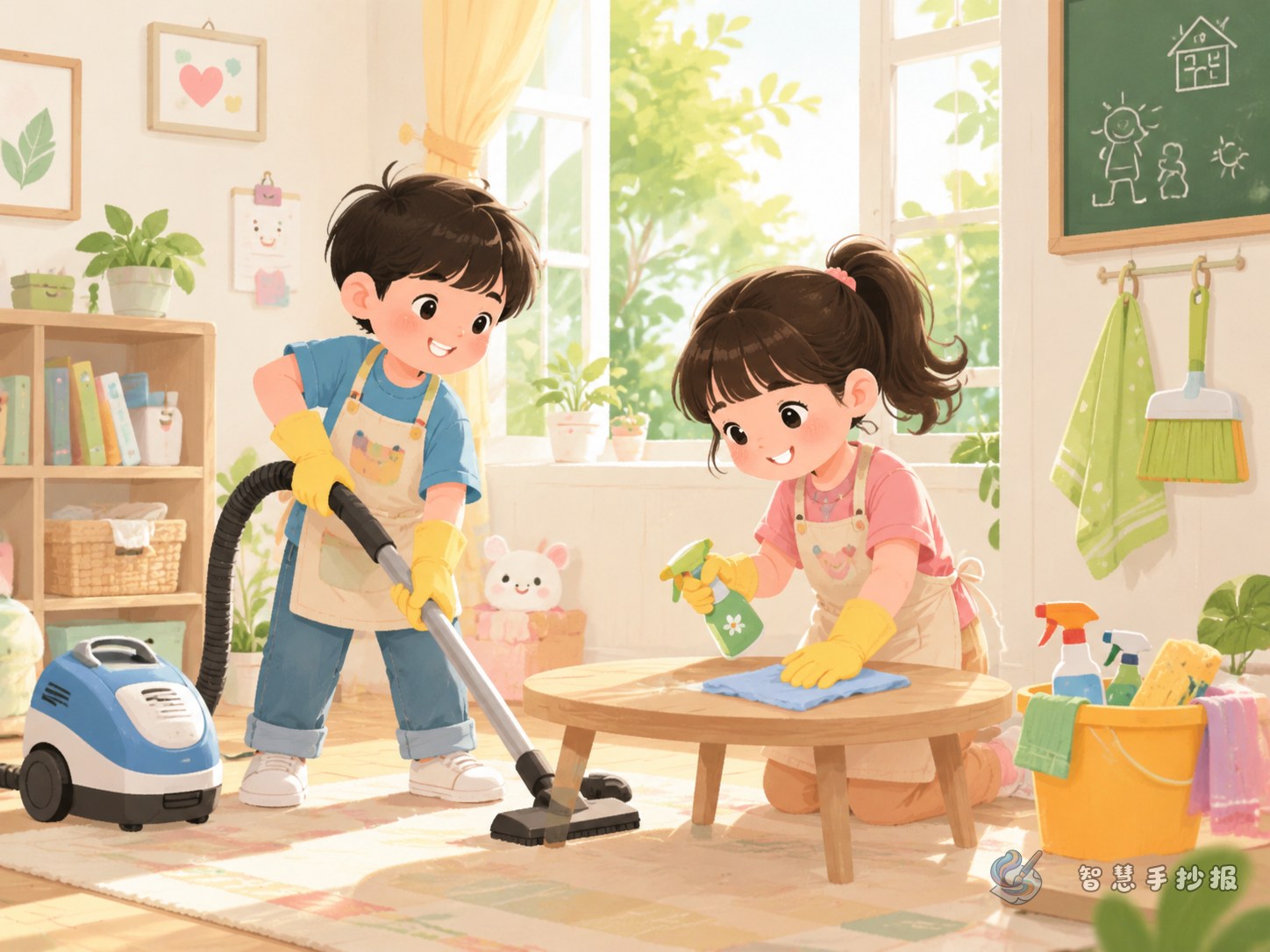
Turn the topic into a growth story
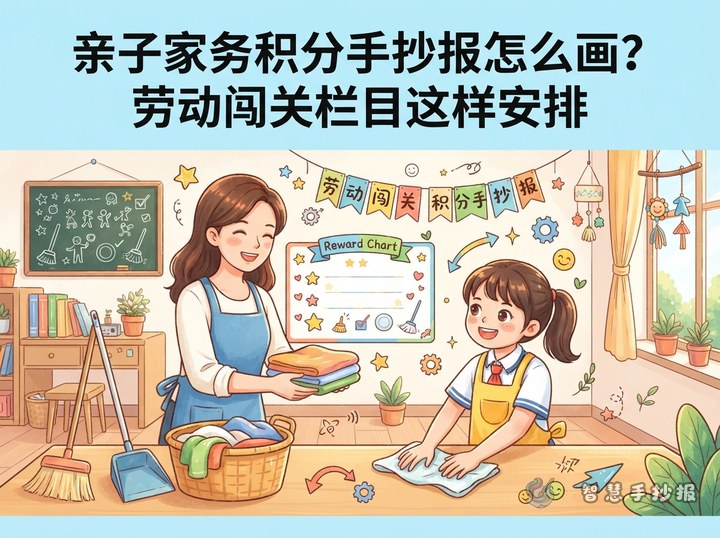
This hand-copied poster can show more than a list of chores. It can tell how a child learns to care for the home step by step. Possible titles include “My Chore Growth Story,” “I Am a Little Helper at Home,” or “Our Family Chore Relay.”
A good opening paragraph may say: Housework is not only for parents. A home belongs to everyone who lives in it. When we learn to tidy our desk, put away dishes, wipe the table, or sweep the floor, we are learning to take care of ourselves and share responsibility with our family.
Design the page as a chore adventure route
Instead of using plain boxes, you can draw a route across the page. Each stop represents one chore skill. Younger students can choose simple tasks, while older students can add planning, teamwork, and responsibility.
- Stop 1: Tidy my own things, with drawings of a schoolbag, pencils, books, or a wardrobe.
- Stop 2: Help before and after meals, such as placing chopsticks, wiping the table, and putting dishes away safely.
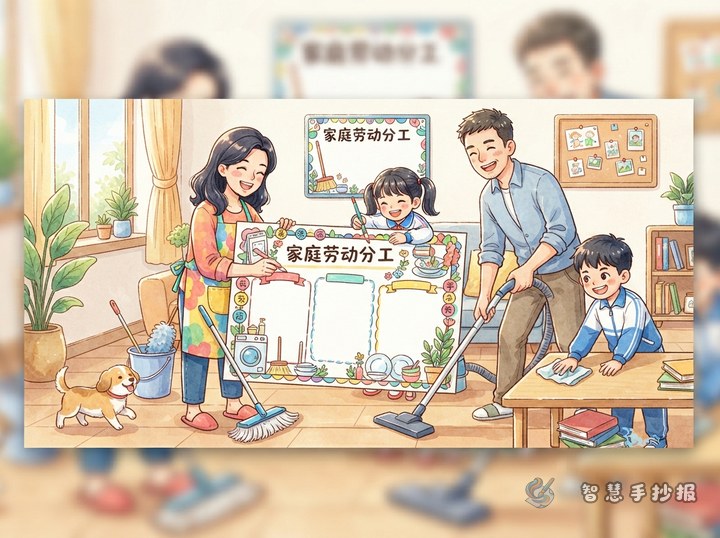
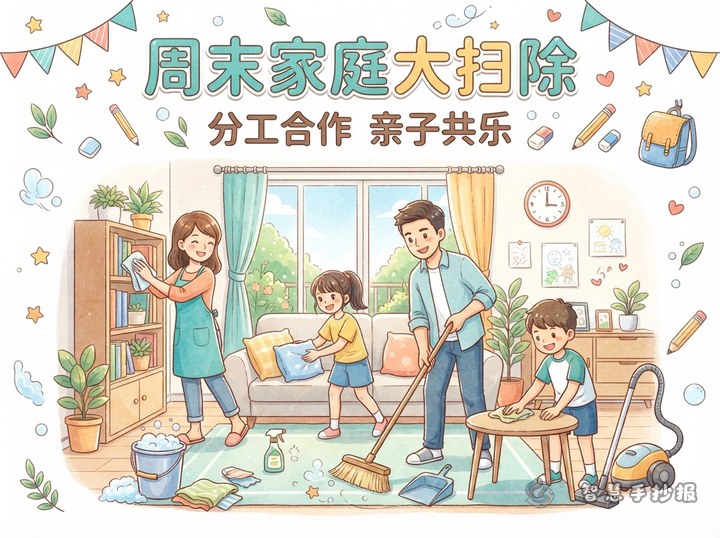
- Stop 3: A parent-child teamwork task, such as mopping the floor, drying clothes, or cleaning the living room together.
- Stop 4: What I learned, with one or two sentences about respect, care, and responsibility.
Short writing materials for the poster
- Small chores can build a strong sense of responsibility.
- When I do a little more, my family has a little less to worry about.
- Housework teaches me to observe, plan, and cherish a clean home.
- Doing chores with my parents brings laughter and teamwork.
- A child who can organize a room can also learn to organize study and life.
A longer paragraph can be written like this: Last weekend, I cleaned the living room with my parents. I put the books back in order and wiped the tea table. My mother arranged the sofa, and my father mopped the floor. After we divided the tasks, the work became faster and happier. Looking at the clean room, I understood that housework is not a burden, but a way for family members to care for one another.
Useful columns that make the poster richer
My chore list
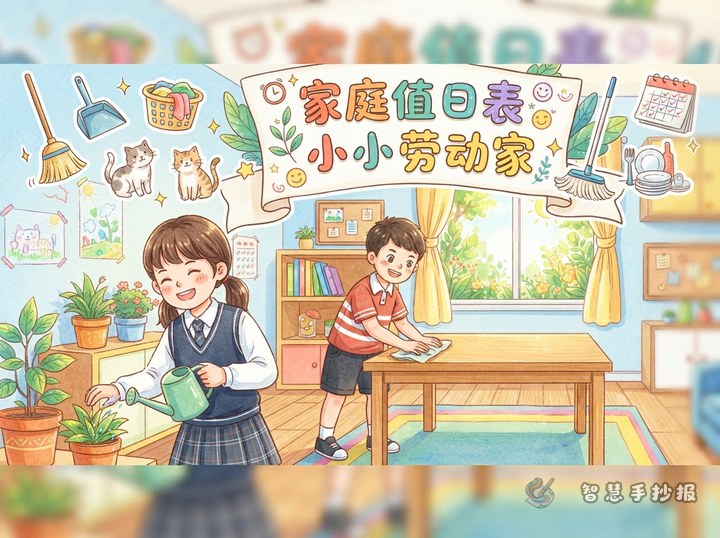
Write chores that the child can do independently, such as folding a quilt, taking out the trash, organizing a desk, and watering plants. Small icons can make the list easier to read.
A teamwork moment with parents
Describe one chore completed with parents. Focus on discussion, task sharing, reminders, and feelings, not only on the action itself.
Safety tips
Remind students to avoid slippery floors, use cleaning tools carefully, and ask adults for help when hot water, knives, or electrical appliances are involved.
Colors and drawings that fit the theme
Light green, orange, and sky blue can create a bright and warm home atmosphere. Decorations may include a broom, cloth, laundry basket, dining table, flowerpot, or storage box, but the writing area should stay clear.
The page can include a large title area, three or four content boxes, and a small “chore stars” corner. After preparing the draft, students and parents can continue in the Zhihui Shouchaobao WeChat mini program to choose layouts and organize materials for a clearer poster.