Start with the key idea: Xiaoman is a growing stage, not the final harvest
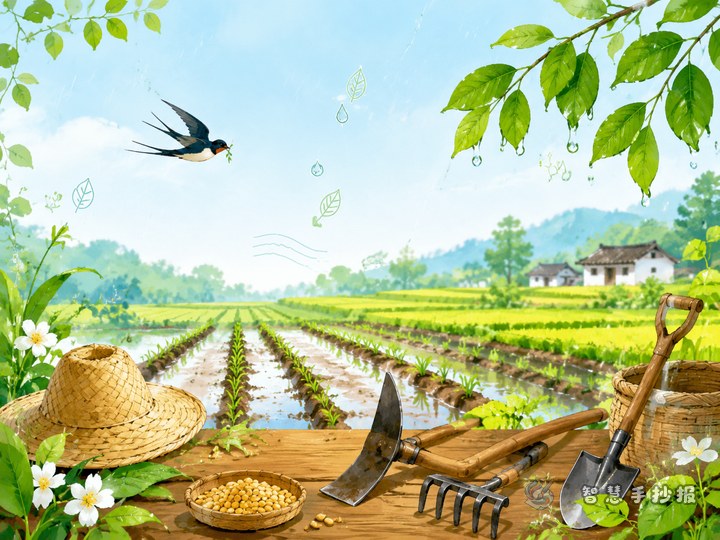
When making a Xiaoman handwritten newspaper, many students only write the name of the solar term and miss the real focus. A better approach is to show that Xiaoman is the time when crops, especially wheat, begin to grow fuller but are not fully mature yet. This makes the topic more specific and helps the whole page feel connected to farming life.
You may choose a title such as Xiaoman in the Fields or Busy Farms During Xiaoman. A short subtitle can explain the main point: the weather gets warmer, rainfall increases, and crops enter an important growth stage.
Useful sections to include on the page
1. Quick facts about Xiaoman
Write a short explanation of the solar term. Xiaoman is an important period in early summer. It means that summer crops such as wheat are becoming plump, but they are not fully ripe. This idea of “almost full, but not yet complete” is the heart of the term.
2. Farm work during Xiaoman
- Observe wheat and other crops as grains begin to fill.
- Remove weeds so they do not take water and nutrients.
- Irrigate fields when needed and keep the soil properly moist.
- Prepare drainage in case of heavy rain.
- Check whether young plants are growing evenly and strongly.
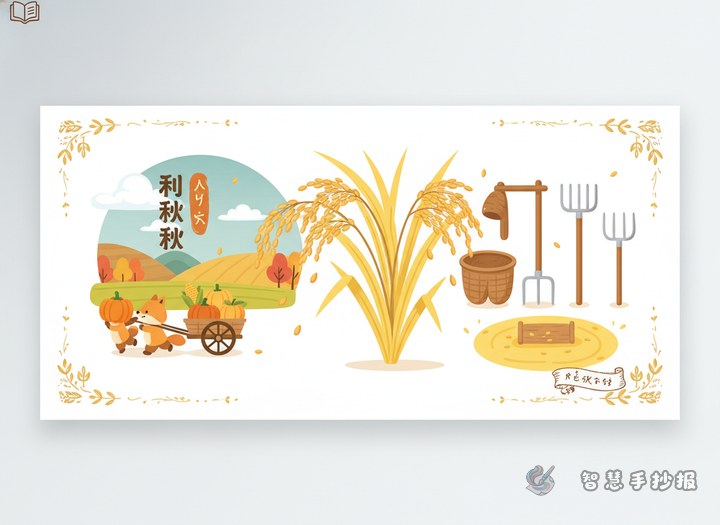
3. Common farming tools
This part should be short and clear so readers can quickly understand each tool.
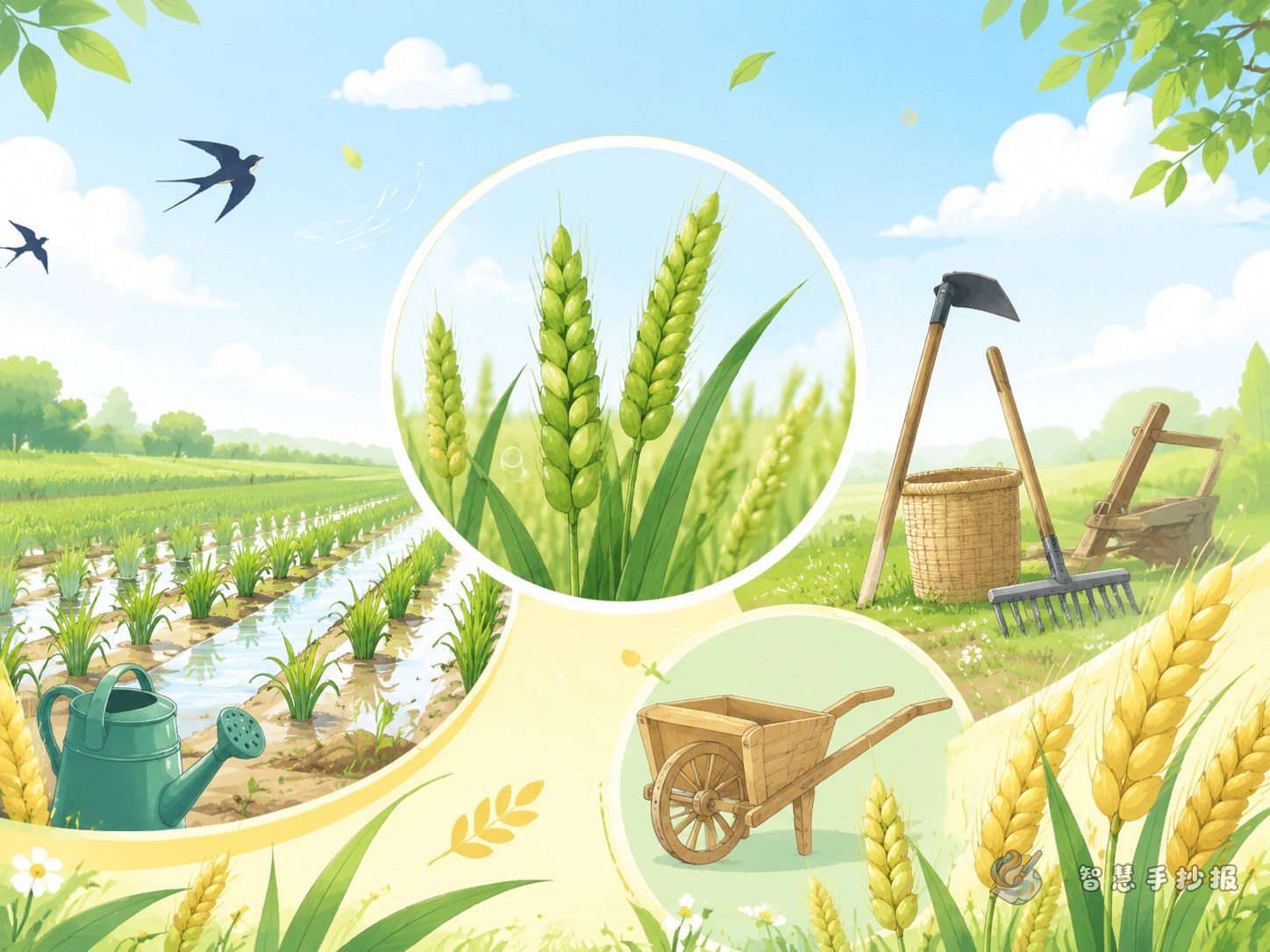
- Hoe: used for loosening soil and removing weeds.
- Sickle: important for harvest work and easy to recognize in farm drawings.
- Water wheel: a traditional tool for lifting water into fields.
- Shoulder pole: used to carry water or farm products.
Short lines students can copy onto the newspaper
- During Xiaoman, the grains grow fuller and the fields grow busier.
- Good harvests need careful field management.
- More rain means both irrigation and drainage matter.
- A hardworking hoe helps protect the field.
- Xiaoman is the time to watch crops closely.
If there is enough space, students can also add a short paragraph: Xiaoman is a key solar term for watching crop growth. Wheat grains begin to fill, and farmers stay busy with weeding, irrigation, and field inspection. A handwritten newspaper on this topic helps us understand the close link between seasons and farm work.
Try a field observation layout instead of equal boxes
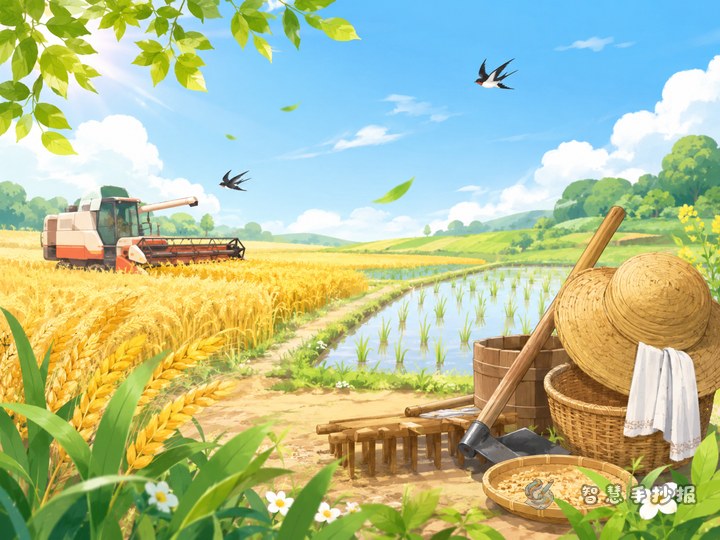
This topic looks better with a scene-based layout. Put the title at the top and decorate it with wheat ears, clouds, or sunshine. In the center, draw a wheat field, a path, irrigation water, or a simple farm worker scene. Then add smaller sections around it for the meaning of Xiaoman, farming tasks, tool knowledge, and short lines.
- Use green, golden yellow, or light blue for the title area.
- Let the middle drawing show crops growing fuller.
- Keep each text block short, around three to five lines.
- Add small drawings of tools with labels to increase the educational feel.
How to make the final work look more complete
For younger students, use shorter sentences and more small drawings. For older students, add one more idea, such as why field care is important during Xiaoman. Parents and teachers can guide children to connect seasonal change, crop condition, and tool use instead of writing only about hot weather. That makes the page more accurate and more useful as a themed handwritten newspaper.
Before finishing, check three things: whether the topic stays focused on Xiaoman, whether the farming details are specific, and whether each tool is explained clearly. If you want to keep improving the wording and page arrangement, you can continue in the Zhihui Shouchao Bao WeChat mini program.