Pick one main idea: a journey along the strings
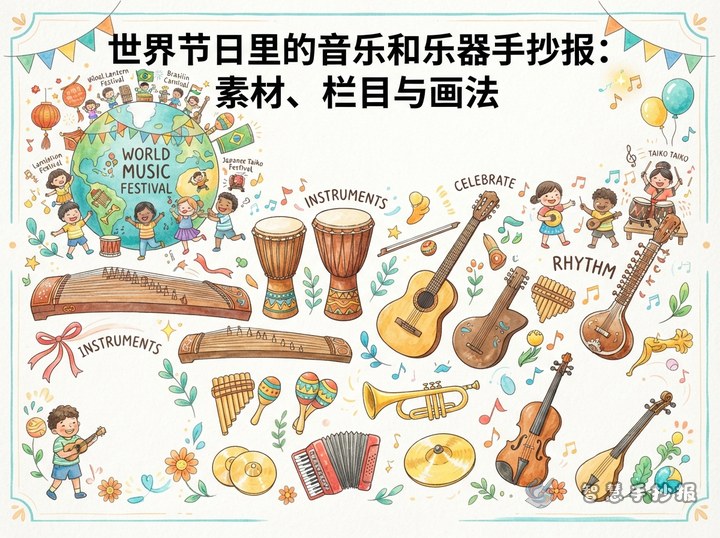
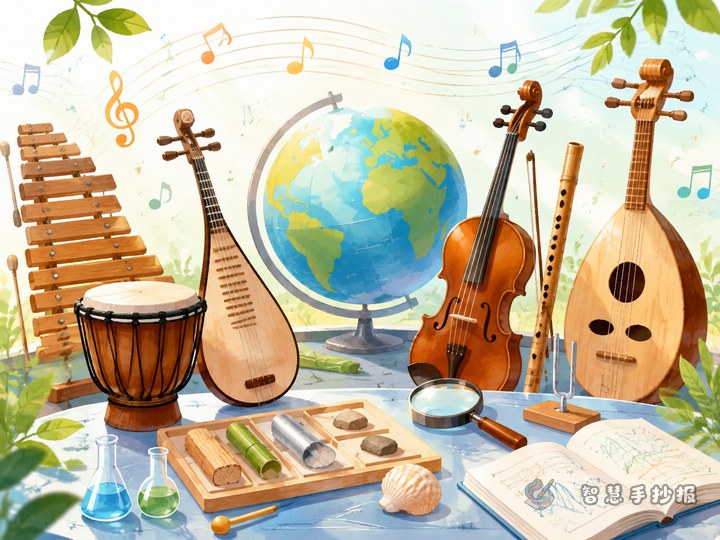
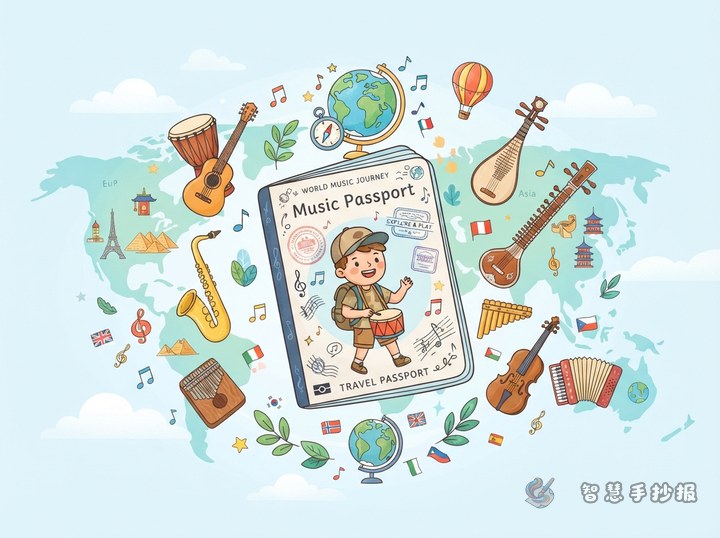
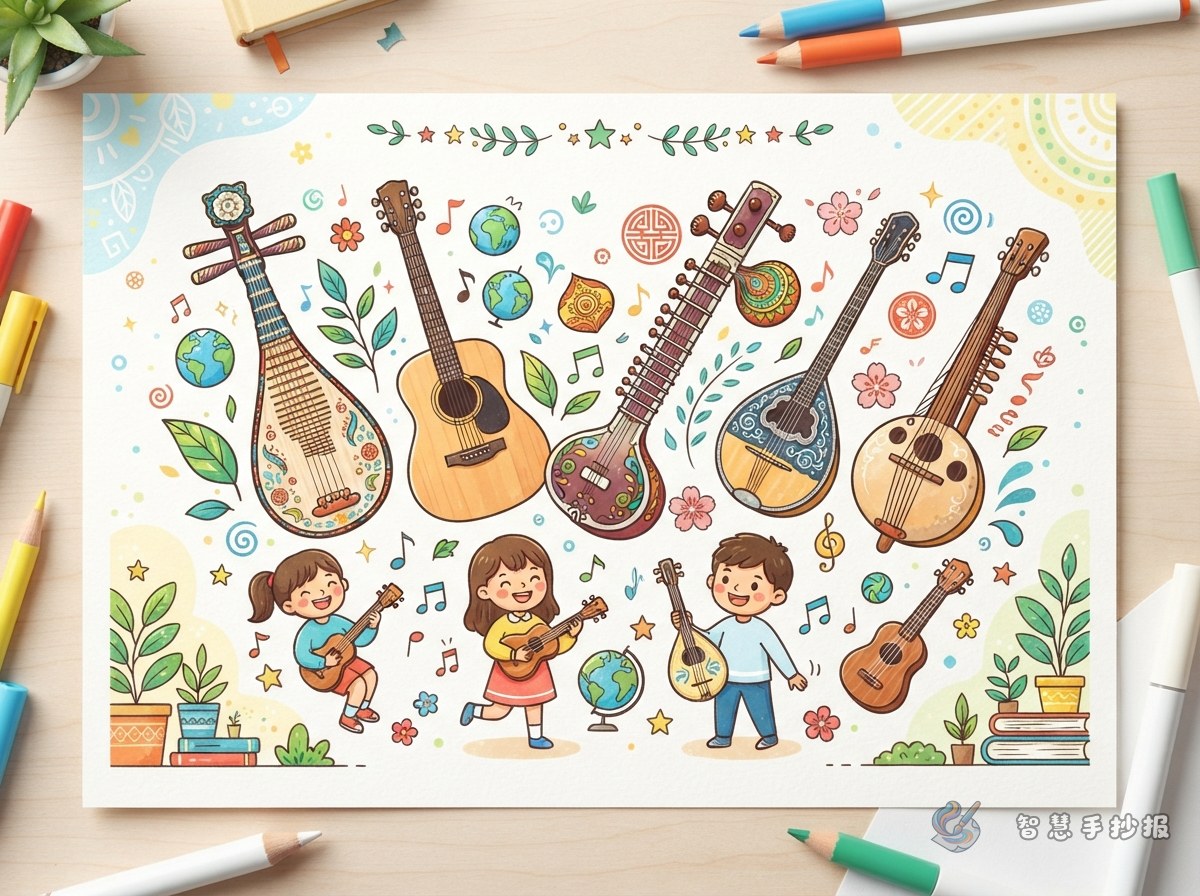
A world plucked string instruments newspaper works best when it follows a clear route instead of listing instruments at random. Try a theme like A Journey Along the Strings: begin with the pipa from China, move through the oud in the Middle East and the sitar in India, then travel to the Spanish guitar and the West African kora.
Once the route is set, divide the page into three areas: a map or route line, an instrument section, and a small corner for your own discoveries. Give each area a friendly name, such as String Travellers, Instrument Files or Plucking Facts.
Instruments you can introduce
Asia
- Pipa – a Chinese plucked instrument with a pear-shaped body and a clear, crisp sound.
- Guzheng – an old Chinese instrument with many strings and a bright, flowing tone.
- Shamisen – a Japanese instrument with a skin-covered body and a distinctive buzzing sound.
- Sitar – a long-necked Indian instrument known for its shimmering, sliding notes.
Middle East, Europe and the Americas
- Oud – a short-necked instrument from the Middle East, often described as a relative of the European lute.
- Classical guitar – a six-string instrument from Spain that can play both melodies and chords.
- Harp – a European plucked instrument played with both hands, with a gentle, watery sound.
- Banjo – a round-bodied instrument used in American folk music, with a lively, bouncing tone.
Africa
- Kora – a large West African harp-lute with a gourd body and neatly arranged strings.
- Ngoni – a simple bowed harp found in parts of Africa, small in shape but rich in sound.
Arrange the columns with a sense of rhythm
Plucked string music has rhythm, and your layout can echo that feeling. These four columns work well on one page:
- String travel map: draw a simplified world map and connect instrument regions with coloured lines.
- Instrument files: write three lines for each instrument, covering name, region and sound.
- Plucking facts: explain how plucking differs from bowing and blowing.
- My music note: add a sentence about your favourite instrument and why you like it.
Place the map in the upper middle, put instrument boxes around it, and leave a horizontal strip at the bottom for plucking facts. This makes the page look steady and easy to read.
Drawing tips: body, neck and strings in three steps
You do not need to draw like a professional. Catch the main features and readers will recognise each instrument.
- Draw the body first: a gourd shape for a guitar, a pear shape for a pipa, a half circle for a kora, a triangle for a harp.
- Add the neck or pillar: watch the length, and make the sitar neck extra long.
- Draw the strings last: use a ruler for light parallel lines, then add small dots to show fingers plucking.
Decorate the border with wavy lines, tiny music notes and dots. Keep the colour palette to three or four colours so the page stays tidy.
Short sentences you can copy
- A single string can tell a story that crosses continents.
- Fingers or a plectrum wake the strings, making sounds that are crisp, lively and full of rhythm.
- Different materials, different strings and different playing styles give plucked instruments their own personalities.
- Music has no borders, but every string carries a local accent.
Finishing touches
To make the newspaper more complete, you can bring your written text, chosen instrument names and layout ideas into the Smart Handwritten Newspaper WeChat mini program. There you can adjust borders, title styles and colours, then print the page and trace or colour it by hand. This keeps your own ideas while making the final layout neater.