Pick One Simple Main Idea: Bones Hold You Up, Muscles Move You
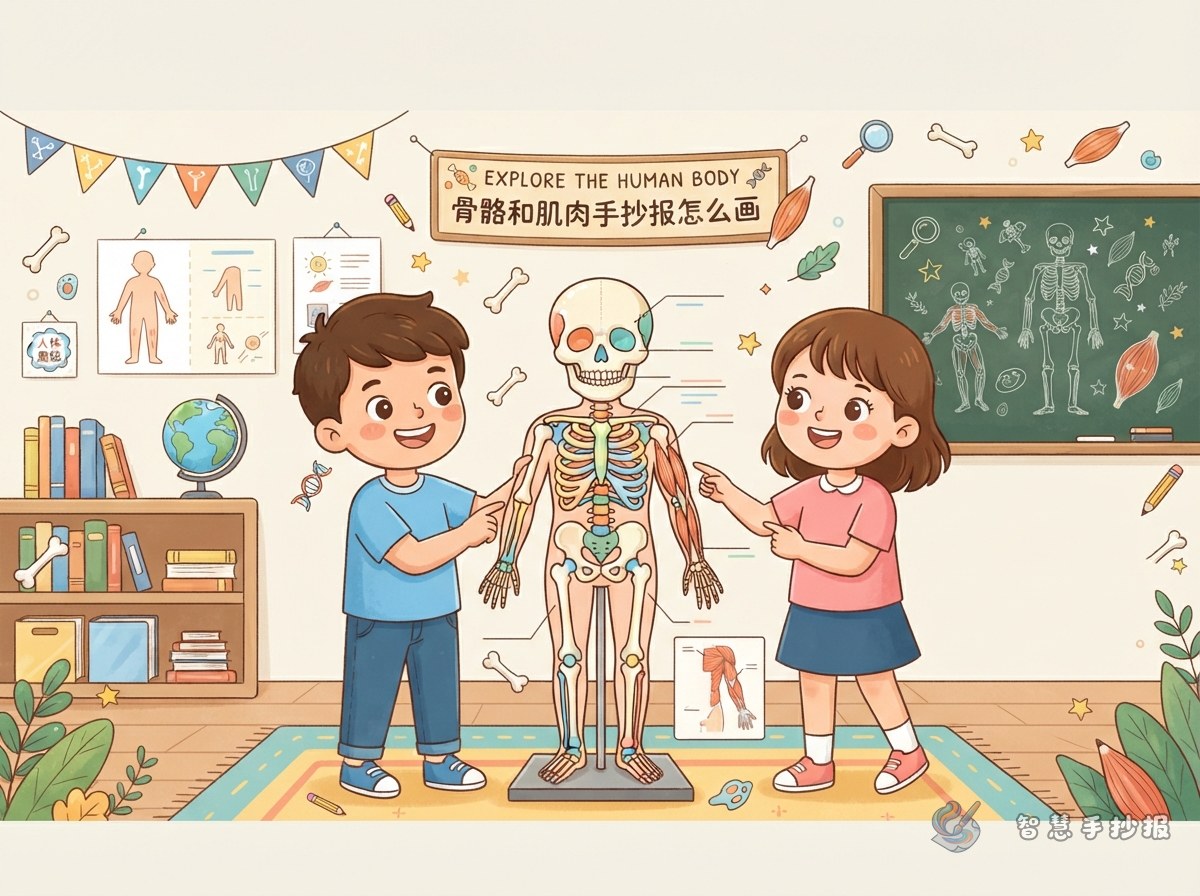
A bones and muscles poster works best when it tells one clear story instead of listing loose facts. Write this sentence at the top of your draft: bones give the body its shape, joints let it bend, and muscles pull on bones to make movement happen. Once the main idea is set, every box on the page has a job.
Sketch a simple stick figure first and mark three spots: the head, the chest and the knee. Those three marks can become the three sections of your newspaper.
Split the Page into Three “Body Booths”
You can use a portrait or landscape sheet, but keeping three content blocks makes the layout easy to read:
- Support booth: what bones do, with a small skeleton drawing.
- Movement booth: how muscles pull on bones, using a bent arm and arrows.
- Care booth: simple tips for keeping bones and muscles healthy.
Separate the blocks with a wavy bone-shaped border. Three or four lines of text in each block is enough; leave room for drawings.
Facts You Can Copy onto the Page
- Babies have more bones than adults; some bones join together as we grow, and an adult usually has 206 bones.
- The longest bone is the thigh bone, and the smallest bone, called the stapes, is inside the ear.
- Bones do more than hold you up. They protect the brain, heart and lungs, and bone marrow helps make blood cells.
- The body has more than 600 muscles, and most movements need several of them working together.
- Cartilage and a slippery fluid inside joints keep bones from rubbing hard against each other.
If there is space left, add a “Guess It” box, for example: “Where is the smallest bone in the body?” Write the answer in a tiny corner frame.
Drawing Bones That Look Friendly
- Long bone: draw a slim line with two small rounded ends and a slightly narrower middle.
- Joint dot: mark where two bones meet with a small circle to show it can turn.
- Muscle shape: use a soft oval for the bulging part, tapering at both ends where it joins the bone.
Choose three or four colours at most — pale blue, cream, soft orange, plus white bones with a dark outline and pink or light red muscles. Make the title large and outline it so it reads from a distance.
Add a “Take Care of Your Bones” Corner
- Sit up straight when you read or write, and keep the book about a foot away from your eyes.
- Drink milk, eat beans and green vegetables to help get enough calcium.
- Jump rope, run and spend time outdoors so bones and muscles get exercise.
- Warm up before sports to avoid falls and bumps.
Draw this corner inside a shield shape so it matches the bone drawings nearby.
A One-Minute Check Before You Start Colouring
Look at your draft and check four things: can the title be read at a glance, are the three blocks clearly different in size, is there breathing space around text and pictures, and are any corners too empty? Fix these points before you ink the lines and colour the page.
If you want ready-made frames and more layout choices, open the WeChat mini program 智慧手抄报 and pick a bones-and-muscles template. You can spend your time on writing and colouring instead of ruling lines.