Start with a Red-and-Blue Journey Map
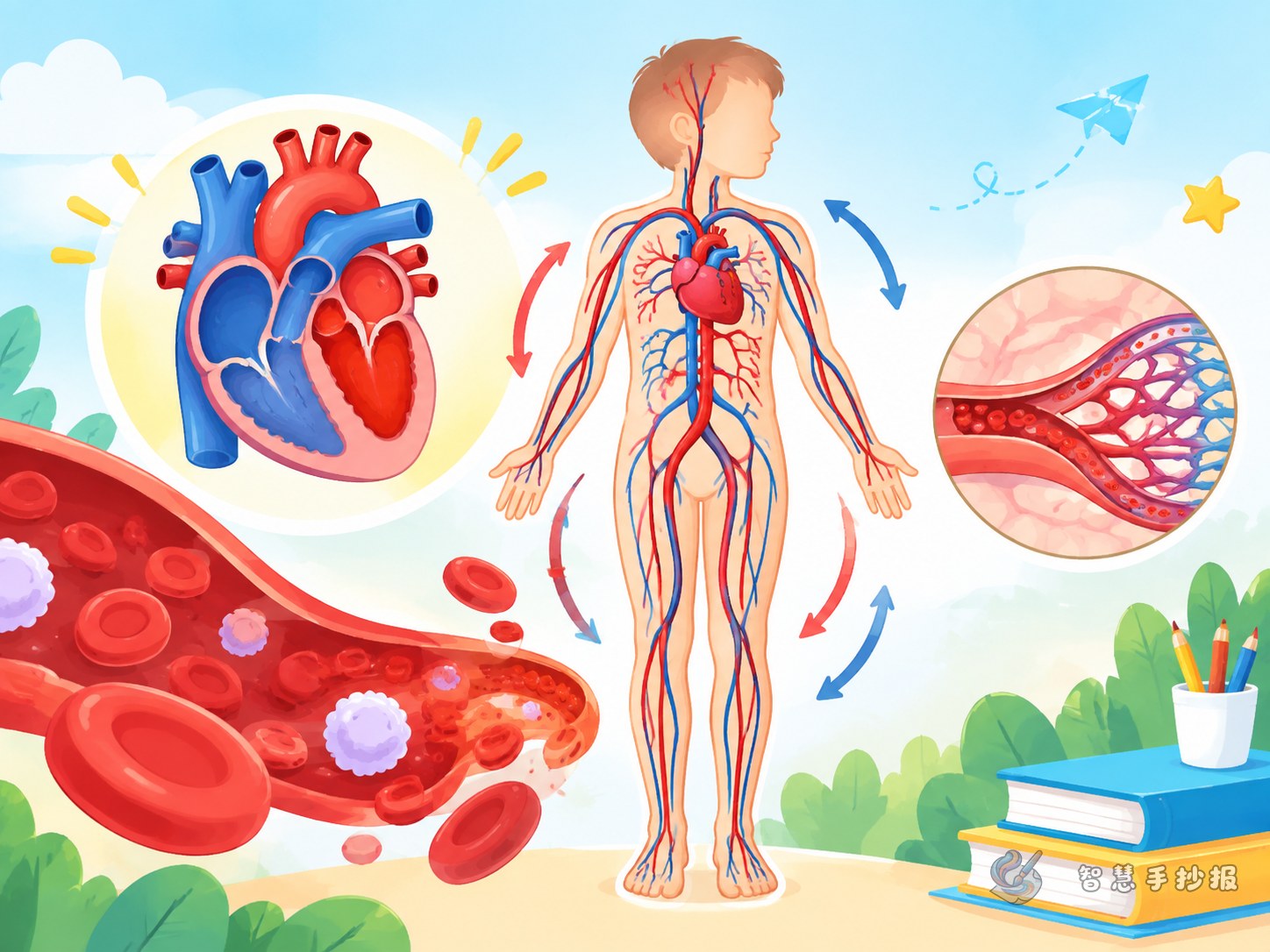
This handwritten newspaper can focus on one clear question: how does blood deliver oxygen and nutrients throughout the body? Draw the heart in the center or upper corner, then use red and blue arrows to show the circulation route. Connect the route to the lungs, digestive tract, muscles, and brain so readers can see how different organs work together.
Key text: The circulatory system is made up mainly of the heart, blood vessels, and blood. The heart works like a pump, blood vessels are like roads throughout the body, and blood transports oxygen, nutrients, and waste products.
Introduce the Four Blood Teams
Add a section called “The Blood Team” and use friendly personification to explain the main parts of blood.
- Red blood cells: They are very numerous and mainly help carry oxygen.
- White blood cells: They act like bodyguards and help defend the body from harmful germs.
- Platelets: They help blood clot when the body has a small cut.
- Plasma: This liquid part carries many substances through the body.
These four points can be drawn as four small information cards, each with a simple icon and only a few lines of text.
Show How Blood Vessels Share the Work
Create a “Blood Vessel Corner” using two main colors. Arteries usually carry blood away from the heart, veins usually return blood to the heart, and capillaries are tiny connecting vessels where materials are exchanged with body cells. Add short labels such as “send out,” “bring back,” and “exchange” beside the arrows.
Red and blue are commonly used in diagrams to make the routes easy to recognize; they do not mean that human blood actually comes in two colors. This small note makes the science section more accurate.
Turn Blood into a Body Delivery Service
A lively section can compare blood to a delivery team. It picks up oxygen from the lungs and nutrients from the digestive system, delivers them to cells, and carries away carbon dioxide and other waste products. The section title could be “What Does Blood Deliver?” with four short words: oxygen, nutrients, hormones, and waste.
- The lungs add oxygen to the blood.
- The small intestine absorbs nutrients from food.
- Blood carries these materials to cells that need them.
- Waste products are carried away for the proper organs to handle.
Arrange the Page Like a Life Map
Try a “center diagram plus surrounding sections” layout. Put a simplified heart and circulation arrows in the middle, blood components on the left, vessel functions on the right, and healthy habits at the bottom. Use red and blue for the title and arrows, dark blue or black for the main text, and orange to highlight important words. Cartoon blood drops, roads, delivery boxes, and cells can make the page lively without requiring complicated medical drawings.
Healthy habits: Regular exercise, balanced meals, enough sleep, and avoiding tobacco and alcohol help support a healthy circulatory system. After finishing the text and sketch, you can open the WeChat Mini Program “Zhihui Shouchaobao” to organize the sections, adjust the layout, and continue making a printable or shareable handwritten newspaper.