Turn an Environmental Topic into a Seven-Day Mission
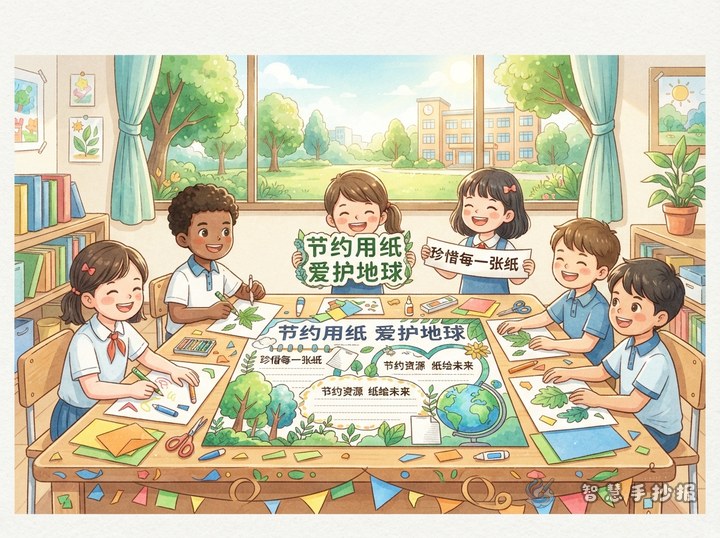
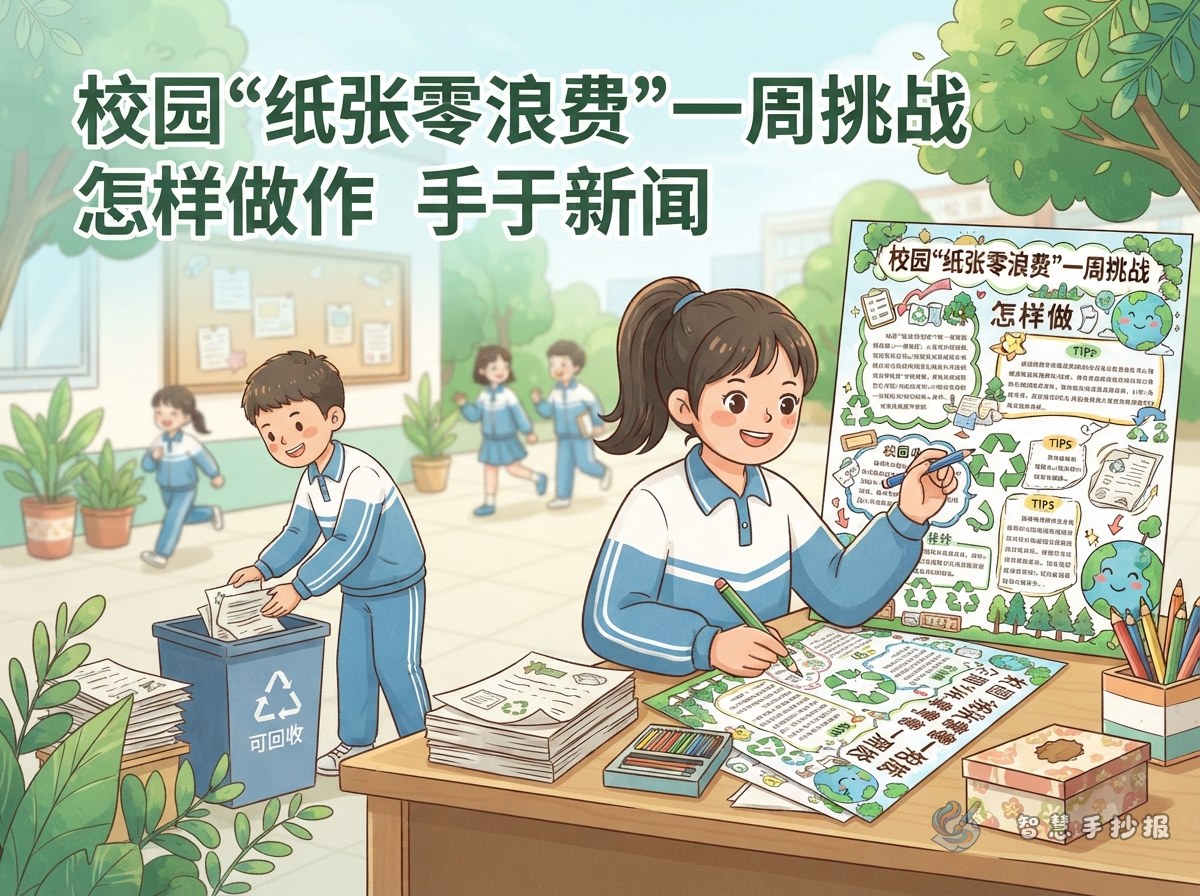
Instead of presenting only general facts, build the handwritten newspaper around a Zero Paper Waste Week. Place the main title across the top and use seven connected boxes or a winding trail to show the progress from Day 1 to Day 7.
Explain near the title that zero waste does not mean never using paper. It means using only what is needed, filling available space, reusing suitable materials, and recycling paper correctly.
Plan One Practical Task for Each Day
- Day 1: Think before taking paper and collect only the amount required.
- Day 2: Check words, numbers, and settings before writing or printing.
- Day 3: Use blank sides and unfinished notebook pages for practice work.
- Day 4: Reduce unnecessary disposable paper products and packaging.
- Day 5: Organize usable worksheets and learning materials so they can be shared.
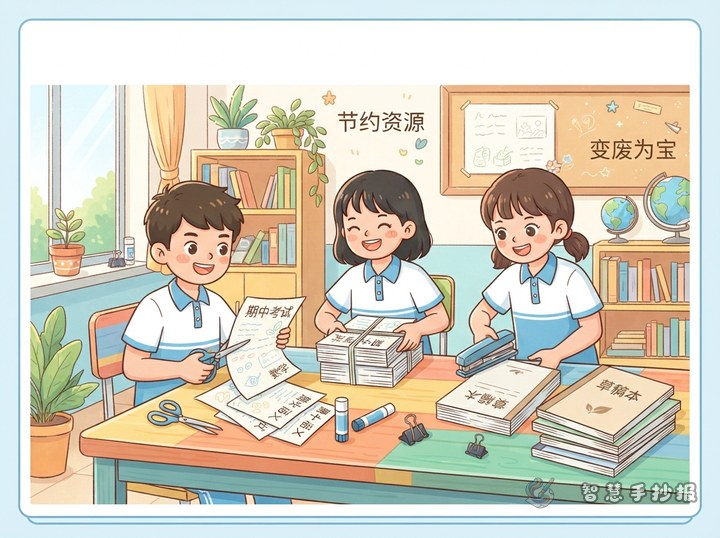
- Day 6: Turn paper scraps, bags, or boxes into bookmarks, labels, or organizers.
- Day 7: Sort waste paper and record the habits developed during the week.
Ready-to-Use Writing for the Page
A Short Introduction
Paper supports learning and everyday life, so every sheet deserves thoughtful use. Taking one less unnecessary sheet, filling an unfinished page, and keeping a notebook in good condition are small actions that conserve resources. Helping paper serve a useful purpose for longer is a simple form of environmental responsibility.
Action Slogans
- Take only what you need and give every page a purpose.
- Check first, then write, and avoid preventable waste.
- Reuse old paper and let resources begin a new journey.
- Conservation grows through small actions repeated every day.
My Challenge Pledge
I will care for my school supplies, use each sheet fully, organize materials that can be reused, sort paper that has reached the end of its useful life, and invite classmates to build responsible habits together.
Build the Layout Around a Check-In Trail
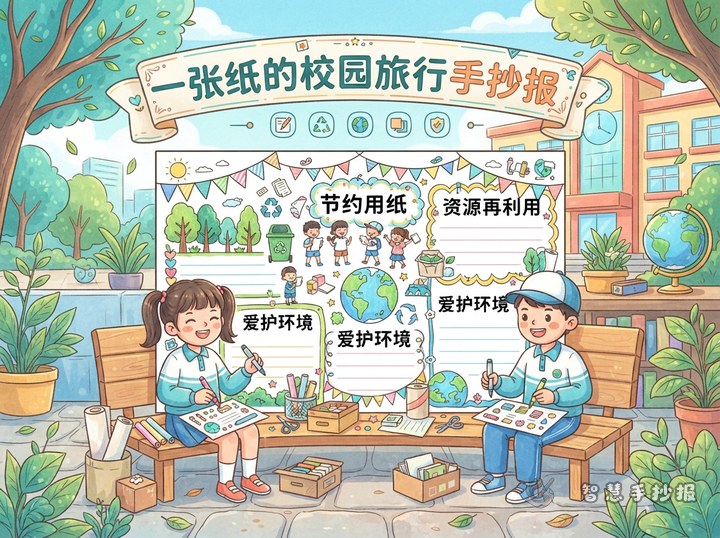
A three-column layout works well. Use the left column for the meaning of zero paper waste, reserve the largest center column for the seven daily tasks, and place tips, slogans, and the personal pledge on the right. A narrow section along the bottom can hold completion marks or a before-and-after reflection.
Small drawings of folded paper corners, pencils, recycling arrows, leaves, and handmade organizers can connect the sections. Green can identify environmental actions and blue can mark information boxes, while open space keeps the writing easy to read.
Review Both the Newspaper and the Challenge
- Make sure the title clearly presents a one-week challenge.
- Check that all seven tasks are specific and realistic at school.
- Include an explanation, conservation tips, and reuse ideas.
- Keep the reading order clear and leave enough space between sections.
- Use paper responsibly while making the handwritten newspaper itself.
After deciding on the title and sections, students and parents can continue in the 智慧手抄报 WeChat Mini Program to choose a layout, organize the material, and complete the handwritten newspaper.