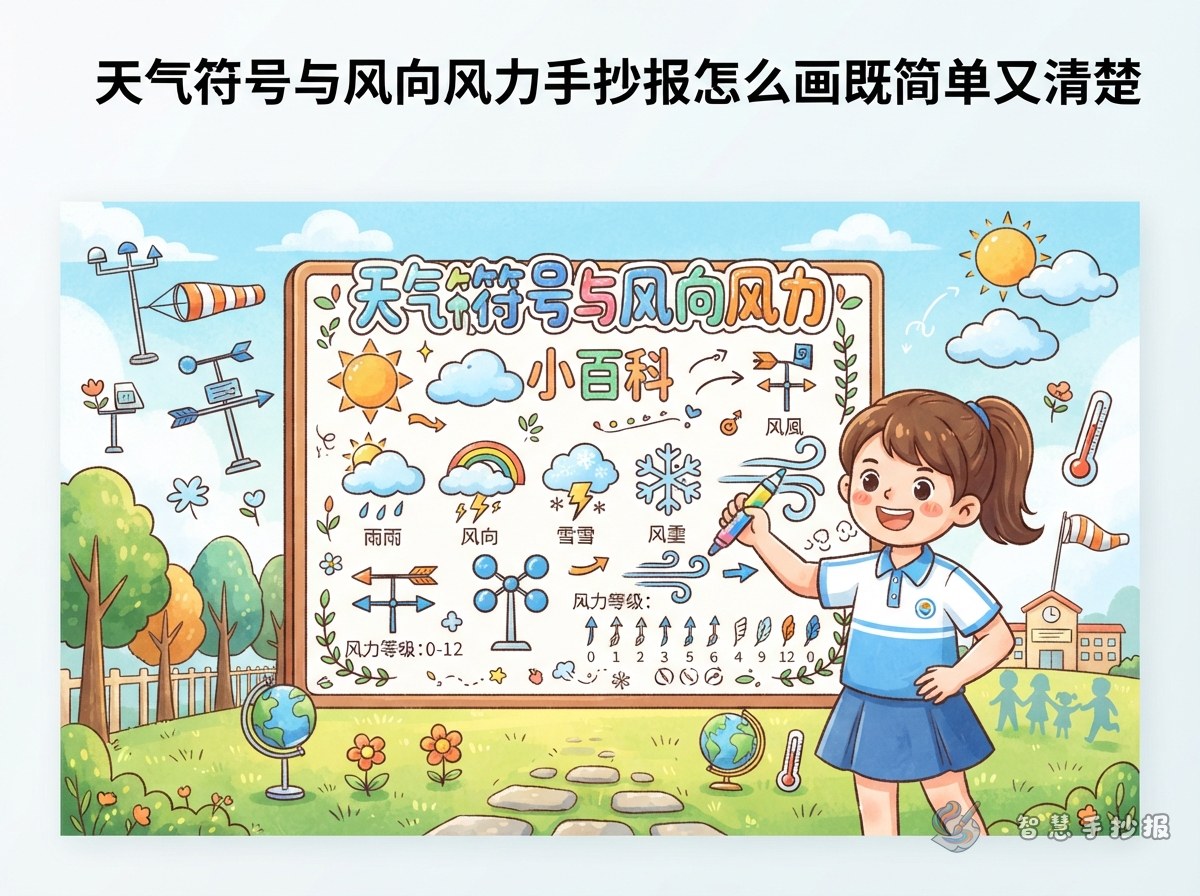
Choose One Focus Before You Draw
There are dozens of weather symbols, and drawing them all makes the page hard to read. Before picking up a pen, decide in one sentence what the newspaper should tell people. Choose one of these three directions.
- I can read weather symbols: the stars of the page are the symbols themselves and their meanings, best for younger students.
- Weather changes told by symbols: group symbols into sunny, cloudy, rainy and windy sets to show how weather shifts.
- A young weather observer's day: link symbols into a day-long record, ideal for anyone who likes drawing sequences.
Once the focus is set, choosing symbols, dividing columns and writing text all become much easier.
Fourteen Everyday Symbols Fill the Page
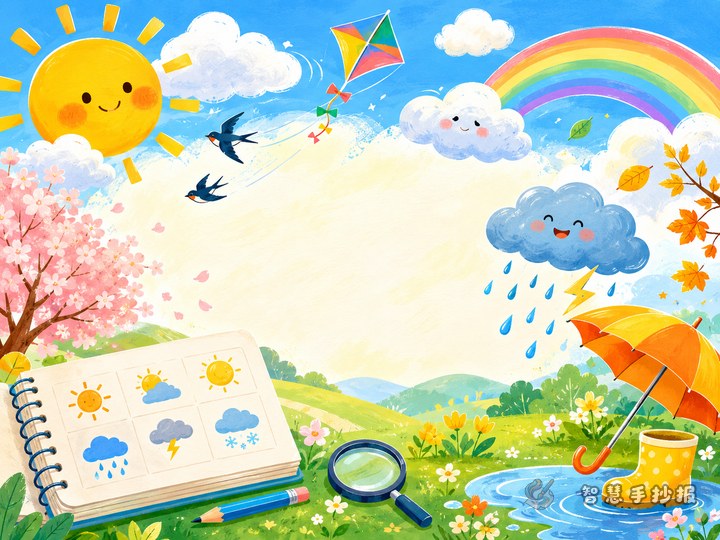
Pick symbols that are common, simple to draw and easy to explain in one line. The ones below work well as reference, though the exact shapes should follow your science textbook or the sample your teacher provides.
- Sunny: a complete sun with evenly spaced rays.
- Cloudy and overcast: use the size and number of clouds; heavy cloud hiding the sun means overcast.
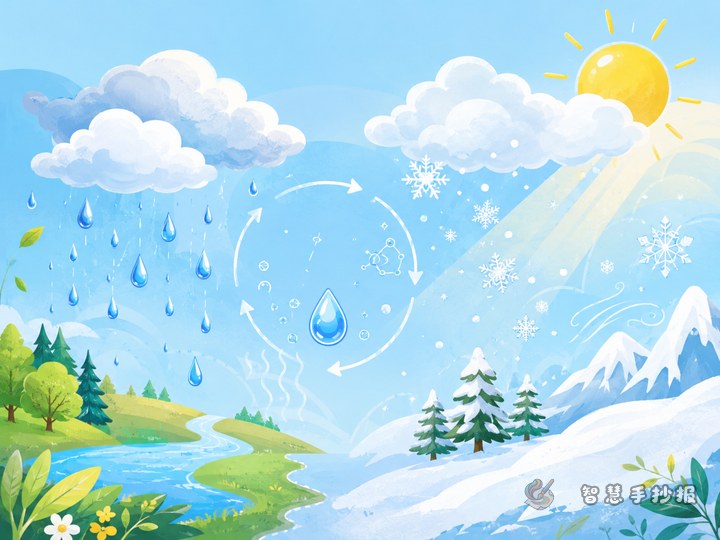
- Rain: raindrops under a cloud, with more drops meaning heavier rain.
- Thunder shower: a lightning bolt under the cloud, drawn with only two or three zigzags.
- Snow: six-pointed snowflakes below the cloud, spaced with white space between them.
- Fog and frost: fine horizontal lines or small ice crystals.
- Wind: lines with arrows, or bent grass and leaves to show the push of air.
Write one short note under each symbol, such as plenty of cloud and little sun means cloudy. The block then reads like a small picture dictionary.
Turn Wind Direction into a Real Section
Wind direction and force are the most rewarding part of a weather newspaper because they carry movement, and the result looks like a proper science chart.
- Direction: a shaft with an arrowhead pointing to where the wind comes from, labelled North wind, Southeast wind and so on.
- Force: feather marks along the shaft, with more marks for stronger wind, or simply write the force number beside it.
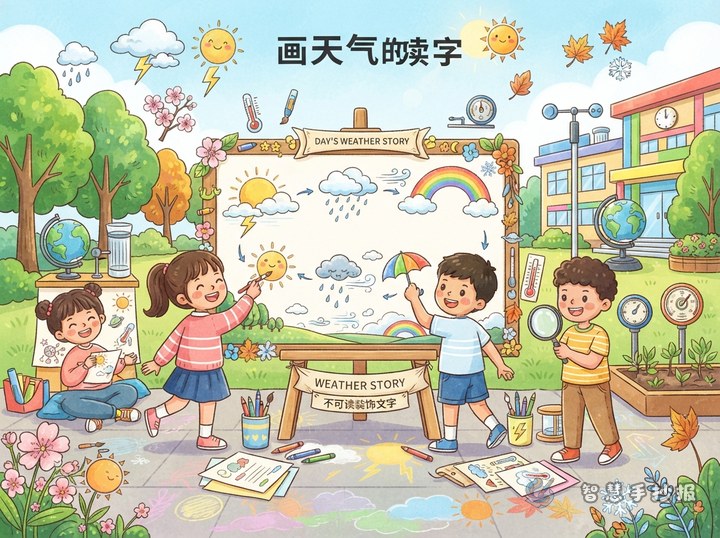
- A nice touch: draw a wind vane or windsock in the corner of the panel and the page instantly feels like a weather station.
If there is space, add a line reading Today's wind direction is, with room left blank so the sheet can be filled in each day and used a little longer.
Split the Page into Three Zones
Try one large block and two small ones: the main title across the top, a big symbol dictionary on the lower left, and wind plus a small facts box stacked on the right. Triangles or diagonal lines also work if you want something less grid-like.
- Keep every symbol frame the same size so the block looks tidy.
- Use pale blue and pale yellow for backgrounds, cool tones for rain and snow, warm tones for heat.
- Make the title noticeably bolder than the body text and leave a finger-width of line spacing.
- Lay everything out on scrap paper first, then copy it onto the final sheet.
Short Lines and Sayings You Can Copy
The text columns do not need long paragraphs. A few short lines can fill the page and give the layout a rhythm.
- Watch the clouds, the wind and the symbols, and you will know the weather first.
- Hooked clouds in the sky often mean rain below. (A traditional weather saying.)
- When the wind shifts, the weather often shifts with it.
- A whole day of weather can be recorded with just a few small symbols.
Write your favourite lines in the gaps between symbols, as if adding notes to the page, rather than lining them up in a neat block.
Final Checks Before It Goes on the Wall
Look over three things: whether any symbol points the wrong way, whether you used more than four colours, and whether every column has content. When it all looks right, sign your class and date in the bottom right corner.
If you would like a different layout or more weather material, open the mini program on WeChat and browse the weather templates, then replace the symbols and text with your own drawing and print it out to trace.