Start with a clear idea, not too much information
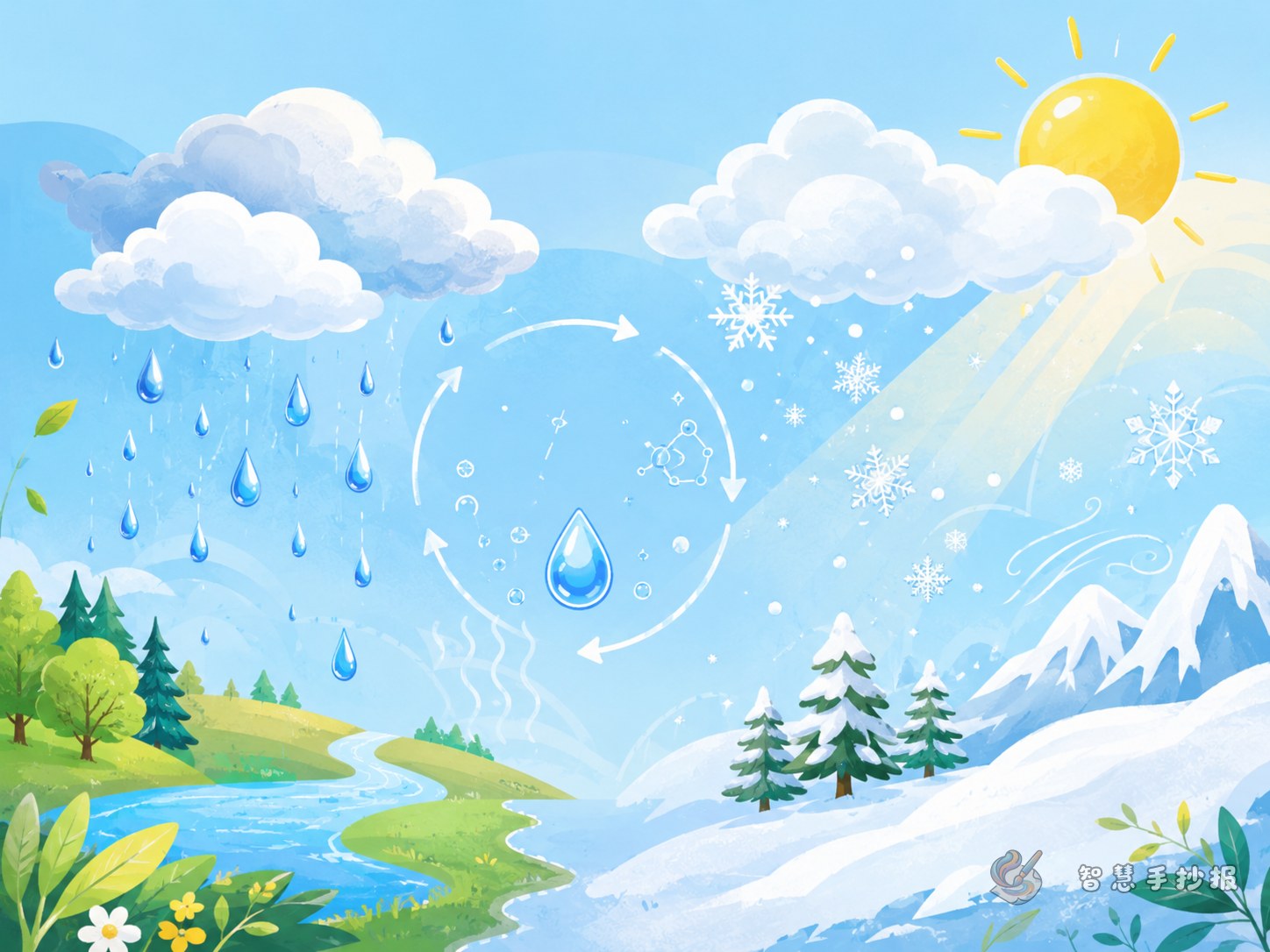
The center of this handwritten newspaper is the question why does it rain and snow. You do not need difficult scientific language. The best way is to explain the process simply: water on the ground turns into vapor, rises into the air, cools into tiny droplets or ice crystals, gathers into clouds, and then falls back to the ground. In warmer conditions it becomes rain, and in colder conditions it may become snow.
For elementary school students, each paragraph should stay short and easy to read. That makes the whole page more friendly for classmates, parents, and teachers.
Section ideas that fit this topic well
- Where rain comes from: explain evaporation, clouds, and rainfall in easy words.
- How snow forms: show that cold air helps tiny ice crystals grow into snowflakes.
- Rain and snow: what is different: compare them by shape, temperature, and season.
- Safety on rainy and snowy days: include umbrellas, warm clothes, and walking carefully.
- My weather notes: write about real things you have seen, such as light rain, heavy snow, or icy windows.
This combination keeps the page balanced with science, daily life, and personal observation.
Short writing materials you can use directly
About rain
The sun warms rivers, lakes, and oceans, and some water turns into vapor. When the vapor rises and meets colder air, it becomes tiny water droplets. These droplets gather together to form clouds. When they grow larger and heavier, they fall as rain.
About snow
In winter, when the air is very cold, water vapor in clouds can turn into tiny ice crystals. These crystals join together and slowly become snowflakes. When they become heavy enough, they fall from the sky.
About daily life
Rain gives water to plants, and snow can help keep farmland warm in winter. Rainy and snowy weather is common, but we should always stay safe when going outside.
A layout idea that feels lively and easy to follow
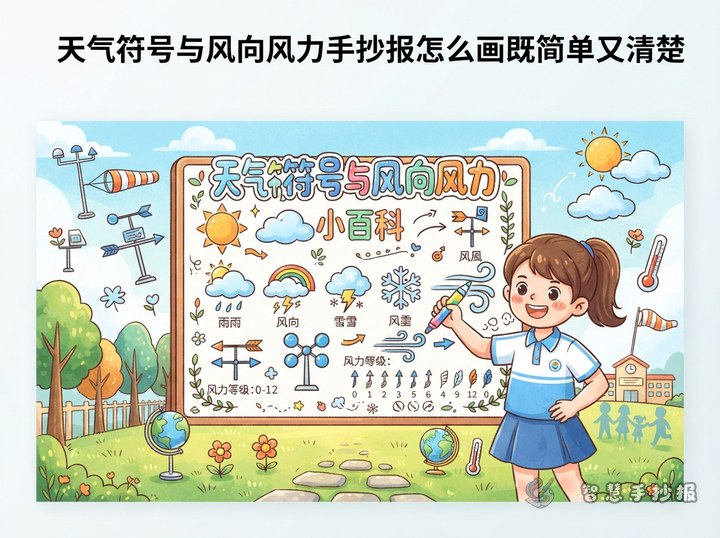
Instead of a common left-and-right layout, try a cloud in the center with rain and snow flowing downward design. Put the title at the top, draw a big cloud below it, and let the content spread down into two sides.
- Place the title at the top with small sun and cloud decorations.
- Use the center for the main formation process.
- Put rain facts on one lower side and snow facts on the other.
- Add safety tips or a weather observation box at the bottom.
This kind of structure matches the topic and helps readers understand the order quickly.
How to decorate without covering the text
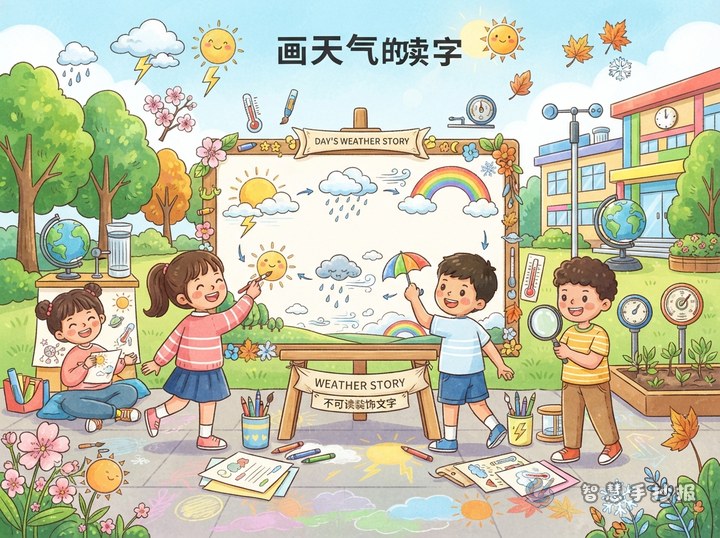
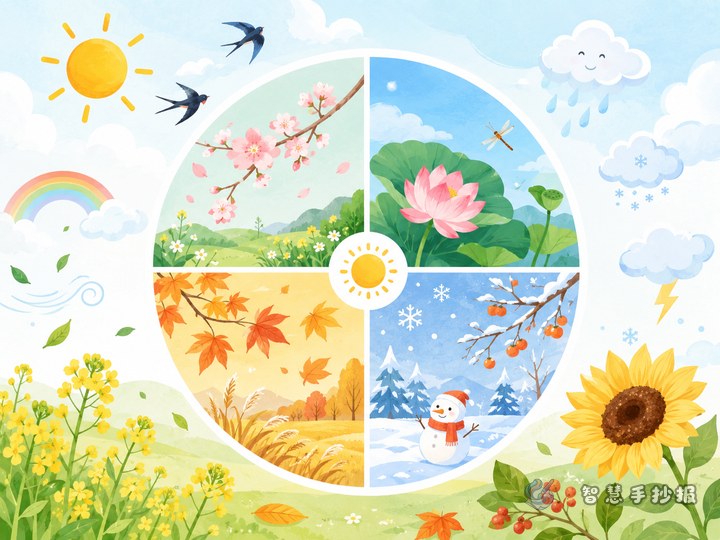
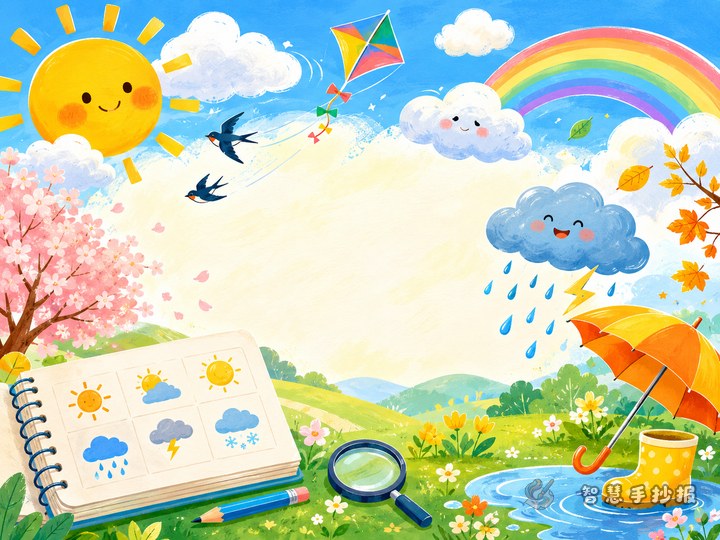
Simple weather drawings work best for this theme, such as clouds, raindrops, lightning, snowflakes, umbrellas, scarves, and mittens. Keep them around the edges so the writing area stays clear and easy to read.
- Make the title larger and outline it in blue.
- Highlight words like evaporation, cloud formation, rain, and snow in different colors.
- Use wave lines, falling raindrops, or snowflake borders.
- Add small weather faces in empty corners for a cheerful look.
Final checks before you finish
Look at the title first, then check whether each section is clear, and finally correct any spelling mistakes. The content should not be too long. A good handwritten newspaper should feel easy to understand at a glance and interesting when read carefully.
If you already have the topic but still want help with layout, fonts, or color matching, you can continue designing in the Zhihui Shouchaobao WeChat mini program.