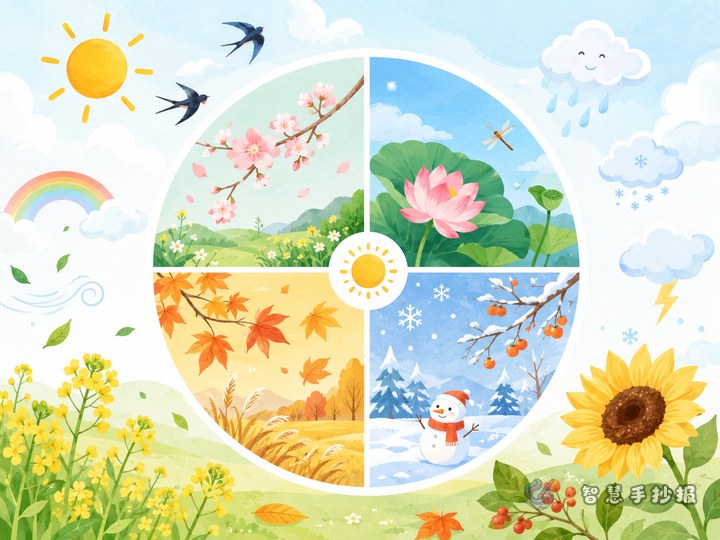
Build the theme around real weather changes
If you want the poster to feel lively and thoughtful, focus on how weather changes in everyday life instead of simply listing sunny, rainy, and snowy days. A better handwritten newspaper shows both weather facts and a child’s own observations.
The title area can use phrases like “My Weather Watch,” “How Does Weather Change?” or “A Week of Weather Notes.” This makes the page feel more like a student-created science poster.
Easy sections to include on the page
- Weather Types: sunny, cloudy, overcast, light rain, heavy rain, thunderstorm, fog, snow, frost.
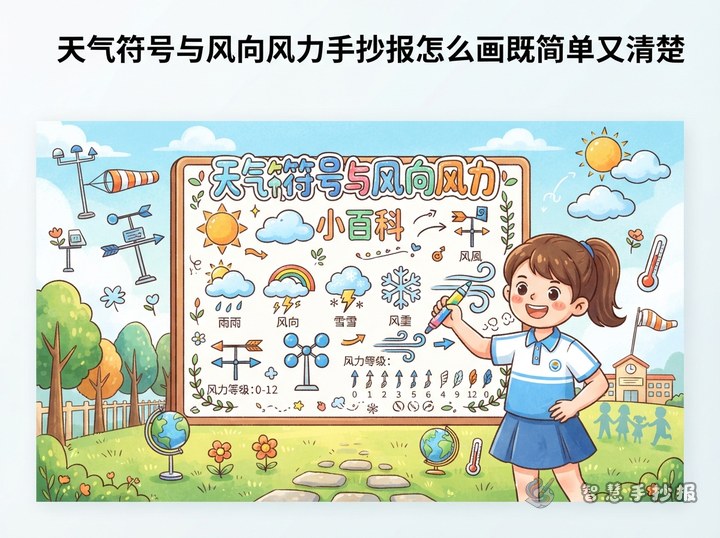
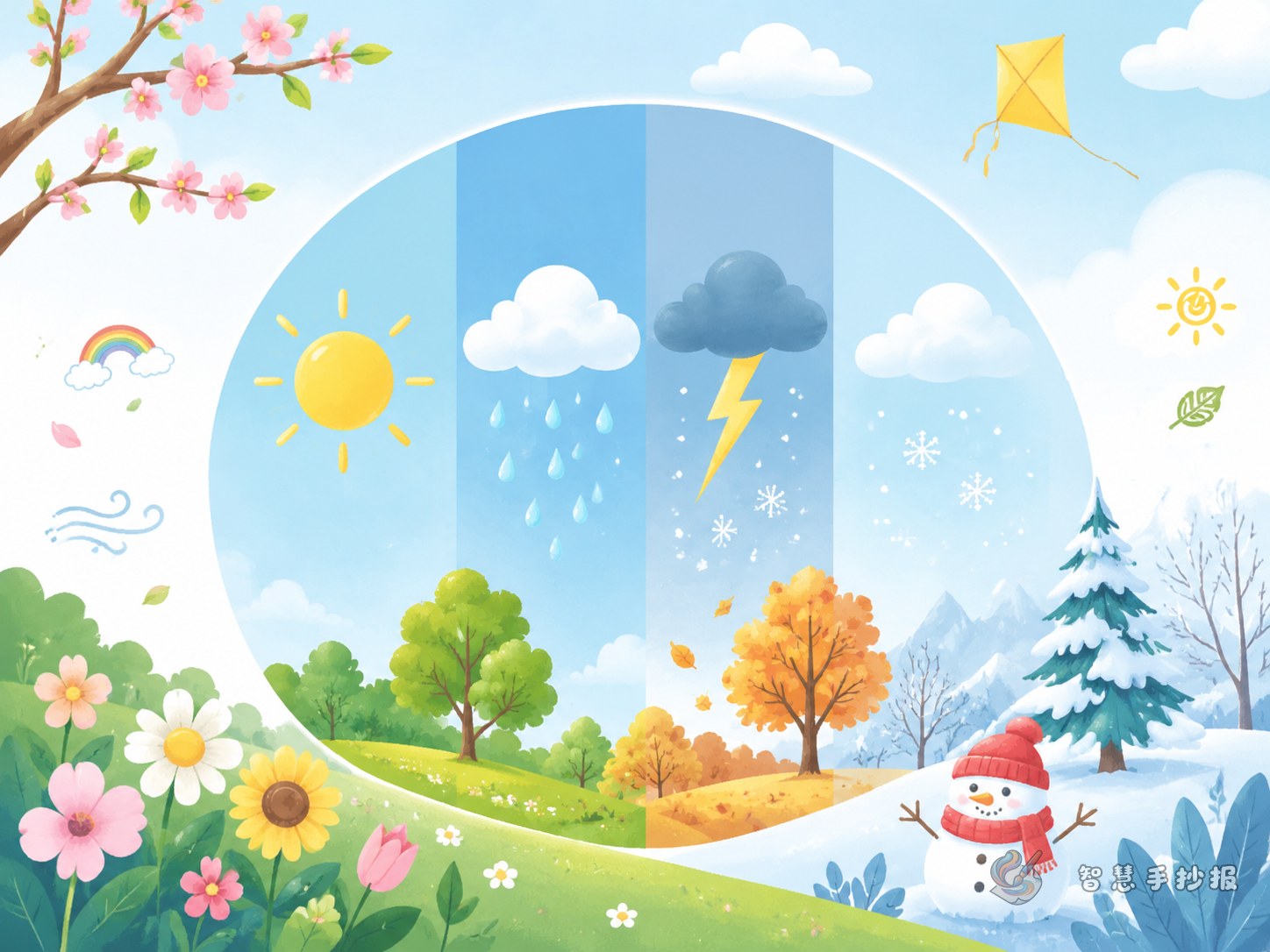
- Weather Symbols I Know: explain symbols such as the sun, clouds, raindrops, snowflakes, and lightning.
- Weather and Clothing: what to wear on hot, cold, windy, or rainy days.
- Weather Safety: staying safe during thunderstorms, strong wind, and sudden cooling.
- My Weather Diary: record one day’s weather, feelings, and activities.
These sections help the poster feel full, organized, and connected to daily life.
Short writing materials students can use
A simple introduction
Weather can change every day. Sometimes the sky is bright and sunny, and sometimes dark clouds bring wind or rain. Weather affects our clothes, travel, and outdoor plans, so learning to observe it is very important.
Observation sentences
- The sky looked bright in the morning, so it might be a sunny day.
- The leaves kept moving, which showed the wind was getting stronger.
- Before it rains, the air often feels heavy and the sky becomes darker.
- In winter, snowy days make the ground quiet and white.
A closing line
Watch the weather, understand nature, and learn to arrange study and life in a smart way.
How to arrange the layout
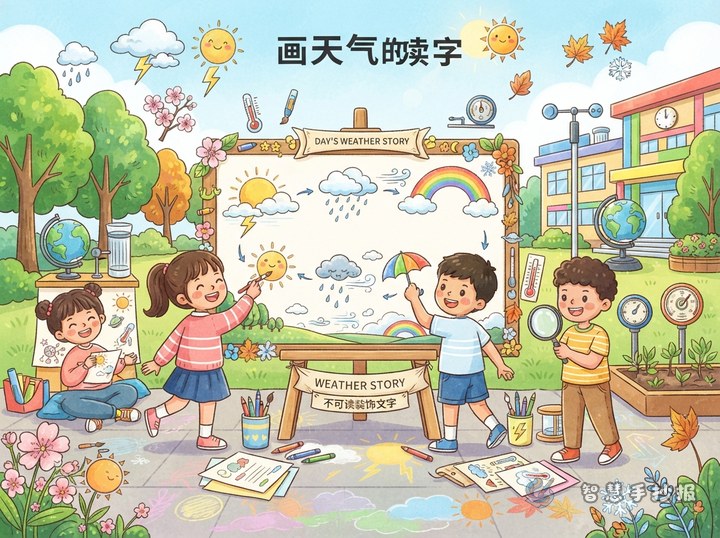
A good design is to divide the page into three areas. Put the big title at the top with sun or cloud decorations. Use the middle for the main text in two columns. Leave the bottom for a weather chart, diary box, or summary sentence. This makes the page neat and easy to read.
For colors, use light blue, yellow, white, and soft gray. Small drawings like umbrellas, rainbows, wind lines, and snowflakes can make the topic clearer and more cheerful.
Tips to make the poster stand out
- Do not only list weather names; explain how weather affects daily life.
- Add a short weather record to show personal observation.
- Use short sections and short sentences for a cleaner student layout.
- Make the title larger and leave enough blank space so the page does not look crowded.
If you want to keep working on layout ideas and weather-themed designs, you can also explore more poster-making inspiration in the Zhihui Shouchao Bao WeChat mini program.