Start with one tree, not too many topics
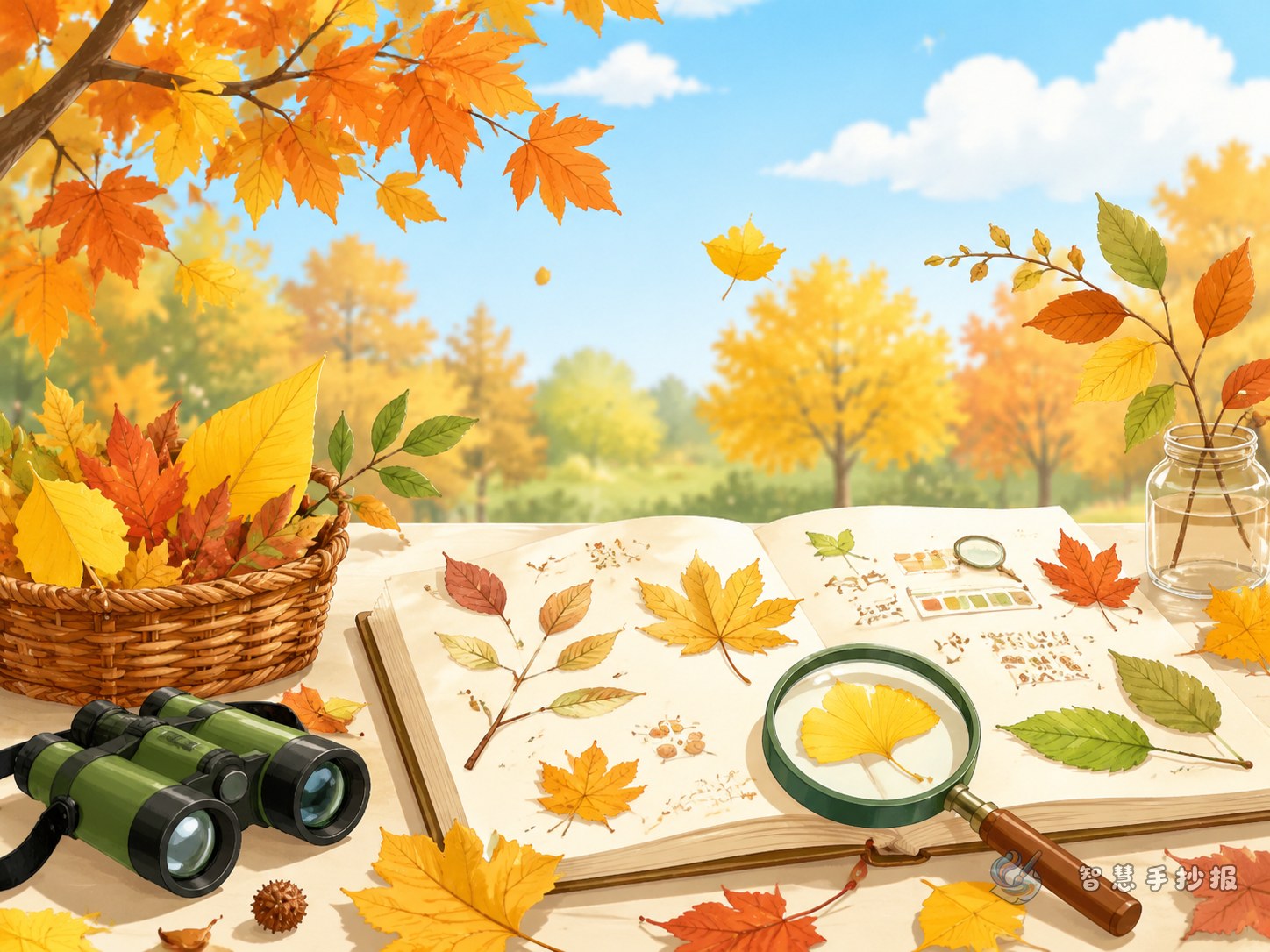
An autumn falling leaves handwritten newspaper works best when it focuses on one easy observation target. Instead of listing many plants, students can choose one common tree near school or home, such as ginkgo, maple, plane tree, or poplar, and record how the leaves change in color, shape, and condition over time.
This makes the page feel like a real nature journal. It is easier for children to write clearly, and the content looks more authentic than copying general facts.
What to write on the poster
Observation notes
- The leaves changed from green to yellow, orange, or red.
- Leaves on the same tree may show different colors at the same time.
- Some leaves curl at the edges before they dry and fall.
- After rain, the fallen leaves look darker and the veins are easier to see.
Simple science facts
- In autumn, with less sunlight and lower temperatures, chlorophyll decreases, so leaf color changes.
- Falling leaves help trees reduce water loss and prepare for colder weather.
- Different trees have different leaf shapes, such as fan-shaped, oval, or hand-shaped leaves.
- Fallen leaves can return nutrients to the soil as they break down.
Useful mini sections
- Leaf Observation Card: date, place, weather, tree name, color, shape.
- Little Science Corner: why leaves change color and why they fall.
- My Favorite Leaf: a short description of one leaf.
- Leaf Hunt List: compare different leaf shapes you find.
A layout that looks like nature study
A practical design is a large title in the center with sections around it. Put the main heading in the middle, then place observation notes on one side, science facts on another side, and a small comparison or summary at the bottom. This gives the page the feeling of a field notebook.
Use warm autumn colors like yellow, orange, light brown, and a little green. Decorations can include branches, leaf veins, wind lines, and scattered leaves. Keep the text in short blocks so the page stays clean and easy to read.
How to make the content feel more real
- Pick one fixed place to observe, such as a playground corner or a path near school.
- Write down two or three observations on different days.
- Separate what you saw from what you learned.
- Add shape comparisons like wide, narrow, smooth-edged, or jagged-edged.
- Finish with one sentence about caring for nature.
If students want help arranging titles, sections, and final poster details, they can continue creating in the Zhihui Shouchaobao WeChat mini program.
A simple ending paragraph to use
Autumn leaves may seem quiet, but they show many changes in nature. By watching their color, shape, and falling process, we can discover how seasons affect plants around us. Careful observation can turn an ordinary tree into an interesting science topic.