Start with a clear focus: what to observe and what to show
If you want to make a handwritten newspaper about why snails often appear after rain, you can frame it as a small nature observation topic. It feels scientific, but it is also close to everyday life, which makes it easy for children to write from real experience. Under the title, add a short opening line such as: Why do we notice more snails near walls, gardens, and wet paths after the rain stops?
This kind of project does not need difficult science terms. The key is to explain what you saw, why you think it happened, and what you learned from observing nature.
Useful sections for the handwritten newspaper
- What I found after the rain: Write when and where you saw the snail, such as in a school garden, near a flower bed, or beside a shady wall.
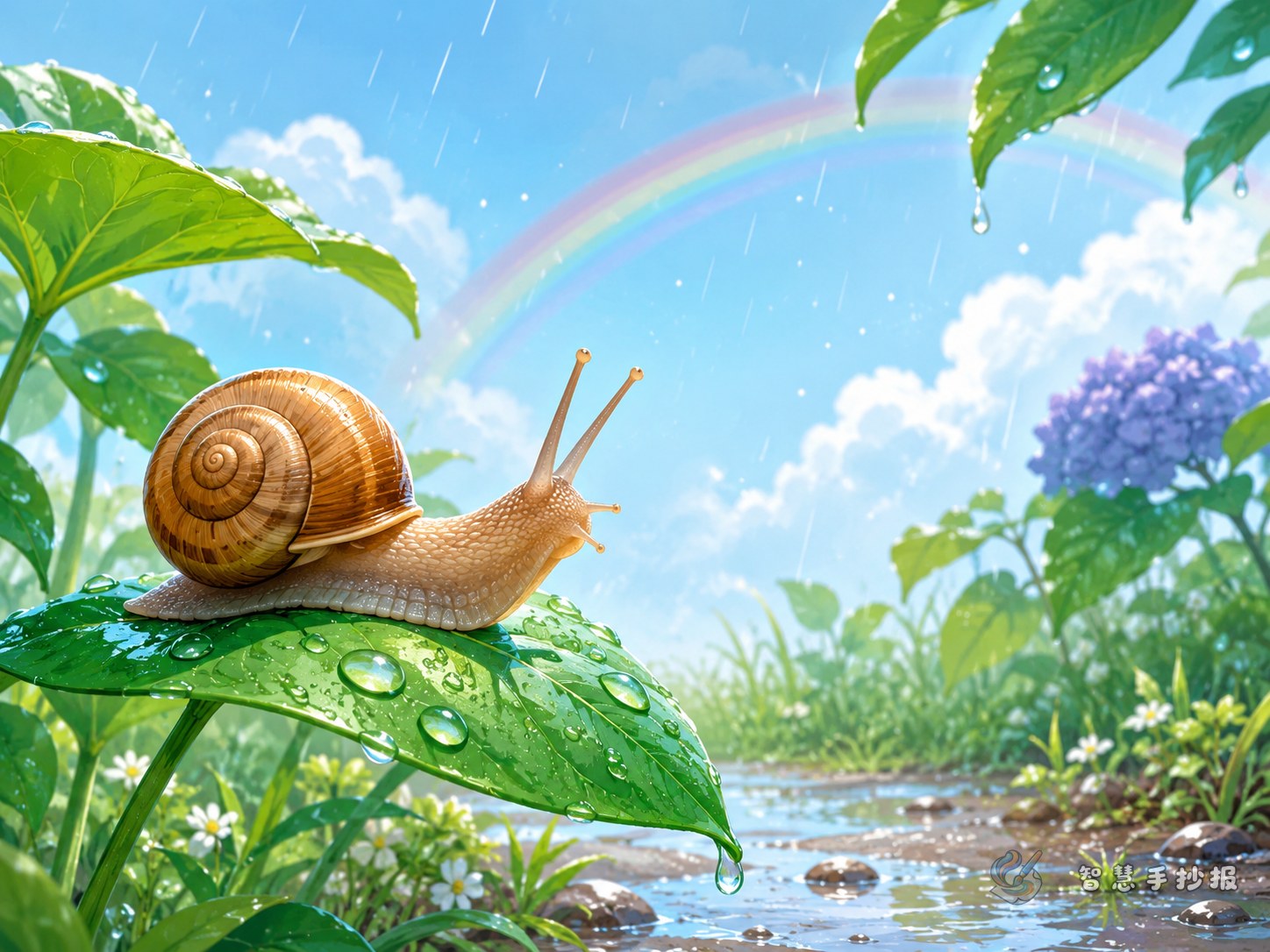
- Snail profile: Describe its soft body, shell on its back, tentacles, and the shiny trail it leaves behind.
- Why snails appear after rain: Explain that the air is moist, the ground is cooler, and snails can move more easily without drying out.
- Observation notes: Add one or two short paragraphs about what the snail did, such as climbing a leaf or changing direction.
- Kindness reminder: Do not step on snails, do not throw salt on them, and leave them in their natural place after observing.
Ready-to-use text ideas
Short science lines
Snails like moist environments. After rain, the air and ground hold more water, so snails are more likely to come out.
Snails move slowly, but the mucus they produce helps them glide and reduces friction.
A snail uses its tentacles to sense the world around it.
Sample observation paragraph
After school, the ground was still wet from the rain. I found a snail near the flower bed. It carried a spiral shell and slowly climbed onto a leaf. I noticed a shiny line behind it. That small trail showed me that even a quiet rainy day can hide amazing little lives.
Closing sentence
A simple observation after the rain helped me understand that every living thing has its own way of surviving. Nature becomes more interesting when we slow down and really look.
How to arrange the page
You can divide the page into four parts. Put the big title at the top. On the left, place the section about why snails appear after rain. On the right, add the snail profile. At the bottom, leave space for observation notes and care tips. Curved lines or raindrop shapes can connect the sections nicely.
Soft green, light blue, and cream work well for the color scheme because they create a fresh after-rain feeling. Small drawings of leaves, raindrops, stones, mushrooms, and snail trails can make the page more lively.
Small details that improve the final work
- Use a question-style title to catch attention.
- Add real observation details to make the content more vivid.
- Keep science points short and easy to read.
- Plan the sections first, then fill in text and decoration.
- Make sure every part stays focused on the snail after rain theme.
If you want to keep improving the layout, wording, and design, you can continue making your work in the Zhihui Shouchaobao WeChat mini program.