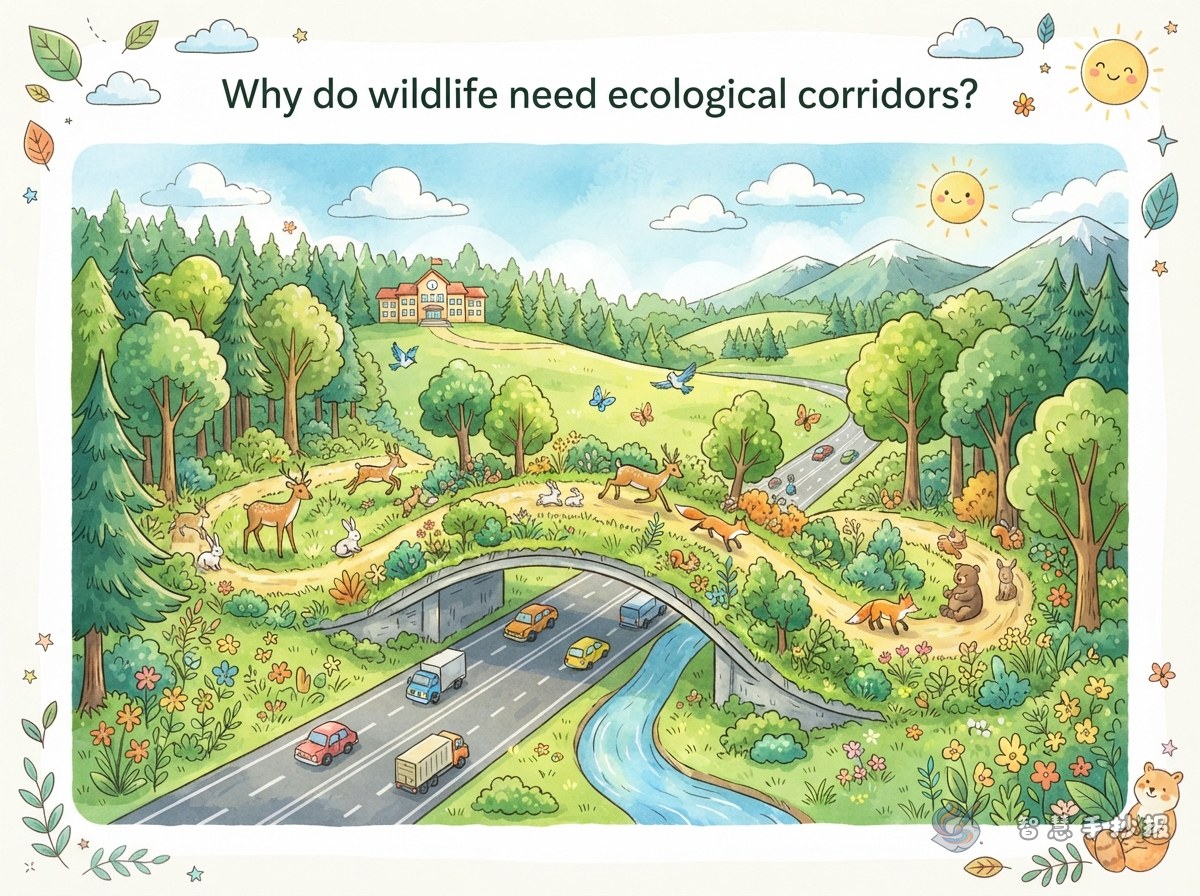
Begin with an Animal's Journey Home
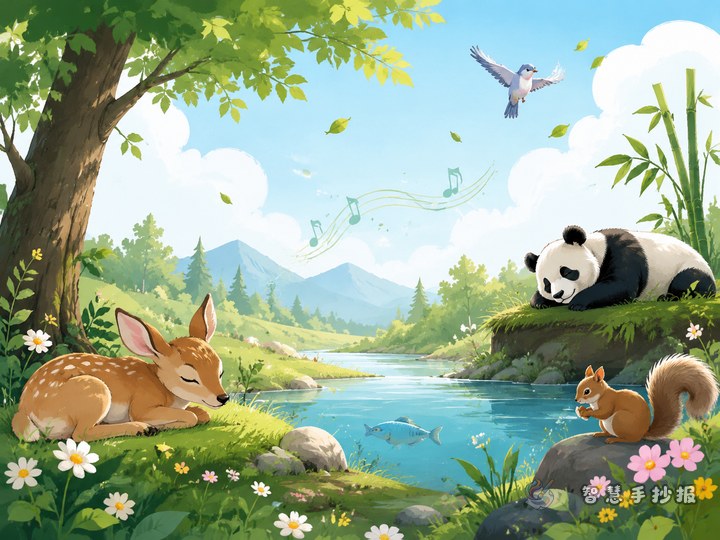
Wild animals do not always remain in one place. They travel to find food, water, shelter, seasonal habitats, and mates. When roads, walls, farms, or buildings divide a forest, wetland, or grassland, a familiar travel route may disappear.
An ecological corridor is a connected area that allows wildlife to move between habitats. It may be a strip of woodland, a planted riverbank, a grassland link, a wildlife bridge, or an underground passage. These routes act as safe connections between separated homes.
Build the Poster Around Three Key Questions
Why do animals need to move?
- They travel to find food, drinking water, and shelter.
- Some species move as seasons and weather conditions change.
- Animals need to meet others of the same species and reproduce.
- They may need to escape fires, floods, construction, or other dangers.
What can reconnect a habitat?
Rows of trees between woodlands, continuous vegetation beside rivers, bridges covered with plants, and passages beneath roads can all help wildlife move. For a clear school poster, choose two or three examples and explain each one with a small drawing and a short caption.
Turn the Page into a Connected Route
Use the poster horizontally and draw a green route across the center. On the left, show a habitat divided by a road. In the middle, add a wildlife bridge, tunnel, or tree-lined riverbank. On the right, show animals arriving safely at a forest, wetland, or meadow. Arrange the text along this route so the reader follows the same journey.
- Place “Why Animals Travel” near the starting habitat.
- Add “Ways to Cross Safely” beside the bridge or passage.
- Finish with “My Habitat Promise” near the destination.
Leaves, footprints, and water ripples can form a simple border. Green and blue can represent healthy habitats, while yellow or red can highlight roads and danger points.
Ready-to-Use Message for the Poster
Leave a Safe Path for Wildlife
Every wild animal needs a habitat where it can find food, water, shelter, and room to travel. When roads and buildings separate natural areas, connected forests, riverbanks, bridges, and tunnels become especially important. We can protect vegetation, avoid disturbing animals, and care for the places they use to move. Together, we can keep their journeys safe.
Check the Final Design
- Make sure the title clearly mentions wildlife corridors.
- Show the difference between a divided habitat and a connected one.
- Keep paragraphs short and highlight important terms.
- Include actions that primary school students can understand and follow.
After planning the content, open the 智慧手抄报 WeChat Mini Program to choose a layout, arrange the sections, and continue making the poster.