Give Your Poster One Clear Job
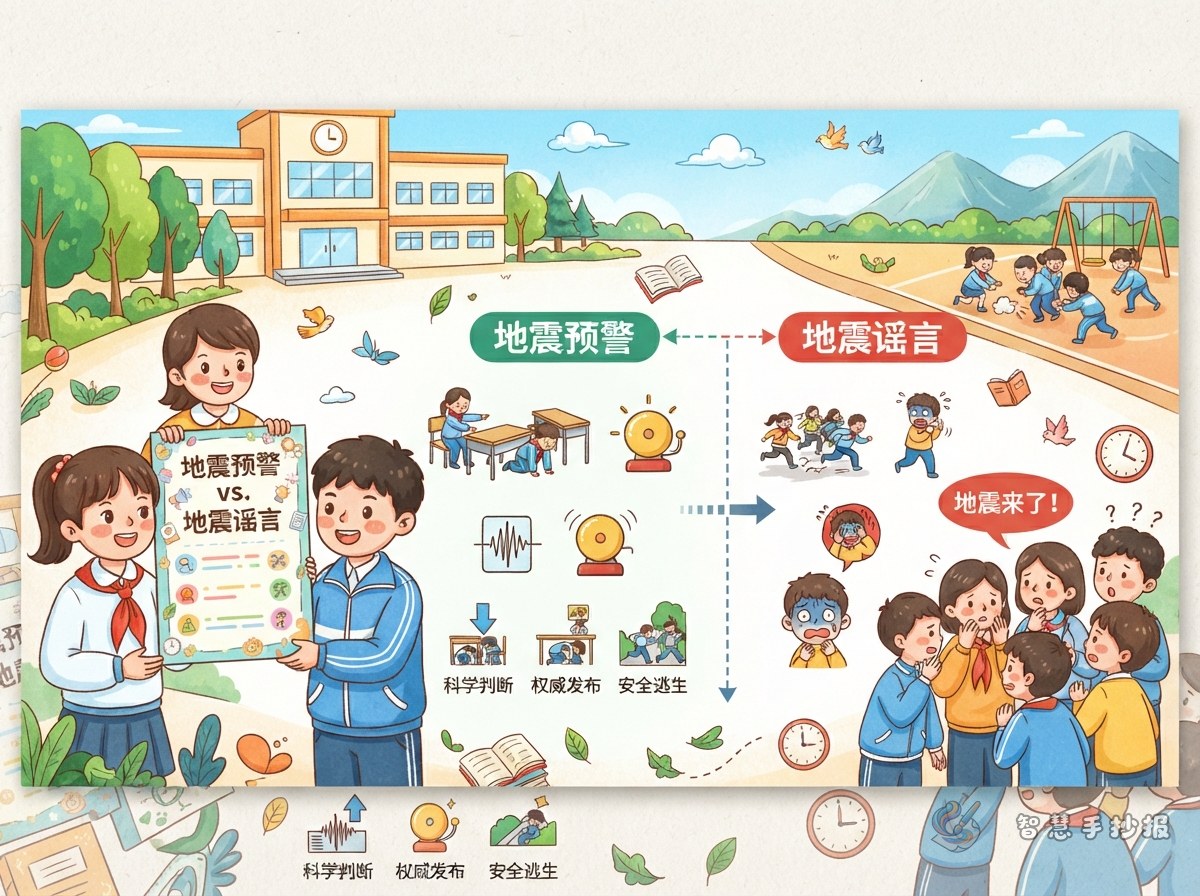
Many students mix up an earthquake early warning with an earthquake prediction, and some forward online messages saying a big quake will hit a certain place at a certain hour. Your poster should help readers tell the difference at a glance: which message is an official warning, and which one is just a rumor.
Once you settle on that single job, the whole page has a spine and will not turn into a pile of unrelated facts.
Divide the Page: Warning on the Left, Rumor on the Right
Split the sheet down the middle. The left half is "Earthquake Early Warning," the right half is "Earthquake Rumor." Matching one side to the other makes the poster easy to follow.
What belongs in the warning column
- A warning is sent after an earthquake has already started, buying seconds to tens of seconds.
- It comes from official channels: phones, TV, radio, and public loudspeakers.
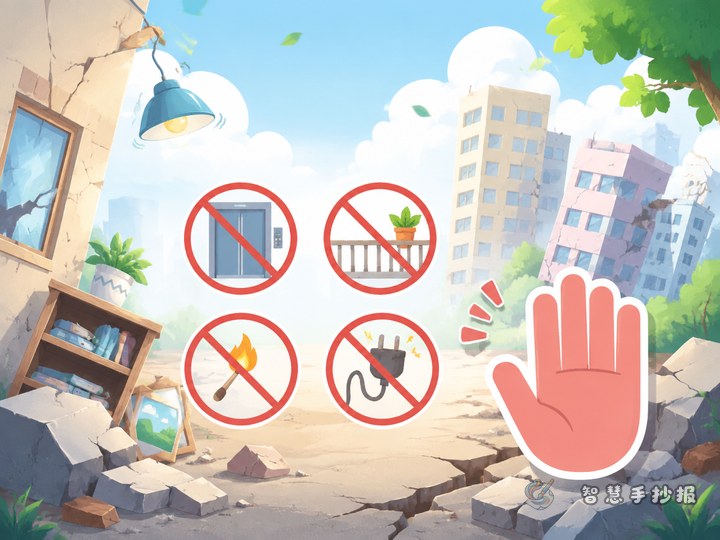
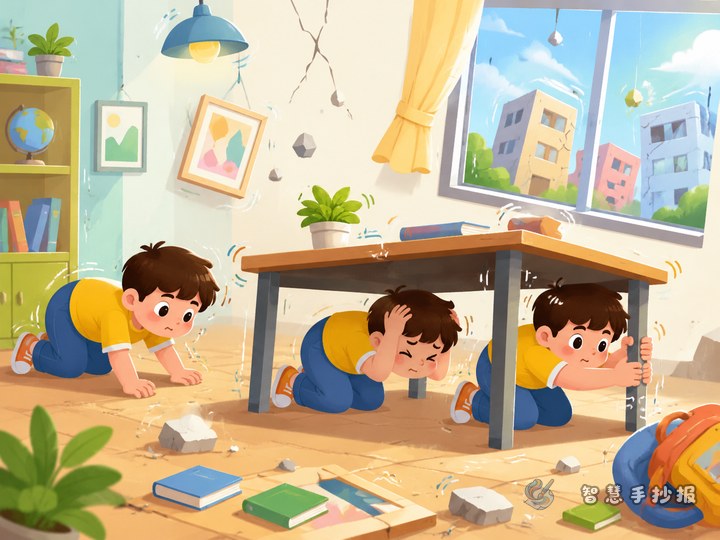
- What to do: take cover nearby, stay away from windows and tall cabinets, keep out of elevators.
- The smaller the countdown number, the sooner the shaking arrives, so act right away.
What belongs in the rumor column
- If it names an exact date, time, and place, treat it with suspicion.
- The source is vague, saying only "insider news" or "an expert said."
- Absolute wording such as "it will definitely happen" is used to create panic.
- The right response: do not believe it, do not forward it, wait for official news.
Turn "Stop, Check, Wait" into a Flow Line
Leave a horizontal strip at the bottom of the sheet and draw three boxes joined by arrows:
- Stop: do not forward the message, and do not rush downstairs.
- Check: see whether the information comes from an official channel.
- Wait: follow the latest official message, then tell your family what is correct.
Add a small icon to each box, such as a hand, a magnifying glass, and a loudspeaker. They are quick to draw and easy to spot.
Layout Notes: Color, Title, and Breathing Room
- Try blue against orange: blue feels calm and stands for science, while orange highlights the "do not spread rumors" side.
- Make the main title large, and add a short subtitle such as "Know the warning, stop the rumor."
- Leave a narrow gap or dotted line between the two columns so they do not crowd each other.
- Save a small corner for a "my promise" signature area, where classmates can write their names.
Short Lines You Can Copy
A handwritten poster does not need many words. Being accurate matters more than filling space. Pick two or three of these:
- A warning is not a prediction; it is a race against seismic waves.
- A few seconds can save a life. Take cover first, evacuate later.
- Check the source before you share a message.
- Do not believe or spread rumors, and pass the correct knowledge to the people around you.
If you want extra sections, such as how to turn on warning alerts or who at home should shut off the gas, you can open the 智慧手抄报 WeChat mini program to pick a template, arrange the layout, and finish the rest of your poster.