Why Gratitude Makes a Good Mental Health Poster Theme
Mental health is not only about what to do when we feel low; it is also about how we hold on to good moments. A gratitude practice gently moves a child's attention from what is missing to what is already there. As a poster topic it is easier to handle than abstract emotion management, because there are real people, real moments and simple pictures to draw.
The readers will be classmates and teachers, so the tone should be warm and honest. Avoid turning it into a self-criticism page or a list of slogans.
Four Sections That Keep the Page From Feeling Empty
Divide the paper into four areas, each with its own job:
- Section one: people I want to thank - three to five names, one specific sentence each, such as 'Thank you to my deskmate for collecting my exercise book every day.'
- Section two: small things I want to thank - a warm meal, cool wind after rain, a pen someone lent you. The more concrete, the better.
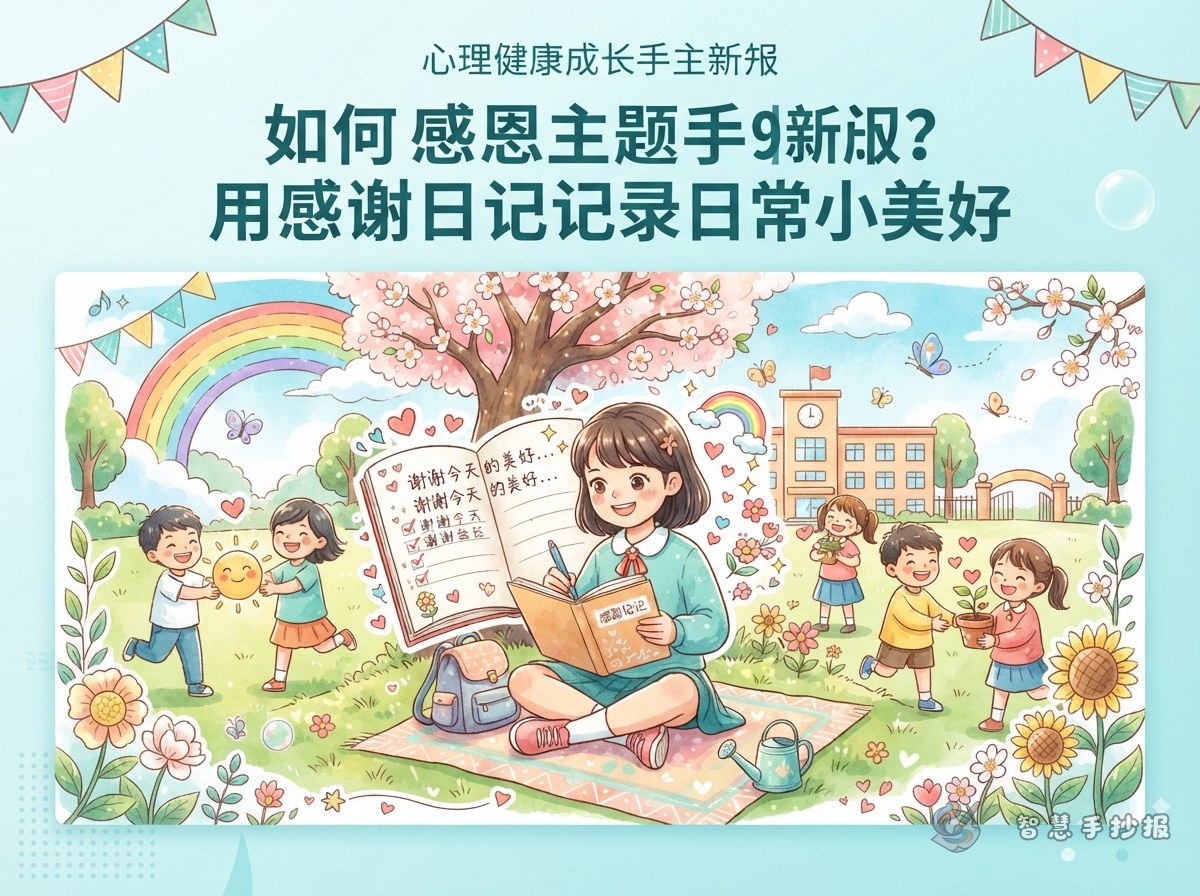
- Section three: my gratitude diary - choose one day and describe what happened, how you felt and what you wanted to say.
- Section four: saying thank you out loud - write down how you plan to show thanks, such as saying it face to face, drawing a small card or leaving a sticky note.
Ready-to-Copy Lines and Drawing Ideas
Short lines
- Thank you to today's sun, and to the me who kept trying.
- Being helped is luck; remembering to say thanks is grace.
- Even an ordinary day holds small lovely things worth keeping.
- With gratitude in your heart, your steps feel lighter.
Opening and closing lines
Opening: I used to think every day was the same, until I started writing down the moments when someone took care of me.
Closing: Gratitude is more than a sentence. It is a small habit I will practise every day.
Drawing ideas
Try a sun resting in an open hand, two hands holding each other, a wall covered in sticky notes, or a glass bottle filled with folded slips of paper. Simple outlines work best, and leave plenty of white space.
Adapting It for Younger and Older Students
Younger children can describe their ideas aloud while an adult writes them down. Focus on who was kind and how it felt, then add one or two lines in large letters. Older students can add a 'thank you to myself' part, such as keeping up with handwriting practice or staying calm when they felt angry, so the poster grows from thanking others into self-approval.
Teachers can turn the poster into a class activity: every student writes one thank-you line for a classmate, and the notes are collected into a gratitude wall.
Small Design Choices That Make the Page Feel Warm
- Use warm yellow, light orange and cream as base colors, with dark brown or dark green lettering for headings. Avoid covering the whole page in bright red or purple.
- Keep borders light. Draw vines, clouds or small hearts in the corners and leave the middle open for writing.
- Make the title a sentence, such as 'Thank you for making my heart feel warm', rather than the plain words 'gratitude poster'.
- Keep handwriting one size throughout, with body text slightly smaller than headings so the page looks tidy.
Turning the Poster Into a Daily Habit
After finishing the poster, agree on one small routine: before bed, say one thing you want to thank today. Try it for a week and notice how the mood changes.
If you want a different layout, extra sections or new colors, open 智慧手抄报 in the WeChat mini program, pick a template, swap in your own text and either print it or copy the design by hand. It takes only a few minutes to settle on a final version.