Decide the Angle: Cloud Types, or Reading the Sky?
Both directions suit a weather poster, but they look very different on paper. "Cloud types" is a knowledge page, so the layout splits into blocks with a short paragraph for each cloud. "Reading the sky" is about observation, so it works better as a set of clues: when you see this cloud, expect that weather. For younger students, combining them is easiest. Let the top half show what clouds look like and the bottom half show what they tell us about the weather, with a title such as "Cloud Files" or "Reading the Sky".
Write down three column names on scrap paper before you start drawing, and the page will not get messy.
Four Clouds That Are Easy to Draw
You do not need every cloud in the sky. Pick a few that look obviously different so readers recognise them at a glance.
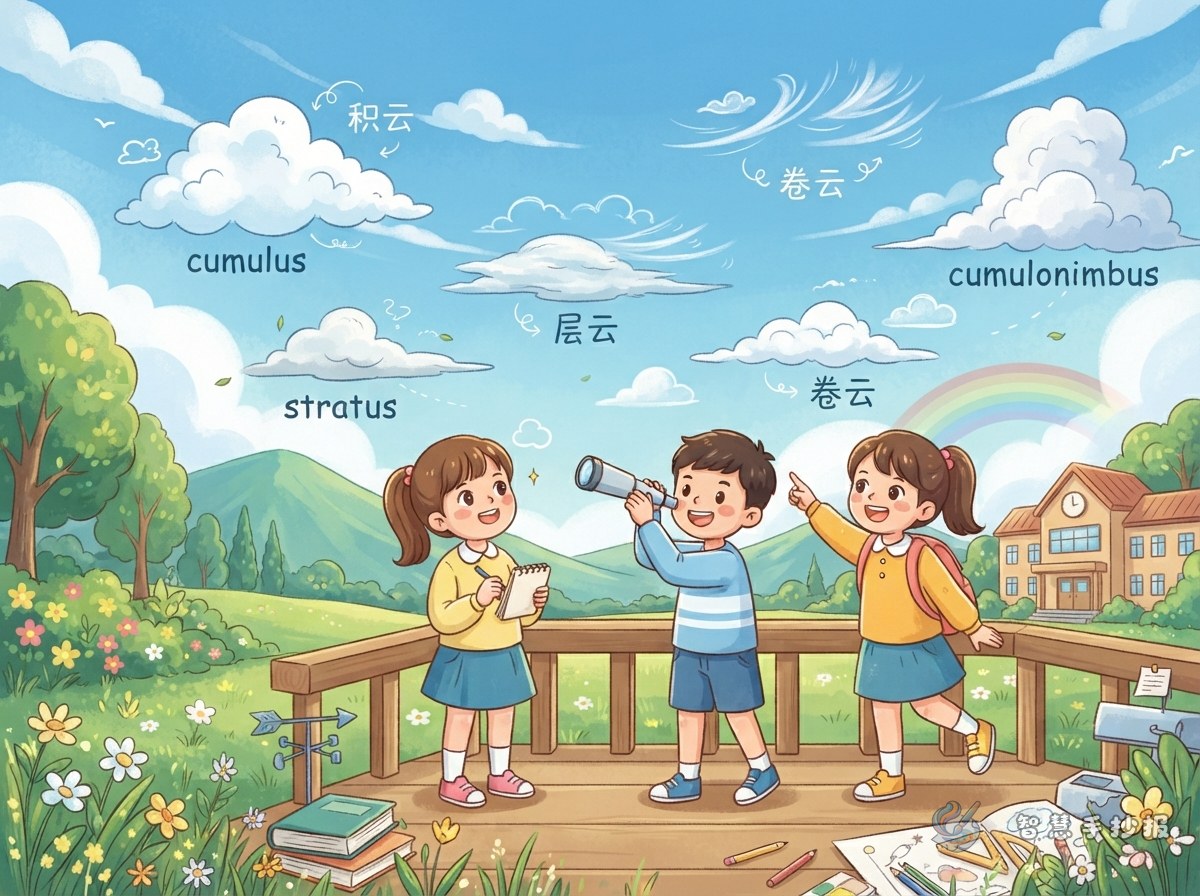
Cumulus: cotton-wool puffs, usually fair weather
A flat base with rounded tops, floating like cotton candy. Small, scattered cumulus usually means a spell of fine weather.
Cumulonimbus: thick and dark, bringing thunderstorms
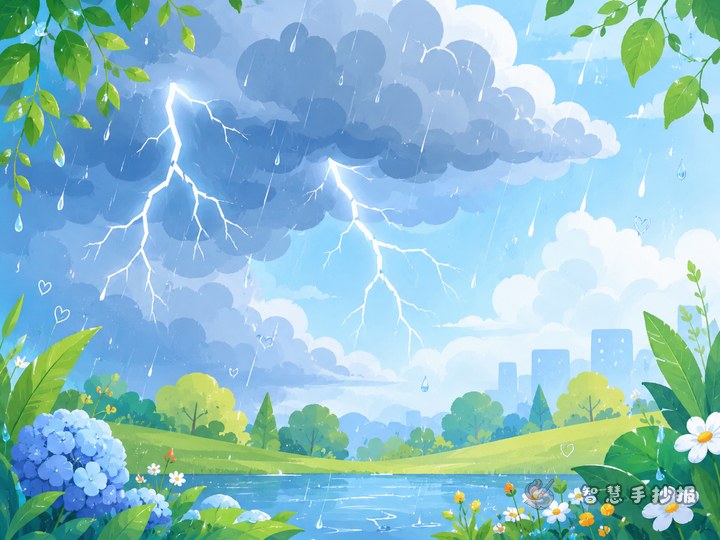
From a distance it looks like a dark tower with a gloomy base. When it grows, thunderstorms and strong wind often follow, so add a small lightning bolt beside it.
Cirrus: thin as thread, floating highest of all
It looks like feathers or threads scattered by the wind, pale in colour and very high up. When cirrus grows thicker, the weather is likely to turn grey and rainy.
Stratus: a grey-white sheet that brings drizzle
It has no clear shape, lying over the sky like a thin grey blanket that hides the sun. It often brings drizzle or a dull, overcast day.
Short Text You Can Copy Neatly
Poster text should be short. One-line facts and proverbs are perfect for small boxes.
- Clouds are made of tiny water droplets and ice crystals that form when water vapour in the air cools.
- How dark a cloud looks depends on its thickness: the thicker it is, the less sunlight gets through.
- If the sky has hooked, wispy cirrus, the weather is often about to change.
- Clouds moving in from the west usually bring rain; clouds drifting east often pass without any.
- When cumulus builds quickly into tall towers, a thunderstorm is on its way.
If there is space left, add a small "Today's Cloud" box with the date and the cloud you actually saw, turning the poster into a real observation record.
Layout: Turn the Page Into a Sky
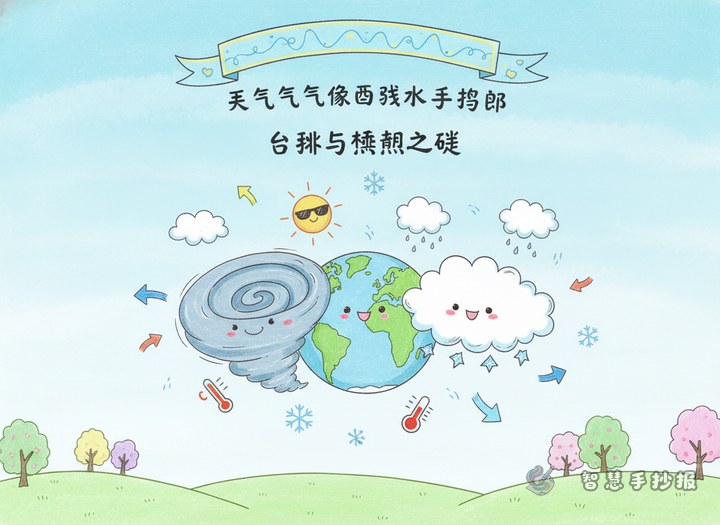
A sky-style layout suits this topic well. Try this plan:
- Wash the whole page with a light blue or pale yellow sky, kept thin so there is room to write.
- Draw the four chosen clouds in different sizes, leaving the inside of each cloud blank as a text box.
- Put the title at the top or top left inside a cloud-shaped border, in larger, bolder letters.
- Save the bottom right corner for a "Proverb Corner" with two or three weather sayings.
- Finish with a faint horizon, hill or rooftop along the bottom so the page does not feel empty.
Colouring and Writing Order
Getting the order right keeps the page clean: sketch in pencil, write the text, then colour. Start with cool tones such as sky blue and light grey, and leave every text box uncoloured. Give clouds a white or pale grey fill with a soft blue shadow so they look puffy. Write the body text in black or dark blue, keep the title in dark blue or dark grey, and limit the page to three main colours.
If time is short, mark out the column positions first, then open the WeChat mini program "智慧手抄报" to pick a layout and lettering style you like, print or copy it, and add your own observation notes afterwards.