Start with one leaf and the topic becomes clear
“Why do leaves change color in autumn?” is a vivid and focused theme for a seasonal handwritten poster. Instead of covering every part of autumn, it lets students explore one natural change that they can easily see around them. You can use a question-style title or a creative one such as The Secret of Autumn Leaves to make the poster feel lively.
Simple facts children can write clearly
Why leaves change color
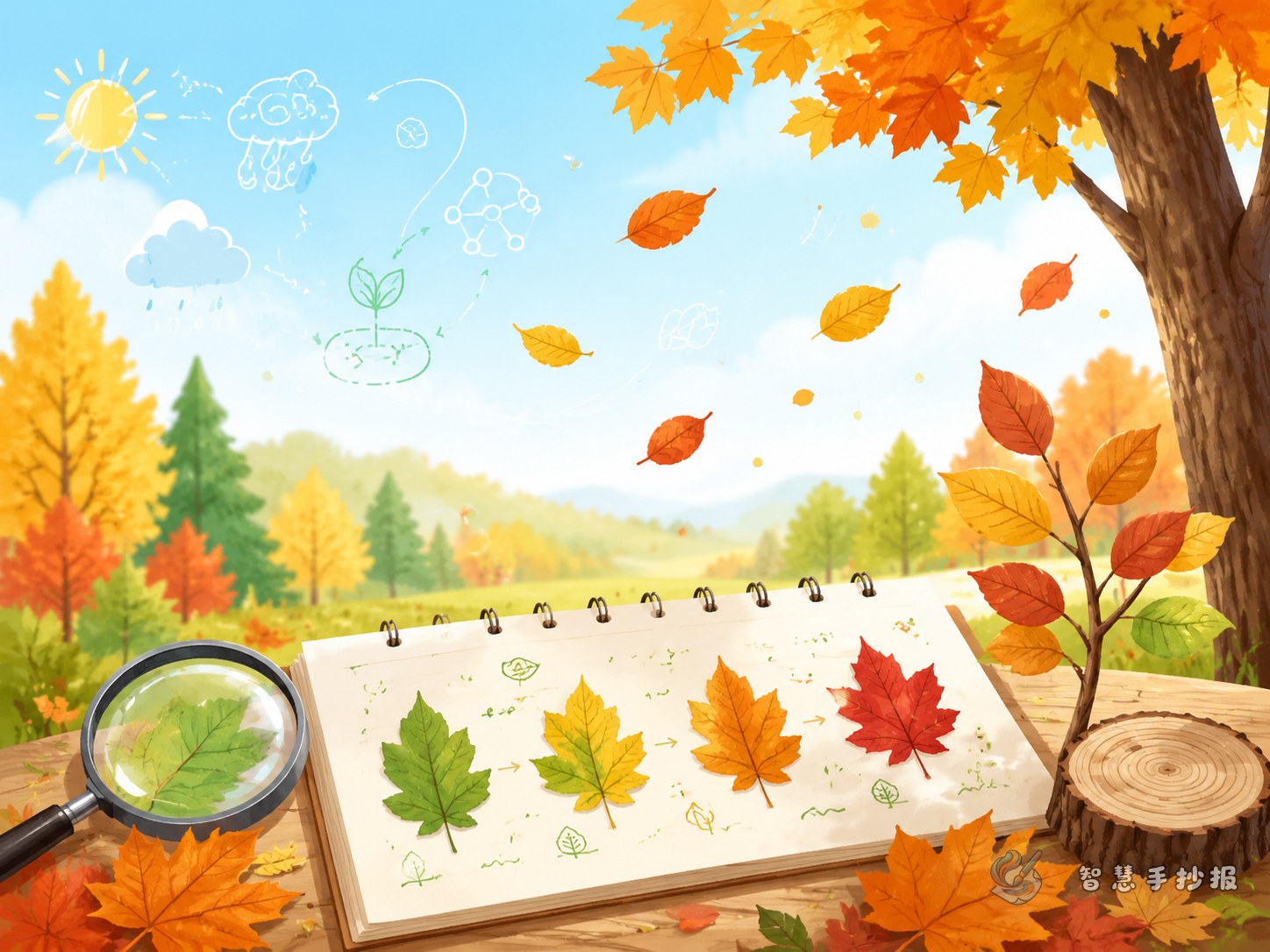
In autumn, the temperature slowly drops and the days become shorter. The green color in leaves gradually fades, so the yellow, orange, and red colors inside the leaves become easier to notice.
What colors autumn leaves can be
Different trees show different colors. Some leaves turn golden yellow, some become orange or red, and some slowly turn light brown. Ginkgo leaves are often bright yellow, while maple leaves can show richer warm colors.
What else changes in autumn
- The weather becomes cooler.
- The temperature difference between morning and evening gets bigger.
- The sky often looks higher and clearer.
- Some fruits ripen and some animals prepare for winter.
Make the poster more lively with observation notes
Facts alone may feel a little flat, so adding a short observation section can improve the poster. Students can write where they saw autumn leaves, what colors they noticed, and how the fallen leaves looked on the ground. This makes the work feel personal and natural.
- Place of observation: school, park, or street near home.
- Tree types: ginkgo, maple, plane tree, and others.
- Things to notice: color, shape, and whether leaves are falling.
- Personal discovery: which tree changes first and which leaves fall fastest.
Try a falling-leaf layout instead of a rigid grid
This topic works well with movement in the layout. Place the main title at the top center, then arrange text boxes like drifting leaves. The page does not have to be split into equal blocks. A flowing layout can make the whole poster feel more like autumn wind.
- Top area: title and a short theme sentence.
- Left side: the reason leaves change color.
- Right side: common autumn leaf colors.
- Bottom area: observation notes or fun questions.
- Blank spaces: small leaves, fruit, branches, and wind lines.
Easy decorations and color choices
You do not need complicated drawings. A few classic autumn elements are enough. Use warm colors for the title and soft background tones so the writing stays clear and easy to read.
- Main colors: golden yellow, orange, maple red, light brown.
- Supporting colors: light blue, pale green, cream.
- Small illustrations: ginkgo leaves, maple leaves, fruit, branches.
- Title style: rounded letters with leaf details.
A simple ending to complete the poster
You can finish with one short sentence, such as: Autumn leaves are colorful letters from nature, showing us that the season is changing. This makes the handwritten poster feel complete. If you want to keep improving the design, you can continue in the Smart Handwritten Poster WeChat mini program.