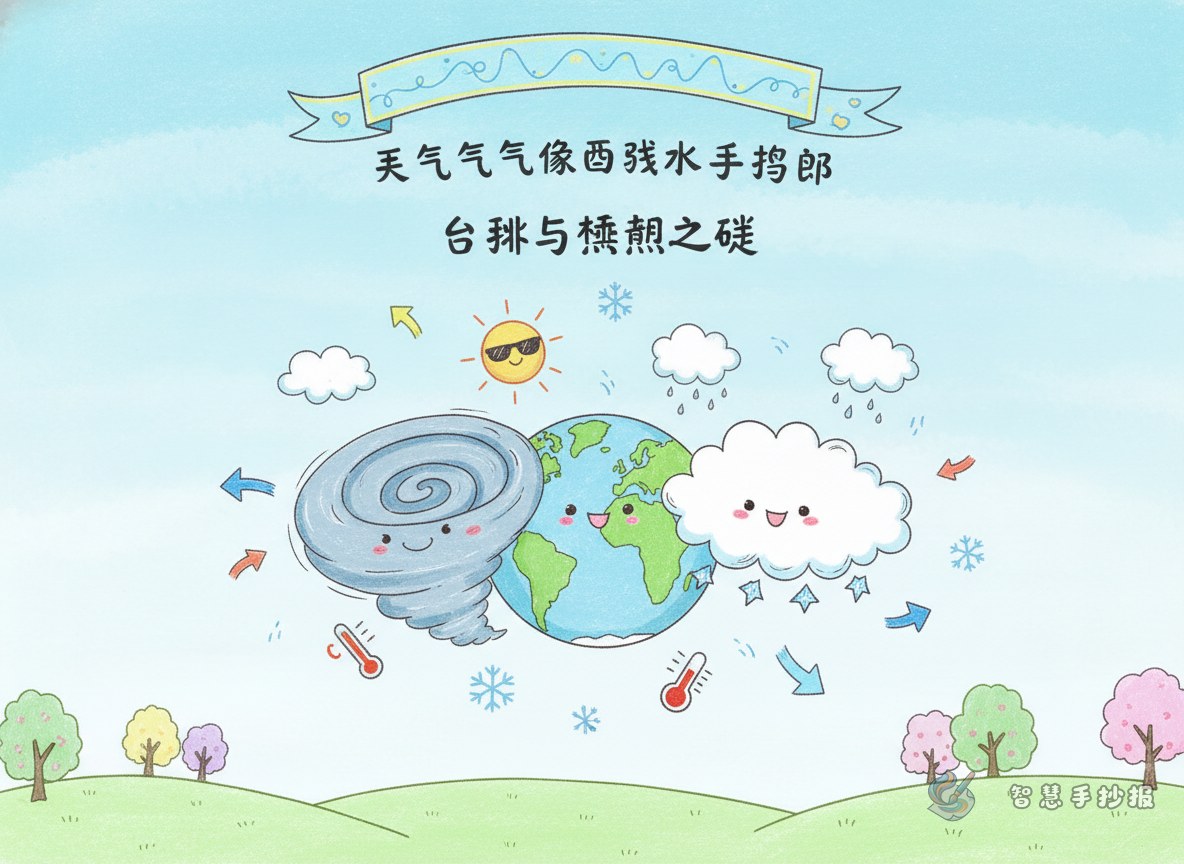
Use a comparison idea as the main theme
If a poster only talks about one weather event, the page may look too plain. Putting typhoons and cold waves on the same poster creates a strong contrast. One comes from warm ocean conditions, and the other is linked to powerful cold air. This makes the poster fit a weather and seasonal change topic very well.
A title such as “Why Do Typhoons and Cold Waves Happen?” or “Two Big Weather Events We Should Know” feels natural for school use.
Ready-to-use writing material
What is a typhoon?
A typhoon is a strong tropical storm that forms over warm ocean water. It often brings powerful wind, heavy rain, and rough seas. It is more common in summer and autumn.
What is a cold wave?
A cold wave is a rapid drop in temperature caused by strong cold air moving across a large area. It may bring wind, snow, frost, and icy weather, often in late autumn, winter, or early spring.
Why do they happen?
- Typhoon: Warm seawater heats the air above it. Rising air and rotating wind systems can grow into a powerful storm.
- Cold wave: Cold air builds up in high-latitude regions and then moves quickly southward, causing a sudden temperature fall.
What effects do they have?
- Typhoons may cause strong wind, flooding, canceled travel, and heavy rain.
- Cold waves may cause sharp cooling, icy roads, frozen crops, and health risks from low temperatures.
Helpful poster sections
- Weather facts: Explain what a typhoon and a cold wave are.
- How they form: Use short child-friendly sentences.
- Effects on life: Show how they influence school, travel, farming, and daily routines.
- Safety tips: Add practical advice that students can remember easily.
If there is extra space, include a small word bank with terms like forecast, warning, wind power, temperature drop, rainstorm, and ice.
Try a warm-versus-cold layout
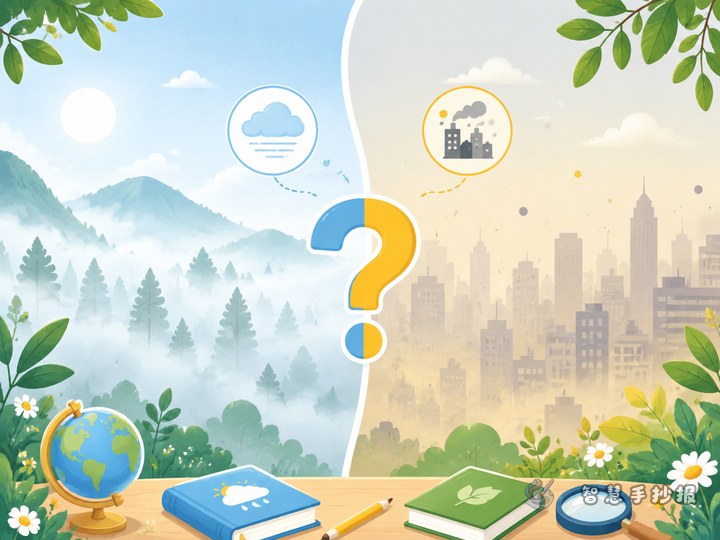
This topic looks great with a contrast design. One side can use cool gray-blue colors, snowflakes, scarves, and winter wind for the cold wave section. The other side can use deep blue, raindrops, clouds, and swirling lines for the typhoon section. In the middle, place a short message like “Check the weather and stay safe.”
The main title should go at the top, and smaller subheadings can be brief and lively, such as “Typhoon Time,” “Cold Wave Alert,” “What Changes?” and “How to Stay Safe.”
Short safety sentences for children
- Stay indoors as much as possible during typhoon weather.
- Keep away from big trees, signboards, and flooded roads.
- Wear warmer clothes quickly when a cold wave arrives.
- Walk carefully on rainy, snowy, or icy ground.
- Check the weather forecast before going to school or outside.
These short lines are easy to copy into a school poster and easy for children to understand.
A simple closing paragraph
The ending does not need to be long. Students can write that weather changes are closely connected with daily life, and learning about typhoons and cold waves helps us understand nature and protect ourselves. This gives the poster both knowledge value and practical meaning.
If you want to keep improving the layout, title style, and section design, you can continue making your poster in the Zhihui Shouchaobao WeChat mini program.