Choose a topic that shows visible change
If you want a science-themed poster with clear observation value, a silkworm growth observation topic is a strong choice for children. The changes happen step by step, so it is easy to record and easy to illustrate. You can use titles like “My Silkworm Observation,” “How a Silkworm Grows,” or “A Small Record of the Silkworm Life Cycle.” This makes the poster feel connected to real classroom learning instead of just copied facts.
A timeline layout makes the page easy to follow
This theme works best with a simple timeline in the middle and short observation sections around it. The page looks organized, and the reader can understand the growth process at a glance.
- Main title area: Write the title clearly and decorate it with mulberry leaves and tiny silkworm drawings.
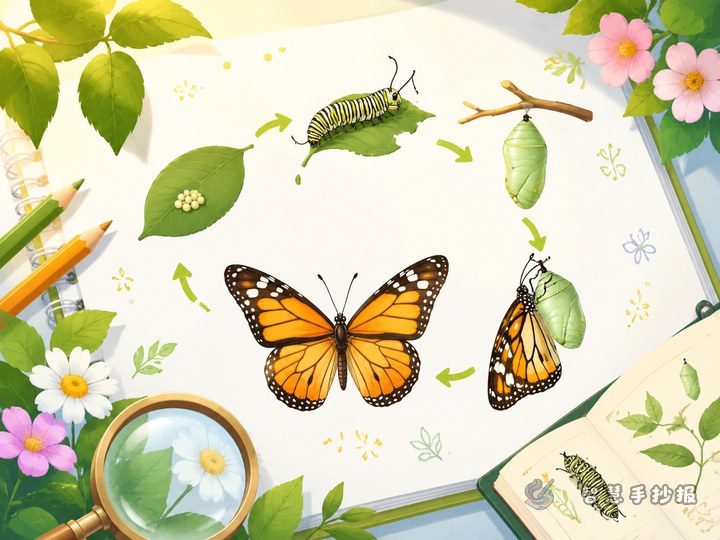
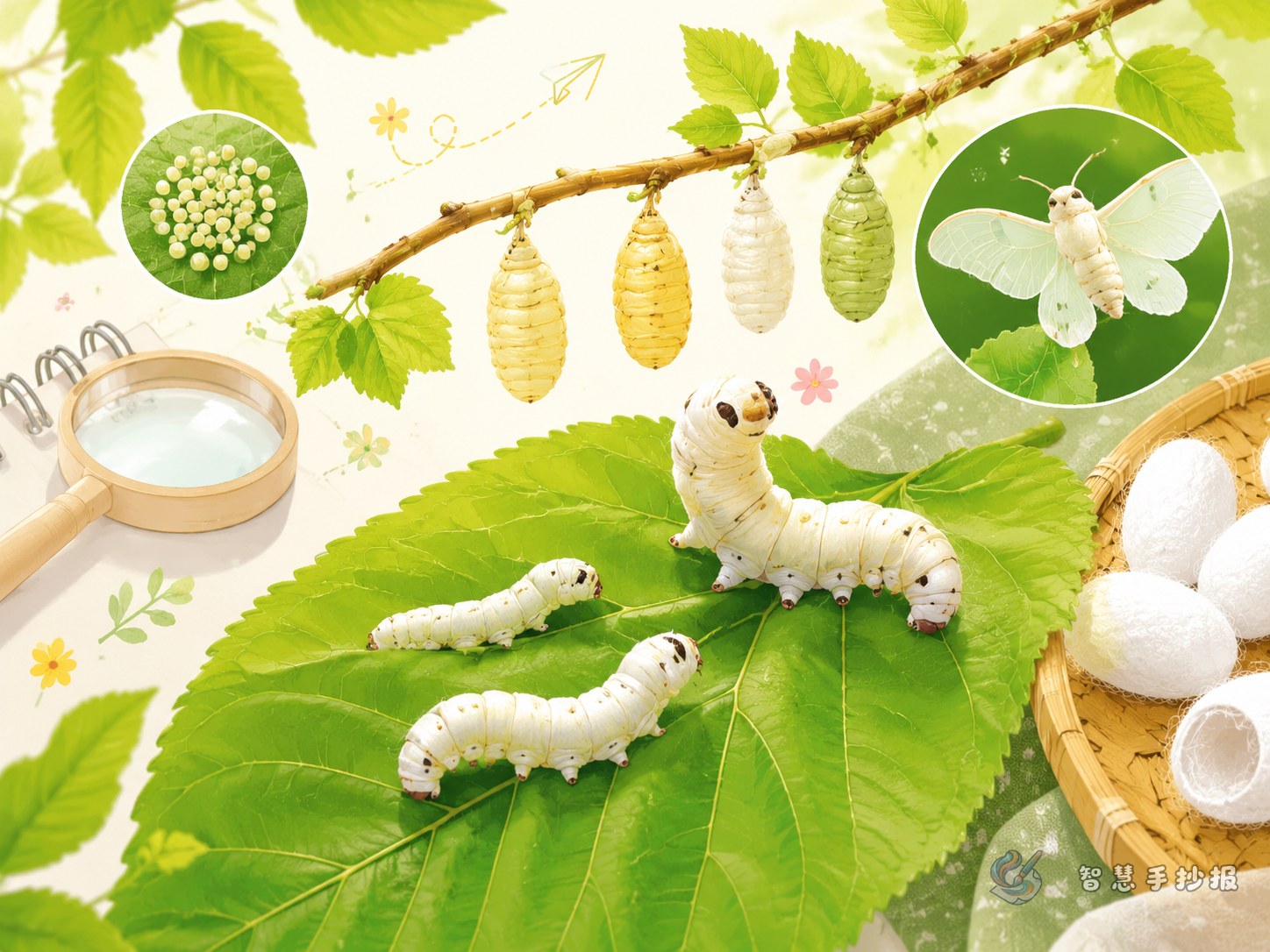
- Growth timeline: Show egg, larva, molting, cocoon, and adult moth in order.
- Daily observation notes: Record changes in color, size, and movement.
- Fact corner: Explain what silkworms eat and what kind of environment they need.
- What I discovered: Add one or two real things you noticed during observation.
If you want to keep improving the design, you can continue making your poster in the Zhihui Shouchaobao WeChat mini program and choose a child-friendly layout to match your notes.
Ready-to-use writing material
Short introduction
The silkworm is a common insect with a clear life cycle. It goes through several stages, including egg, larva, pupa, and adult. By observing silkworms, students can learn how living things grow and change over time, while also practicing careful recording and patient observation.
Observation sample
When silkworms first hatch, they are very small and dark in color. As they grow, they eat mulberry leaves again and again, and their bodies gradually become whiter and larger. After a period of feeding, they become quieter and begin to spin silk around themselves to make a cocoon. Later, an adult moth emerges, completing one full life cycle.
My feelings
Watching silkworms helped me understand that growth does not happen all at once. It takes place little by little every day. If we observe carefully, we can discover many interesting secrets in nature.
Small details that can improve the poster
- Do not write facts only. Add what you actually saw.
- Mention how the leaves looked before and after feeding for more specific content.
- Use words like first, next, then, and finally to show sequence clearly.
- Draw different stages of the silkworm to create visual comparison.
- Keep each section short and neat so the page still looks like a handmade newspaper.
Colors and decorations that fit a nature theme
Soft green, cream, and light yellow work well because they match mulberry leaves and a natural atmosphere. You can draw leaf borders, cocoons, and tiny moth shapes, but leave enough blank space so the writing stays clear. Make the title larger, keep the body text tidy, and highlight only a few key words with color.
A simple ending for the final section
Through this silkworm observation, I learned that every living thing in nature has its own growth pattern. If we watch carefully, we can discover the wonder of life in small everyday changes. This kind of ending is short, natural, and suitable for the last part of the poster.